

Why Summer Dust Storms Necessitate Frequent Solar Panel Cleaning
Summer dust storms can reduce solar panel output by 15% to 30% by depositing fine silt, clay, and pollen that bakes onto glass surfaces. Fast cleaning after storms recovers lost production during peak generation months.
- Dust storms leave mineral residue that rain cannot remove, and tap water creates spots that scatter light. Deionized water and proper technique are needed for effective cleaning.
- During active storm season, panels should be cleaned within days of each major event rather than waiting for quarterly maintenance. Back-to-back storms may require weekly inspection and rinsing.
- A 6 kW system losing 20% output to dust accumulates real financial losses over sunny summer days. Delaying cleaning turns small maintenance costs into significant generation losses.
Summer dust storms deposit fine grit across solar panels that blocks sunlight from reaching the cells, causing immediate drops in energy production. A single storm can reduce output overnight during peak generation months. Regular cleaning removes this accumulated debris and restores panels to full efficiency, protecting your investment and maintaining consistent power generation throughout the dusty season.
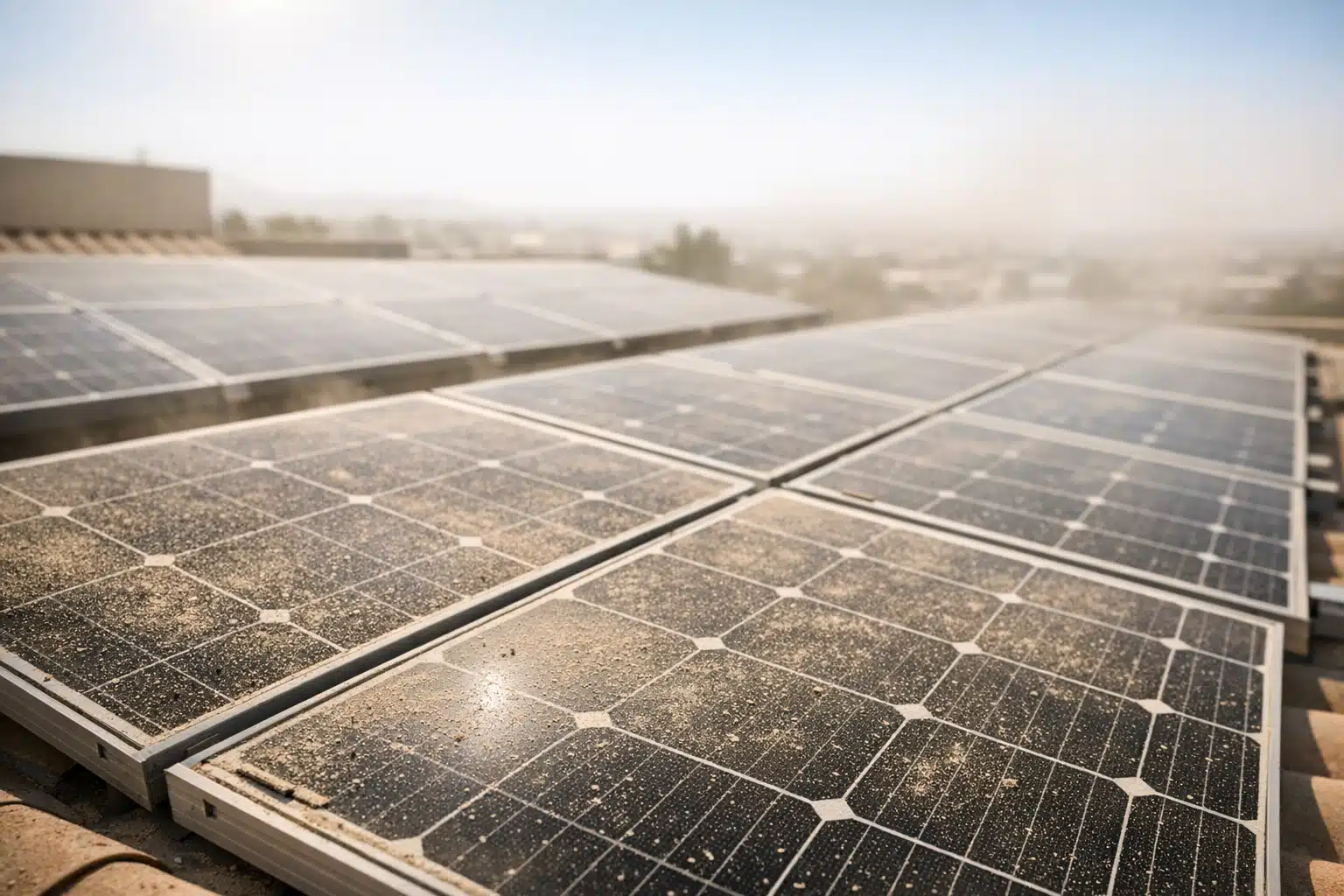
A single summer dust storm can drop your solar output overnight. Fine grit settles across every panel, blocking sunlight before it reaches the cells. Dust storms are the fastest way to slash your solar production during peak generation months.
This post explains what dust storms do to panel efficiency, why summer makes the problem worse, and how frequently you should clean afterward. You will learn the science, the numbers, and the practical steps that keep your system producing.
How Summer Dust Storms Cut Solar Panel Efficiency
Dust accumulation reduces solar panel output by blocking photons from reaching the photovoltaic cells. Even a thin layer scatters and absorbs light that would otherwise become electricity.
Studies from arid regions record efficiency losses between 15% and 30% after heavy dust events. In extreme cases with caked mineral deposits, losses climb higher.
Summer compounds the damage for three reasons:
- Dry soil lifts easily. Parched ground during summer feeds airborne particles into storms.
- Peak sun hours coincide with dirty panels. The season you generate most is the season dust hits hardest.
- Heat bakes grit onto glass. High panel temperatures fuse dust and pollen into a stubborn film.
A clean panel in June might produce full rated output. That same panel after a Front Range dust storm can lose a quarter of its yield until it is washed.
Why Dust Storm Residue Is Worse Than Everyday Dirt
Storm dust carries mineral content that ordinary settling does not. Fine silica and clay particles cling tightly to glass and resist rain.
When morning dew mixes with this residue, it hardens into a cloudy layer. Rain alone rarely clears it, which is why owners see lasting output drops after a storm passes.
Why Dust Storms Demand More Frequent Solar Panel Cleaning
Dust storms force a shorter cleaning cycle because a single event can undo weeks of clear-sky production. One storm can leave more residue than a full month of normal exposure.
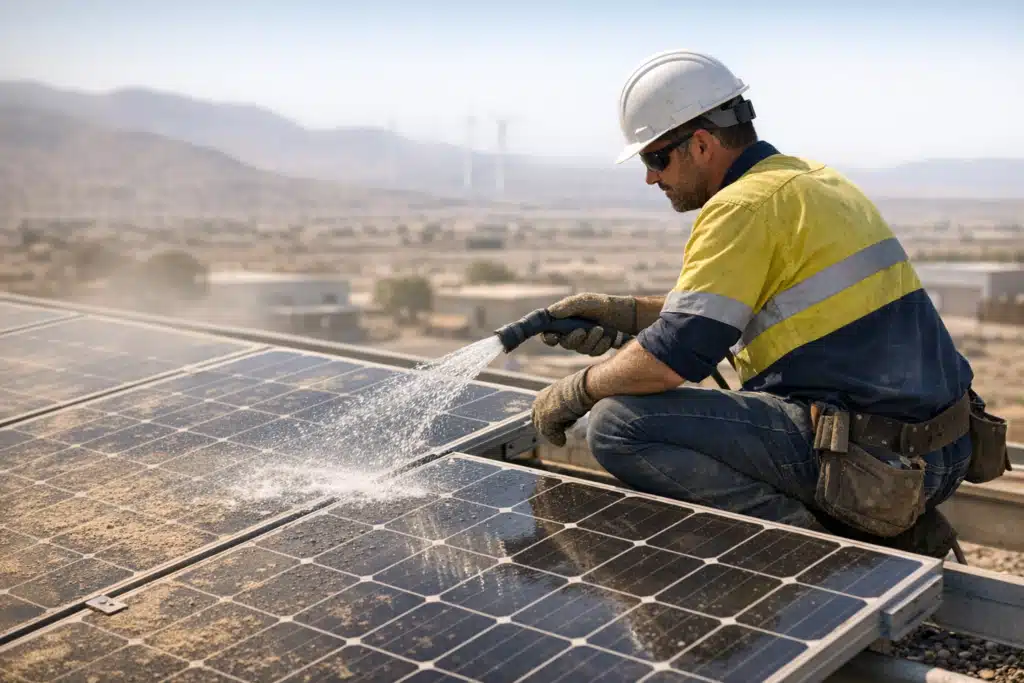
During calm months, quarterly cleaning may hold output steady. Summer changes that math entirely.
Here is how storm frequency affects your cleaning schedule:
- Light dust season: Clean every 2 to 3 months to maintain output.
- Active storm season: Clean within days of each major event.
- Back-to-back storms: Inspect and rinse weekly during the worst stretches.
Waiting until fall to clean means paying for lost production all summer. The financial gap grows with every sunny day a dirty panel underperforms.
The Efficiency Math Behind Cleaning Timing
Assume a 6 kW residential system losing 20% output to storm dust. Over a bright July, that loss adds up to real dollars off your utility savings.
Cleaning within a few days of a storm recovers most of that production. Delaying by weeks turns a small maintenance cost into a large generation loss.
What Dust Storms Leave Behind on Colorado Panels
Front Range dust storms deposit a mix of fine silt, agricultural dust, and pollen onto rooftop arrays. Each element behaves differently on glass.
- Silt and clay: Cling to surfaces and cloud the glass evenly.
- Agricultural dust: Carries organic matter that streaks when wet.
- Pollen: Bonds with dust and creates a sticky yellow film.
This combination explains why a garden hose rarely restores full output. The residue needs deionized water and correct technique to lift cleanly without streaking.
Why Rinsing Alone Falls Short
Tap water contains minerals that dry into spots on panel glass. Those spots scatter light and leave a haze that lowers efficiency.
Deionized water dries clean and removes the bonded storm residue. Correct equipment matters as much as timing after a dust event.

 Posted on Google
How to Protect Solar Output Between Dust Storms
The best defense against dust storm losses is fast cleaning paired with regular monitoring. Watching your production data tells you exactly when a wash pays off.
Follow these steps during storm season:
- Track daily output. A sudden drop after windy weather signals dust buildup.
- Schedule a cleaning within a week of any major storm. Speed limits your generation loss.
- Inspect for hardened residue. Caked-on dust needs proper cleaning, not a quick rinse.
- Avoid walking rooftop panels yourself. Ground-based systems clean safely without risking damage or injury.
Panels under warranty often require gentle cleaning methods. Abrasive scrubbing or hard water can void coverage and scratch the glass.
When to Call a Cleaning Team
Call for cleaning when output stays low after rain, or when you spot a visible film. Rooftop access and correct equipment make a trained team safer and more effective than a DIY attempt.
A ground-fed water system reaches most residential arrays without ladders on the panels. That protects both your roof and your warranty.
Key Takeaways on Dust Storms and Solar Cleaning
Summer dust storms can cut solar output by 15% to 30% and bake residue onto panel glass. Faster cleaning after each event recovers that lost production before it drains your utility savings.
A short storm-season cleaning cycle keeps your system producing at full strength during the months that matter most.
Ready to recover your lost solar output after summer dust storms? Contact Ease Your Panes at (720)-477-3273, text the same number, or email info@easeyourpanes.com to schedule your solar panel cleaning. Visit https://www.easeyourpanes.com to book online.
Sources
- National Renewable Energy Laboratory – Photovoltaic Soiling Research
- U.S. Department of Energy – Solar Performance and Efficiency
- U.S. Environmental Protection Agency – Particulate Matter Basics




