

Preparing Solar Panels for Late Summer Sun Intensity
Late summer brings the highest solar panel output potential, but dust, ash, pollen, and bird droppings can reduce production by 5% to 20%. Proper cleaning and inspection during this period protects your investment.
- Clean panels before 9 a.m. using soft tools and purified water to avoid thermal shock and mineral spots from Colorado's hard water.
- Check for new shade patterns between 2 p.m. and 5 p.m. since trees grow and the sun angle shifts from early summer.
- Professional cleaning reduces safety risks from hot rooftops and slippery glass while preventing warranty issues from improper equipment.
To prepare solar panels for late summer sun, clean off accumulated pollen and monsoon dust that reduce energy production. Inspect panels for debris buildup and check that mounting hardware remains secure. Late summer offers peak production potential with high-angle sunlight, so removing any film or residue from panel surfaces helps maximize output during this high-yield season.
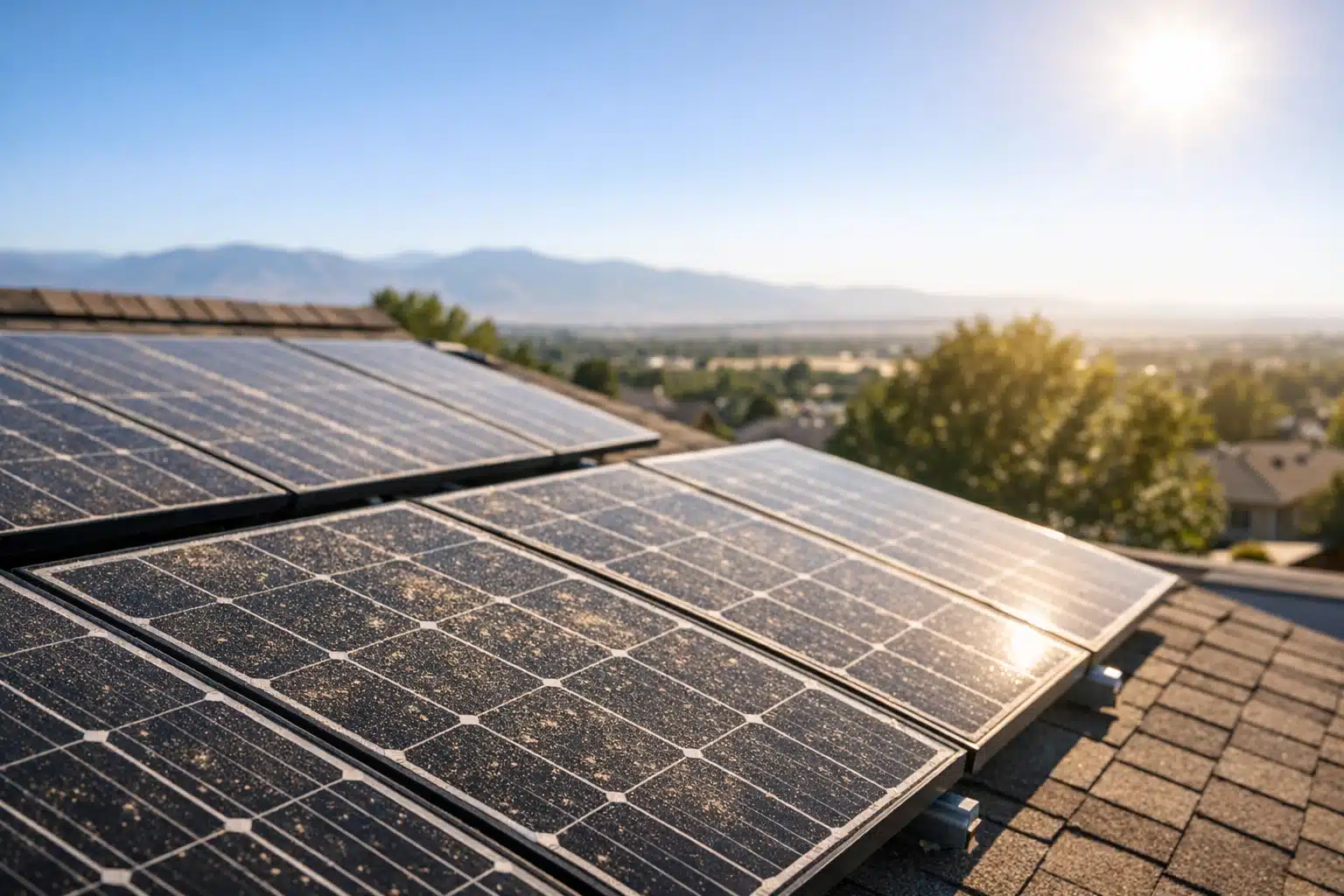
Late summer delivers the longest stretch of high-angle sun your solar panels will see all year. Along the Front Range, July and August bring intense UV, afternoon monsoon dust, and pollen residue that quietly cut into production. Getting your solar panel preparation right now protects the season when panels can produce the most.
This post covers what late summer does to panel output, how to clean panels without damaging them, and when timing matters most. Every recommendation comes from cleaning panels across Denver metro rooftops during peak heat.
Why Late Summer Sun Intensity Demands Solar Panel Preparation
Summer sun intensity peaks in late July and August across Colorado, driven by long daylight hours and a high solar angle. Panels receive more direct radiation during this window than any other. Any surface film blocking that light costs you real kilowatt-hours.
Dirty panels lose 5% to 20% of output depending on soiling. In dry regions with dust and pollen, losses climb faster between rain events. Late summer stacks several soiling sources at once.
Local Conditions That Coat Panels in Late Summer
- Monsoon dust: Afternoon storms kick up dirt, then leave muddy spots as light rain evaporates.
- Wildfire ash: Smoke from regional fires settles a fine gray film on glass.
- Pollen and cottonwood seed: Sticky residue that bonds to warm glass.
- Bird activity: Droppings create hard hot spots that block cells entirely.
Rain alone does not clean panels. Light Front Range showers leave mineral spots that reduce transmission. Manual cleaning removes what weather leaves behind.
How Heat Changes the Way You Clean Panels
Never spray cold water on panels baking in afternoon sun. The thermal shock can crack cells or the glass. Panel surfaces reach 150°F or higher during a July afternoon.
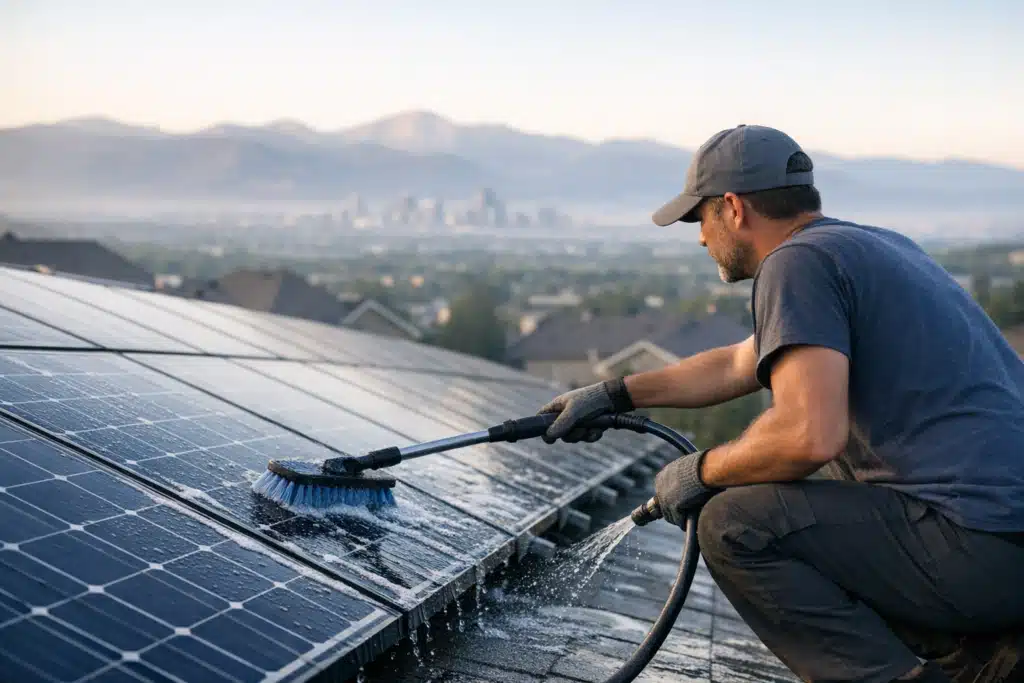
Clean early in the morning instead. Glass is cool, dew has softened the grime, and evaporation is slower. This prevents the streaking that happens when water dries too fast on hot glass.
Step-by-Step Late Summer Panel Cleaning
- Check output first. Note your inverter or app production numbers before cleaning to measure the gain.
- Clean before 9 a.m. Cool glass avoids thermal shock and streaking.
- Rinse with low-pressure water. Loosen dust before any contact with the surface.
- Use a soft brush or microfiber pad. Abrasive materials scratch the anti-reflective coating.
- Skip harsh detergents. Deionized or purified water lifts residue without leaving film.
- Rinse fully and let air dry. Squeegeeing helps avoid spotting on hard-water areas.
Colorado water runs hard in many neighborhoods. Tap water dries with mineral spots that block light. Purified water rinses spot-free, which is why it matters here.
Checking Panel Angle and Shading for Peak Sun
The sun sits lower in late summer than it did in June, changing shadow patterns on your roof. Trees that cleared your panels in early summer may cast afternoon shade now. A quick shading check protects production.
Walk your property between 2 p.m. and 5 p.m. Look for new shadows crossing any panel. Even partial shade on one panel drags down a whole string.
What to Inspect During Solar Panel Preparation
- Overhanging branches: Summer growth extends limbs toward panels.
- Debris in panel gaps: Leaves and seeds collect at frame edges and trap moisture.
- Loose mounting hardware: Heat expansion and contraction can loosen clamps.
- Discoloration or hot spots: Brown patches signal cell damage worth reporting to your installer.
Fixed-tilt panels stay put, but debris and shade still shift with the season. A late summer inspection catches problems before fall storms hit.
Cleaning Frequency for Late Summer Conditions
Most Front Range panels benefit from cleaning every two to three months, with late summer needing closer attention. Dust and ash accumulate faster in dry heat. A single cleaning in early August can restore lost output for the rest of the season.
Homes near open fields, dirt roads, or construction see heavier soiling. Panels under bird-heavy trees need more frequent checks. Match your schedule to your surroundings, not a generic calendar.
Signs Your Panels Need Cleaning Now
- Production numbers dropping without weather changes
- Visible film, streaks, or spots on the glass
- Bird droppings or leaf debris on the surface
- A hazy gray coating after regional wildfire smoke

 Posted on Google
Why Professional Panel Cleaning Beats DIY in Peak Heat
Rooftop panel cleaning in late summer combines heat, height, and slippery glass into real safety risk. Afternoon temperatures make roof surfaces dangerous underfoot. Trained crews carry the right equipment and purified water systems.
DIY cleaning with a garden hose leaves mineral spots and risks thermal cracking. Pressure washers can force water under seals and void warranties. Careful hand cleaning with the right tools protects both output and the panel.
At Ease Your Panes, we clean panels from the ground when reach allows, cutting rooftop risk. We use purified water that dries spot-free on Colorado’s hard water. Our crews time cleanings for cool morning conditions.
Key Takeaways for Late Summer Solar Panel Preparation
Late summer sun intensity gives your panels their highest earning window, but dust, ash, and pollen quietly cut output. Clean early in the morning with soft tools and purified water, and check for new shade and debris. A single well-timed cleaning restores production for the rest of the season.
Ready to get your panels ready for peak sun? Call or text Ease Your Panes at (720)-477-3273, email info@easeyourpanes.com, or visit https://www.easeyourpanes.com.
Sources
- National Renewable Energy Laboratory – Photovoltaic Soiling
- U.S. Department of Energy – Solar Photovoltaic System Maintenance
- U.S. Environmental Protection Agency – What Is Particle Pollution




