

The Challenge of Cleaning Windows After Cottonwood Season
Cottonwood season coats windows with stubborn white fluff that bonds to moisture and static on glass, clogs screens, and packs into tracks. Ease Your Panes explains how to remove the fibers properly and when to call for professional help.
- Cottonwood fibers stick to wet glass and dry into a filmy residue, while screens trap dense mats that recontaminate clean windows within hours. Always remove fluff dry before washing to avoid smearing it into paste.
- Clogged weep holes and packed tracks hold moisture that can damage wood frames over time. Clearing these areas is part of proper seasonal window care.
- The best time for a full cleaning is after trees stop shedding in mid-June, not during peak release. Ease Your Panes offers complete service including screens, tracks, and weep hole clearing.
Cottonwood seeds create unique cleaning challenges because the white fibers bond tightly to glass surfaces and resist simple wiping. The fluffy seeds cling to windows, pack densely into screen mesh, and accumulate in tracks where moisture collects. This sticky buildup requires more thorough cleaning methods compared to standard dirt or dust removal.
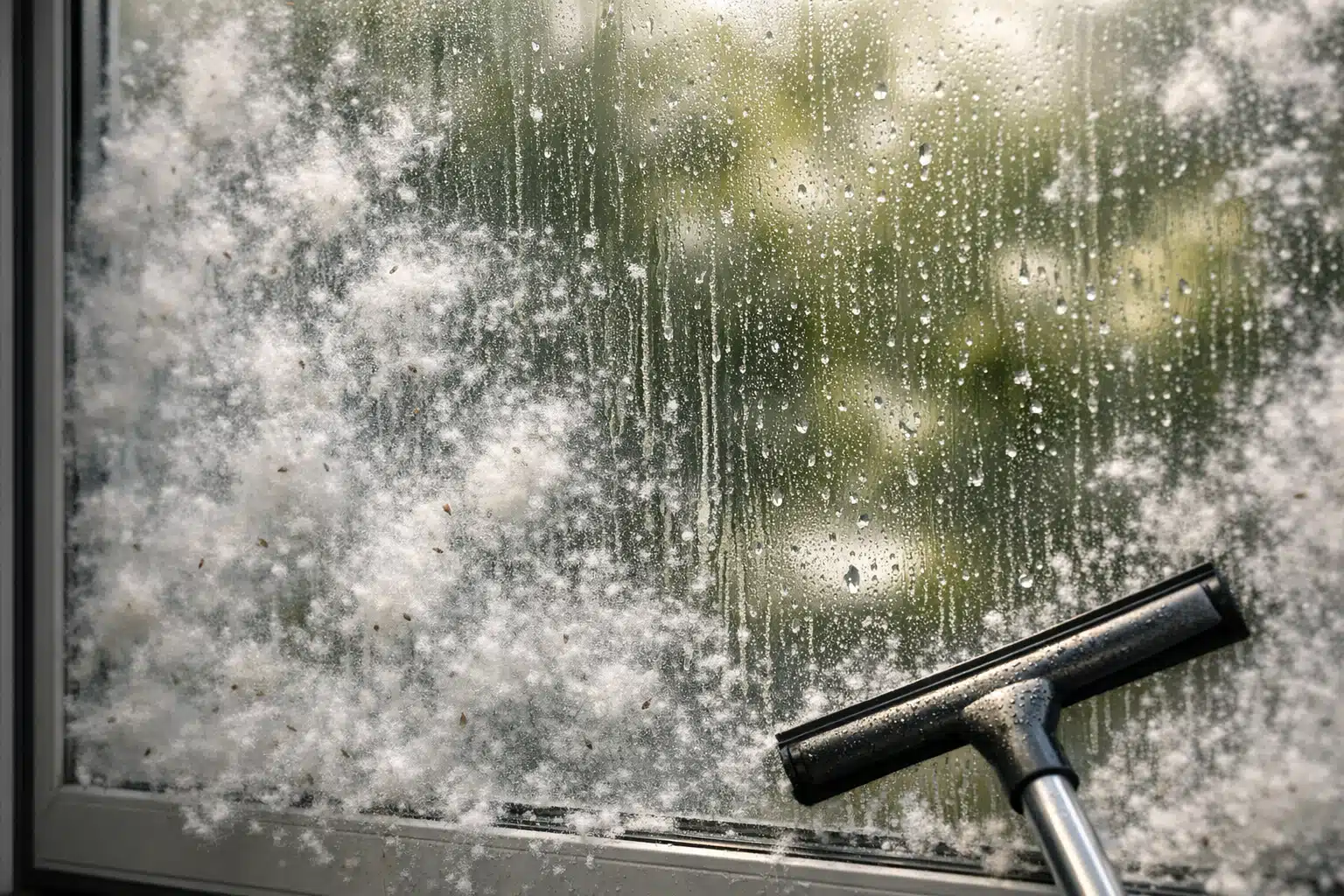
Cottonwood season turns clean windows into magnets for white fluff within days. The seeds cling to glass, pack into screen mesh, and stick to tracks where moisture collects. Cottonwood cleaning is harder than regular washing because the fibers bond to surfaces and resist a quick wipe.
This post covers why cottonwood fluff is stubborn, how to remove it from glass and screens, and when to call for help. You will learn the exact steps that work on bonded fibers and how to keep windows clear until the season ends.
Why Cottonwood Fluff Is So Hard to Clean
Cottonwood fluff is the seed-carrying fiber released by female cottonwood trees in late spring and early summer. Each seed wraps in a cotton-like strand that floats on air and sticks to any damp or static surface.
The fibers are the problem, not the seed. They tangle together and grip glass, caulk, and screen mesh.
The Fluff Bonds to Moisture and Static
Morning dew on your windows acts like glue for cottonwood fibers. Once the fluff lands on wet glass and dries, it leaves a filmy residue behind.
Static from dry glass pulls fibers in too. A single windy afternoon can coat an entire west-facing window.
Screens Trap More Than Glass Does
Window screens act like filters during cottonwood season. The mesh catches airborne fibers and packs them into a dense mat.
A clogged screen blocks airflow and traps pollen against the glass. Cleaning the glass without clearing the screen gets you a dirty window again in hours.
Cottonwood Cleaning: A Step-by-Step Method That Works
Effective cottonwood cleaning starts with dry removal, then wet washing. Reversing that order smears fibers into a paste that is harder to lift.
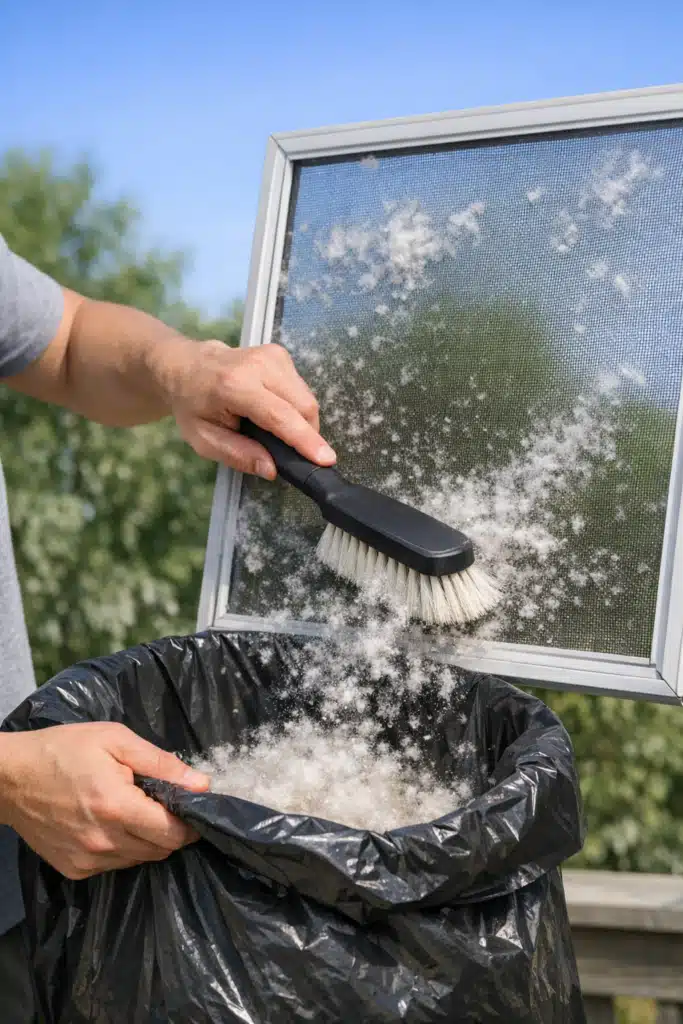
- Remove screens first. Take them out before touching the glass to stop fibers from falling back onto clean surfaces.
- Brush screens dry. Use a soft-bristle brush to sweep packed fluff out of the mesh over a trash bag.
- Rinse screens with a hose. Spray from one side at an angle to push remaining fibers through the mesh.
- Dry-dust the glass. Wipe loose fluff off with a microfiber cloth before adding any water.
- Wash with soapy water. Use a few drops of dish soap in warm water and a clean sponge.
- Squeegee top to bottom. Pull in straight strokes and wipe the blade after each pass.
- Clear the tracks last. Vacuum packed fluff from sills and tracks, then wipe with a damp cloth.
Let screens dry fully before reinstalling them. Wet mesh grabs new fibers the moment you put it back.
Tools That Make the Job Easier
The right tool stops you from spreading fibers around. A few items handle most cottonwood buildup.
- Soft-bristle brush for lifting fluff from screen mesh
- Microfiber cloths for dry-dusting glass before washing
- Rubber squeegee for streak-free drying
- Shop vacuum for clearing packed tracks and sills
- Garden hose with a spray nozzle for flushing screens
The Local Problem With Cottonwood Season
Cottonwood trees line creeks, ponds, and greenways across much of Colorado’s Front Range. Homes near open space or water features get the heaviest fluff load.
Properties backing onto a drainage ditch or park can see glass coated every single day in June. The fluff travels on wind and settles in drifts against north and west walls.
When the Fluff Peaks
Cottonwood release runs from late May into mid-June in most Front Range neighborhoods. Warm, dry, windy stretches push the heaviest shedding.
A hailstorm or hard rain can knock fluff to the ground for a day. The trees keep releasing until the seeds run out, which takes two to four weeks.
Why One Cleaning Is Not Enough
Washing windows at the start of cottonwood season rarely holds. New fibers land within hours of the next breeze.
Timing matters more than effort. The best results come from cleaning once the trees finish shedding, not during peak release.
Mistakes That Make Cottonwood Buildup Worse
Several common moves spread fluff instead of removing it. Avoiding them saves time and rework.
- Spraying water first turns dry fluff into a sticky film on glass.
- Using a dry paper towel leaves lint that tangles with fibers.
- Skipping the screens recontaminates clean glass within hours.
- Cleaning on a windy day coats your fresh glass before it dries.
- Ignoring the tracks leaves packed fluff that holds moisture and breeds mold.
Fibers in damp tracks can hold water against the sill for weeks. That trapped moisture damages wood frames and paint over time.

 Posted on Google
How Cottonwood Affects Window Maintenance Long Term
Cottonwood fluff does more than block your view. Packed fibers in tracks and weep holes cause problems that add up.
Good window maintenance during cottonwood season protects the frame, not just the glass. Clogged weep holes stop windows from draining and let water pool inside the frame.
Watch the Weep Holes
Weep holes are the small slots on the bottom edge of a window frame that drain rainwater. Cottonwood fibers plug them fast.
A blocked weep hole can push water back into your home during a summer storm. Clearing them is part of any seasonal window maintenance check.
When to Call for Cottonwood Cleaning Help
Hire a crew when fluff covers upper-floor windows or large glass spans you cannot reach safely. Second-story windows over a deck or walkout are common trouble spots.
Ease Your Panes handles cottonwood cleaning on homes where screens, tracks, and high glass all need attention at once. We time the work for after peak shedding so the results last.
What a Full Cleaning Covers
- Screen removal, dry brushing, and rinsing
- Glass washing inside and out
- Track and sill vacuuming
- Weep hole clearing
- Screen reinstallation once dry
A single visit after the trees finish keeps windows clear through summer. That beats repeated partial cleanings during peak fluff.
Key Takeaways
Cottonwood cleaning works best as dry removal first, wet washing second, with screens and tracks handled alongside the glass. Time the full cleaning for after the trees stop shedding, and clear the weep holes to protect your frames.
Ready for clear windows after cottonwood season? Call or text Ease Your Panes at (720)-477-3273, email info@easeyourpanes.com, or visit https://www.easeyourpanes.com.
Sources
- Colorado State Forest Service – Colorado Trees
- USDA Forest Service – Populus deltoides (Eastern Cottonwood)
- U.S. Environmental Protection Agency – Mold Cleanup in Your Home




