

Late Summer Window Cleaning for Homes Near Construction Zones
Construction dust contains abrasive materials like cement, silica, and metal filings that bond to glass and can cause permanent scratches or etching if cleaned improperly. Late summer heat makes the problem worse by baking debris onto surfaces.
- Always rinse windows with plenty of water before wiping to float away abrasive particles. Work early morning or evening to avoid hot glass that causes streaking and locks in residue.
- Homes near active build sites should clean windows every four to six weeks to prevent permanent etching. Use purified water and clean tools to avoid reintroducing grit.
- Call a professional team if cloudy etching or stuck sealant remains after rinsing. Ease Your Panes offers scratch-safe methods using purified water systems for construction zone homes.
Construction dust contains fine particles that bond to glass surfaces rather than simply sitting on top like regular dirt. When homes are located near active build sites, this gray film accumulates on windows and the late summer heat bakes it onto the surface, making it increasingly difficult to remove with standard cleaning methods.
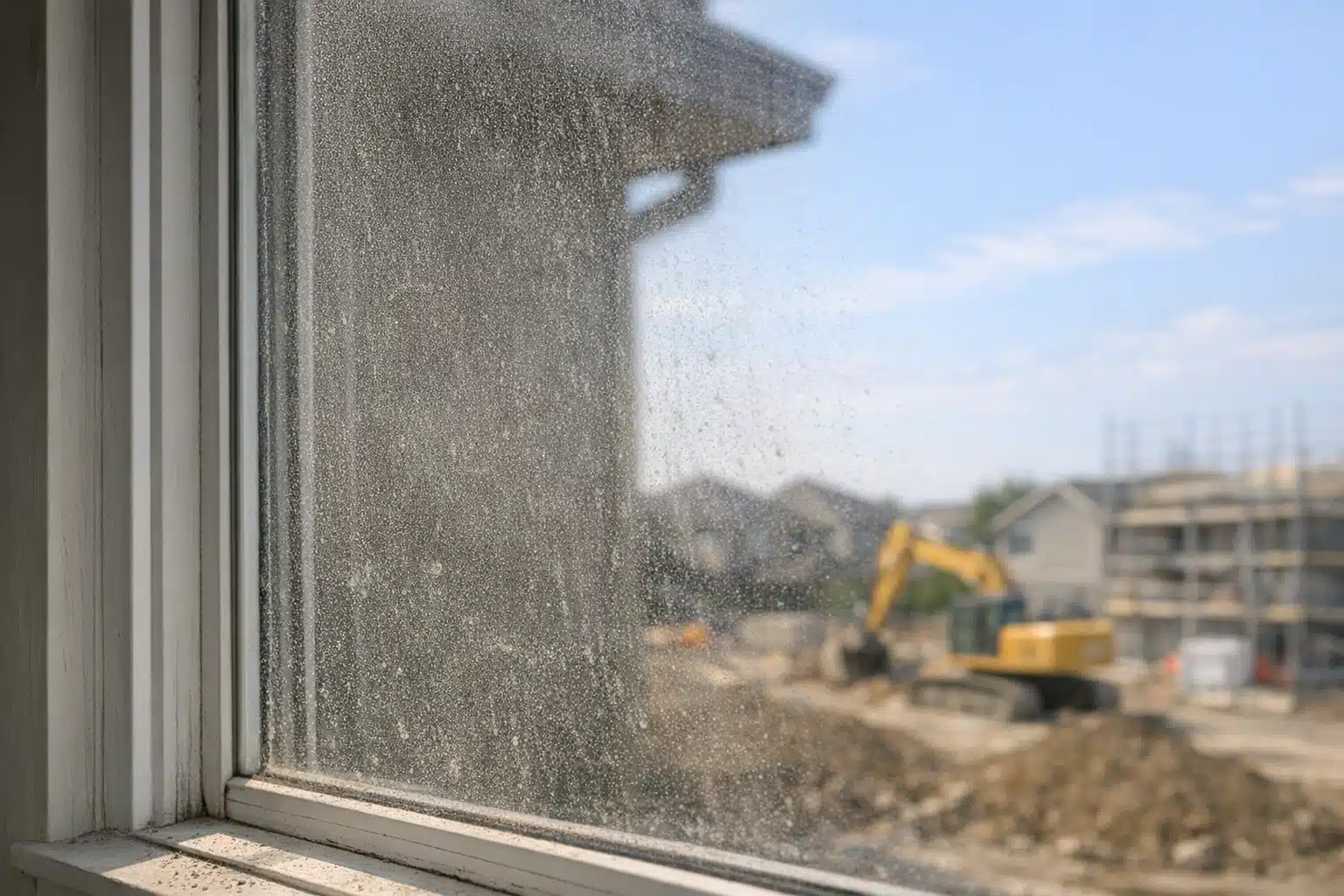
Construction dust does not wash off like regular dirt. Homes near active build sites collect a fine gray film that bonds to glass, and late summer heat bakes it harder onto the surface.
If you live near a build site, standard window cleaning methods can scratch your glass instead of clearing it. This post covers why construction debris behaves differently, and how to clean it safely in the hottest months of the year.
You will learn what construction dust does to windows, the right order of cleaning steps, and when to call for help.
Why Window Cleaning Near Construction Zones Is Different
Construction dust is not ordinary dirt. It contains cement particles, silica, drywall powder, and metal filings that behave like sandpaper on glass.
Dragging a dry cloth across this film grinds those particles into the surface. The result is a pattern of fine scratches that no amount of cleaning will remove later.
What Lands On Your Windows
Homes within a few hundred feet of active construction collect several kinds of debris:
- Cement and concrete dust — alkaline, abrasive, and bonds when wet then dried
- Silica sand — hard enough to scratch glass under pressure
- Drywall and plaster powder — chalky, leaves a stubborn white haze
- Metal grinding particles — can oxidize and leave rust spots
- Caulk and sealant overspray — sticks and resists water alone
Each type needs a different approach. Cement dust reacts to acidic conditions, and metal filings need to be lifted off, not wiped across the pane.
Why Late Summer Makes It Worse
Heat is the problem in August and September. High glass temperatures dry cleaning water in seconds, locking dust and minerals onto the surface.
Afternoon sun also bakes any residue into a hardened crust. Combined with summer humidity, this creates a film that resists a simple wipe-down.
The Risk of Cleaning Construction Dust the Wrong Way
Scratched glass is the most common damage near construction zones. Once silica grinds into the pane, the marks are permanent.
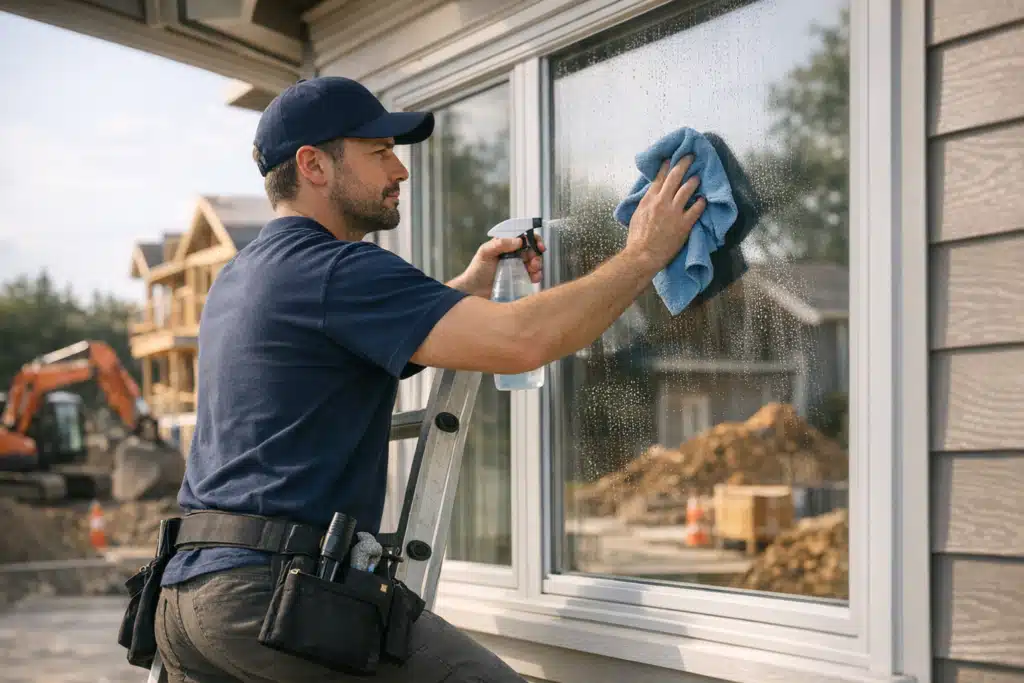
Cement dust causes a second issue. Left on the glass, it etches the surface over weeks, leaving a cloudy stain that looks like fog trapped inside the pane.
A few habits make the damage worse:
- Wiping dry glass before rinsing off loose grit
- Using a dirty cloth that already holds abrasive particles
- Scrubbing hard spots with a standard razor at the wrong angle
- Cleaning in direct midday sun during a heat wave
How to Clean Windows Near Construction Zones in Late Summer
The safe method removes abrasive particles before any wiping starts. Follow these steps in order.
- Clean early or late. Work before 10 a.m. or after 6 p.m. to avoid baked-on streaking from hot glass.
- Rinse first with plenty of water. Flood the glass to float off loose silica and cement dust before touching the surface.
- Use a dedicated bucket and clean mop. Rinse your tools between panes to avoid reintroducing grit.
- Apply a mild acidic cleaner for cement haze. A diluted vinegar mix helps break cement film. Test a corner first.
- Lift stuck debris with a soft scraper. Keep the blade flat and wet. Never push a dry razor across the pane.
- Squeegee in overlapping strokes. Wipe the blade clean after each pass to prevent dragging particles back.
- Dry edges with a clean microfiber cloth. Separate cloths for washing and detailing keeps grit away from the glass.
The rule that matters most: never wipe dry glass that has construction dust on it. Always flood and float the debris away first.
Tools That Make a Difference
The right equipment lowers the scratch risk sharply:
- Soft natural-bristle brush for loosening dust without pressure
- Purified or deionized water that dries without spots in hot weather
- New scraper blades swapped out at the first sign of nicks
- Two-bucket method to keep rinse water clean
Purified water matters most in late summer. Tap water leaves mineral spots when it dries fast on hot glass.
Interior vs. Exterior Cleaning Near a Build Site
Both sides of the glass collect construction film, but for different reasons. Exterior panes face direct dust exposure from the site.
Interior glass picks up a thin haze when dust drifts in through open windows and vents. Each side needs a separate approach.
Exterior Glass
Outside panes hold the heaviest cement and silica load. These need the full rinse-first method and frequent tool cleaning.
Interior Glass
Inside surfaces hold less grit but show fingerprints and chalky film. A damp microfiber cloth with light cleaner clears this safely.

 Posted on Google
How Often Should You Clean During Active Construction?
Homes beside active sites benefit from cleaning every four to six weeks. Letting cement dust sit longer risks permanent etching.
Once the build finishes, a single thorough cleaning restores the glass. Waiting until the project ends may leave stains that already set into the surface.
A simple schedule during construction:
- Weekly — rinse exterior glass with a hose to prevent buildup
- Monthly — full cleaning of interior and exterior panes
- At project end — deep cleaning to clear any remaining film
When to Call a Window Cleaning Team
Some construction film is too set-in for home methods. Cloudy etching, stuck sealant, and metal rust spots need specialized handling.
A trained crew uses commercial-grade purified water systems and knows the safe acid dilution for cement haze. They also carry fresh blades and clean tools for every job.
If your glass shows a haze that will not clear after rinsing and wiping, the film has likely bonded. At that point, pressure and the wrong cleaner make it worse, not better.
Key Takeaways
Construction dust near your home is abrasive and bonds fast in late summer heat. Rinse and float debris away before any wiping to avoid permanent scratches and etching.
Clean every four to six weeks during active work, and bring in help when film sets into the glass.
Ease Your Panes handles window cleaning for homes near construction zones with purified water and scratch-safe methods. Call or text (720)-477-3273, email info@easeyourpanes.com, or visit https://www.easeyourpanes.com to schedule a cleaning.
Sources
- OSHA – Crystalline Silica in Construction
- CDC NIOSH – Silica Dust Hazards
- EPA – Particulate Matter Basics


