

Timing Your Gutter Cleaning for Peak Rainfall in Your Area
Gutter cleaning should be timed 3-4 weeks before your region's heaviest rainfall rather than following a fixed calendar schedule. This approach prevents overflow damage to fascia, foundations, and siding during peak storm periods.
- Different climate zones have distinct peak rainfall periods - Pacific Northwest sees heaviest rain October through March while Colorado's wettest months are April and May with July thunderstorms. Southeast regions face the most rain June through September.
- Properties with heavy tree cover may need three cleanings annually instead of two. Overhanging maples or pines within 20 feet can double debris loads and require mid-season maintenance.
- Warning signs like water sheeting over gutter edges or gurgling downspouts indicate clogs that need immediate attention. Professional cleaning is recommended for two-story homes or steep roofs to avoid ladder injuries.
The best time to clean gutters is before your region's peak rainfall season arrives. You should clear all debris from gutters and downspouts a few weeks before the heaviest storms are expected in your area. This proactive approach prevents water damage from overflow during intense rain rather than dealing with problems after they occur.
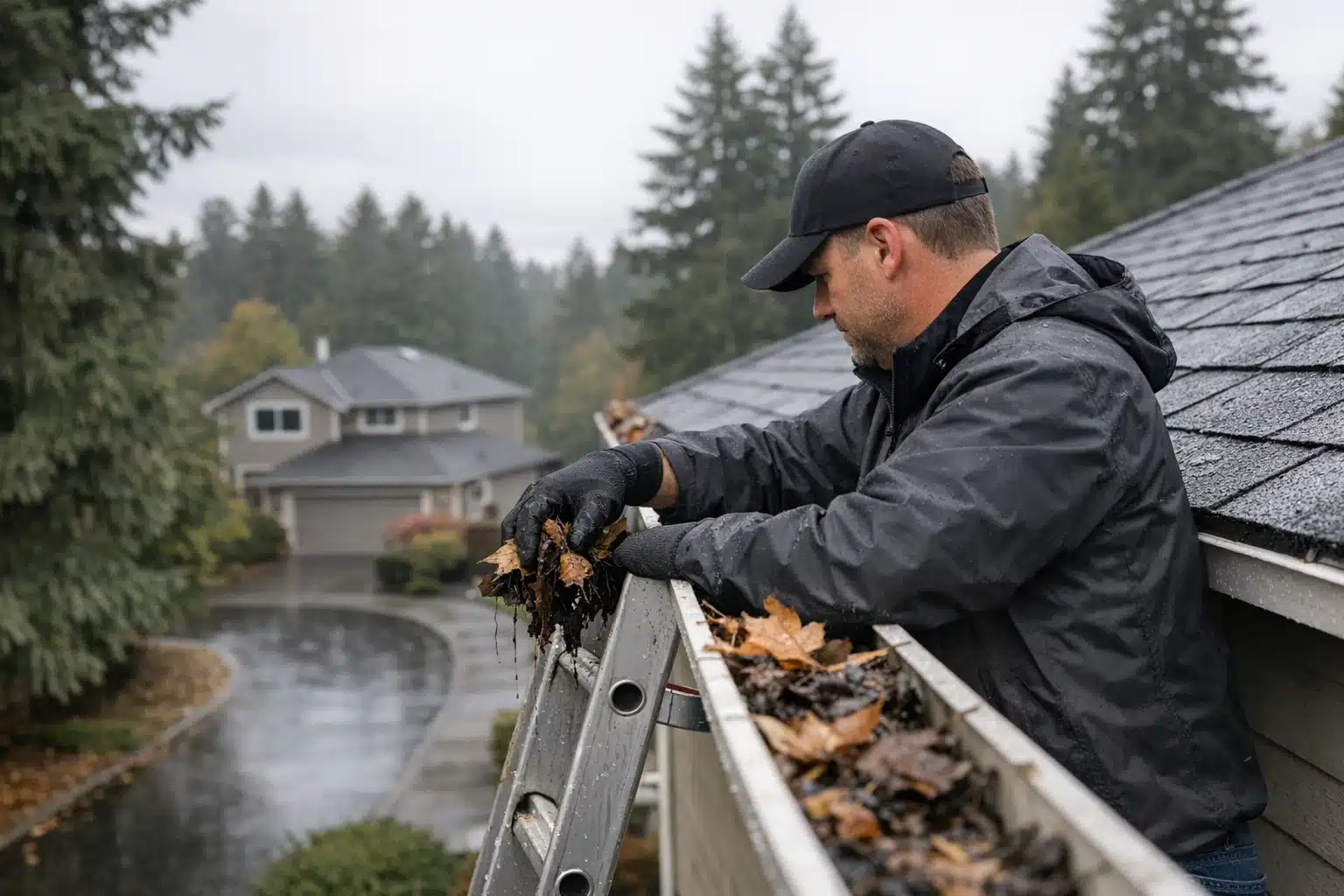
Clogged gutters cause the most damage during the exact weeks you can least afford it: your region’s heaviest rain. Getting your gutter cleaning timing right means clearing debris before those storms arrive, not scrambling after water spills over the edge.
This post shows how to match your cleaning schedule to local rainfall patterns. You will learn which months to target across different climate zones, how to read your own roof’s debris cycle, and when a mid-season cleaning pays for itself.
Why Gutter Cleaning Timing Should Follow Rainfall, Not the Calendar
Most homeowners clean gutters twice a year out of habit. A rainfall-based schedule works better because it lines up maintenance with actual risk.
A gutter clogged in July causes no damage if your area stays dry until October. The same clog becomes an overflow problem the moment heavy rain hits.
Gutter cleaning timing matters most in the 3-4 weeks before your wettest stretch. Clear channels during that window handle peak volume without backing up under the roofline.
What Overflow Actually Damages
Water that skips the gutter runs straight down your exterior wall. Over one heavy season, that causes visible problems:
- Fascia rot where trapped water sits against wood trim
- Foundation pooling that seeps into basements and crawlspaces
- Ice dams in cold zones when clogs freeze and back up under shingles
- Stained siding from mineral-laden runoff sheeting down walls
Each of these costs far more to repair than a scheduled cleaning.
Matching Gutter Cleaning Timing to Your Climate Zone
Peak rainfall lands in different months depending on where you live. Below are the patterns we see most, with the cleaning window that fits each.
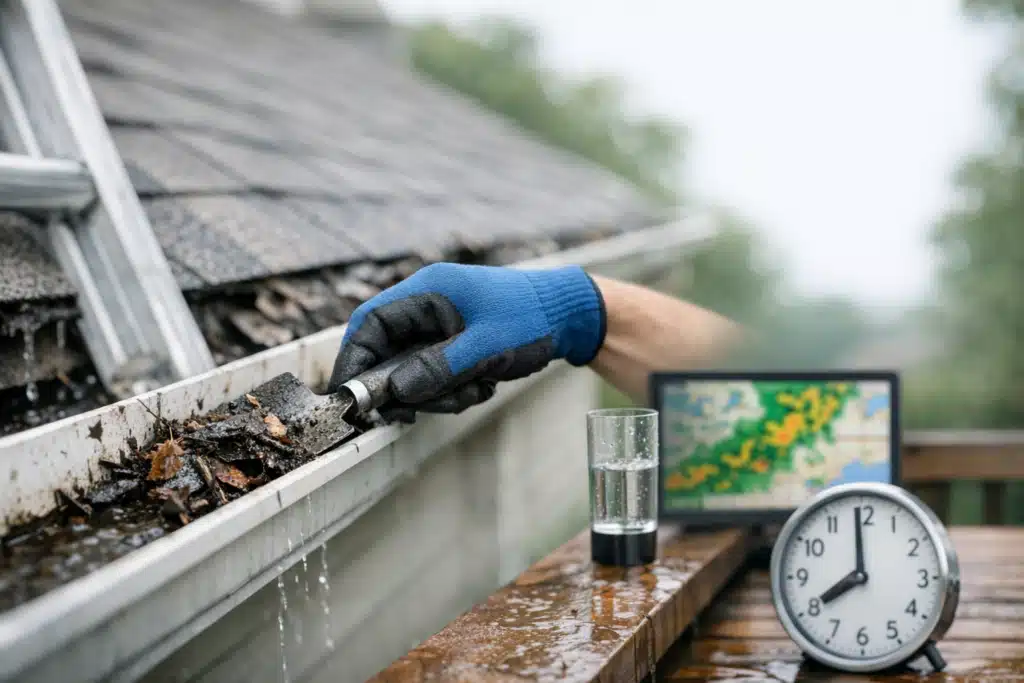
Pacific Northwest and Coastal West
Rain concentrates from October to March, with November through January carrying the heaviest loads. Clean in early October to catch the season fresh.
A second cleaning in late December clears the leaf drop that piles up mid-storm-season. Douglas fir and cedar needles are the usual culprits here.
Front Range and Mountain West (Colorado)
The Denver metro sees its wettest stretch in April and May, with a second spike from July thunderstorms. Snowmelt adds runoff on top of spring rain.
Clean in late March before spring moisture arrives. A follow-up in early July clears cottonwood fluff and pine debris ahead of monsoon-season storms.
Southeast and Gulf Coast
Summer brings the heaviest rain, June through September, with hurricane season stretching into October. Afternoon downpours test gutters daily.
Clean in late May before the summer pattern sets in. Schedule a second cleaning in September, ahead of peak hurricane activity.
Northeast and Midwest
Rain spreads more evenly, but spring melt and autumn leaf drop create the two biggest clog risks. Peak rainfall centers on spring, roughly April and May.
Clean in early spring after snow clears. The second and most important cleaning comes in late November, once leaves have fully dropped.
How to Read Your Roof’s Own Debris Cycle
Regional averages set the baseline. Your specific property adjusts it.
Two houses on the same street can need different schedules based on tree cover. Track these signals to fine-tune your gutter cleaning timing:
- Count your overhanging trees. A single large maple or pine within 20 feet doubles your debris load.
- Note your dominant species. Pines and firs shed year-round; oaks and maples dump heavily over a few weeks.
- Check downspout flow during light rain. Weak flow or trickling from seams means partial blockage already exists.
- Watch for granule buildup. Shingle grit in gutters signals roof aging and adds to sediment.
- Inspect after the first hard rain. Overflow points reveal where clogs form fastest.
Homes under heavy pine cover may need three cleanings a year rather than two.
The Case for a Mid-Season Cleaning
One cleaning before peak rainfall handles most homes. Properties with dense tree cover benefit from a second pass during the wet stretch itself.
Consider a Colorado home surrounded by cottonwoods. A March cleaning clears winter debris, but cottonwood seed drop in June refills the gutters before July storms.
A late-June cleaning catches that refill. Skipping it means the heaviest thunderstorms hit gutters already half-full.
Signs You Need an Extra Cleaning
- Water sheets over the front edge during moderate rain
- Plants or seedlings sprout in the gutter channel
- Downspouts sound clogged or gurgle instead of draining
- Visible debris mounds sit above the gutter lip
Any one of these means the channel is already compromised.

 Posted on Google
A Month-by-Month Framework for Peak Rainfall Prep
Use this as a starting point, then shift dates to fit your local rain calendar.
- 60 days before peak rainfall: Inspect gutters and downspouts for early debris and loose fasteners.
- 30 days before peak rainfall: Complete a full cleaning and flush test with a hose.
- During peak season: Do a quick visual check after the first major storm.
- Mid-season: Clean again if tree cover is heavy or flow has weakened.
- End of wet season: Clear residual debris and confirm downspouts drain away from the foundation.
This rhythm keeps water moving when it matters and spares your walls and foundation.
When to Call a Professional Instead of Climbing the Ladder
Ground-level gutters on a single story are within reach for many homeowners. Two-story homes, steep roofs, and icy conditions change the math.
Falls from ladders send thousands of people to emergency rooms each year. The cost of a cleaning is small next to a hospital visit.
A trained crew clears the full channel, flushes downspouts, and spots damage you might miss from the ground. That check often catches loose fascia or separated seams before rain exposes them.
Key Takeaways
The best gutter cleaning timing lands in the weeks just before your area’s peak rainfall, adjusted for the trees over your roof. Most homes need two cleanings a year; heavy tree cover pushes that to three.
Track your downspout flow and first-storm overflow points to fine-tune the schedule. Getting ahead of the rain protects your fascia, siding, and foundation from the damage clogs cause.
Want your gutters cleared before the next wet season hits? Contact Ease Your Panes at (720)-477-3273, text the same number, or email info@easeyourpanes.com to schedule a cleaning matched to your local rainfall.
Sources
- National Weather Service – Climate and Past Weather Data
- NOAA – Precipitation Education Resources
- U.S. Consumer Product Safety Commission – Ladder Safety News Releases




