

Why Hard Water Stains Are Worse in Dry Seasons
Hard water stains worsen during dry seasons because low humidity and heat speed up evaporation, concentrating minerals on glass surfaces. Without rain to rinse deposits away, minerals bond faster and can etch the glass permanently.
- Hard water leaves calcium and magnesium deposits that form in two stages - surface deposits that wipe off early, then bonded scale that chemically etches glass if left too long.
- Common causes include lawn sprinkler overspray, pressure washing runoff, and hose rinsing - each drop leaves marks instead of evaporating cleanly in dry conditions.
- Prevention includes aiming sprinklers away from windows, watering early morning, rinsing overspray quickly, and scheduling regular cleaning before deposits bond to the glass.
Hard water stains become more severe during dry seasons because low humidity causes water to evaporate faster from glass surfaces. When mineral-heavy water dries quickly, it leaves behind concentrated deposits of calcium and magnesium. This rapid evaporation process results in more visible white, cloudy buildup on windows and glass compared to humid conditions.
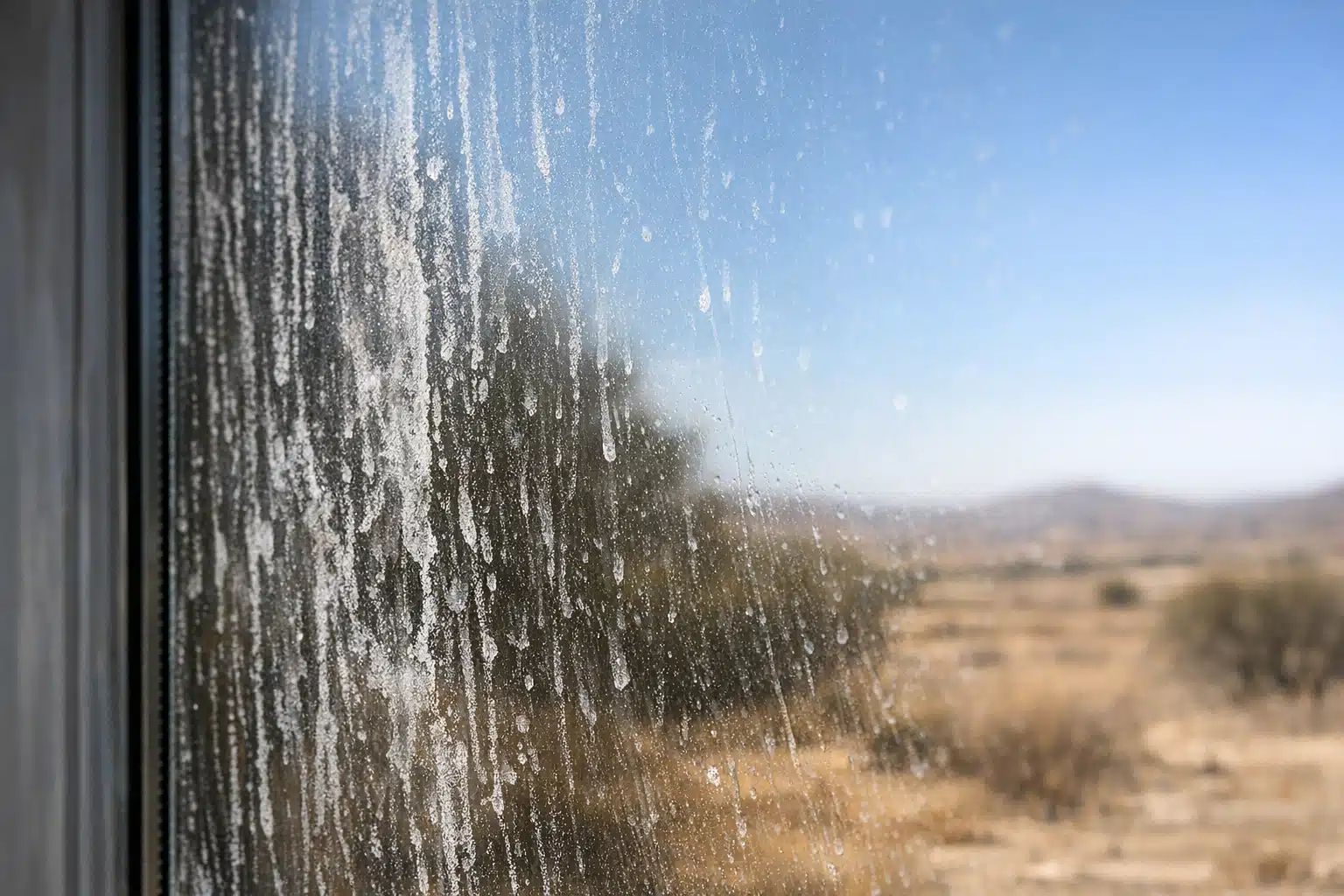
Hard Water Stains Get Worse When the Air Dries Out
Hard water stains are the white, cloudy deposits left on glass after mineral-heavy water dries. They worsen during dry seasons because low humidity speeds up evaporation. Faster evaporation leaves more minerals behind on the pane.
If your windows look chalky every summer or every winter cold snap, the dry air is part of the cause. This post breaks down why that happens and what to do about it.
You will learn how local water hardness and dry climate work together to etch and cloud your glass. You will also see which fixes work and which ones waste your time.
What Hard Water Stains Are Made Of
Hard water carries dissolved minerals, mostly calcium and magnesium. When that water dries on glass, the water leaves but the minerals stay. The leftover deposit is what you see as a stain.
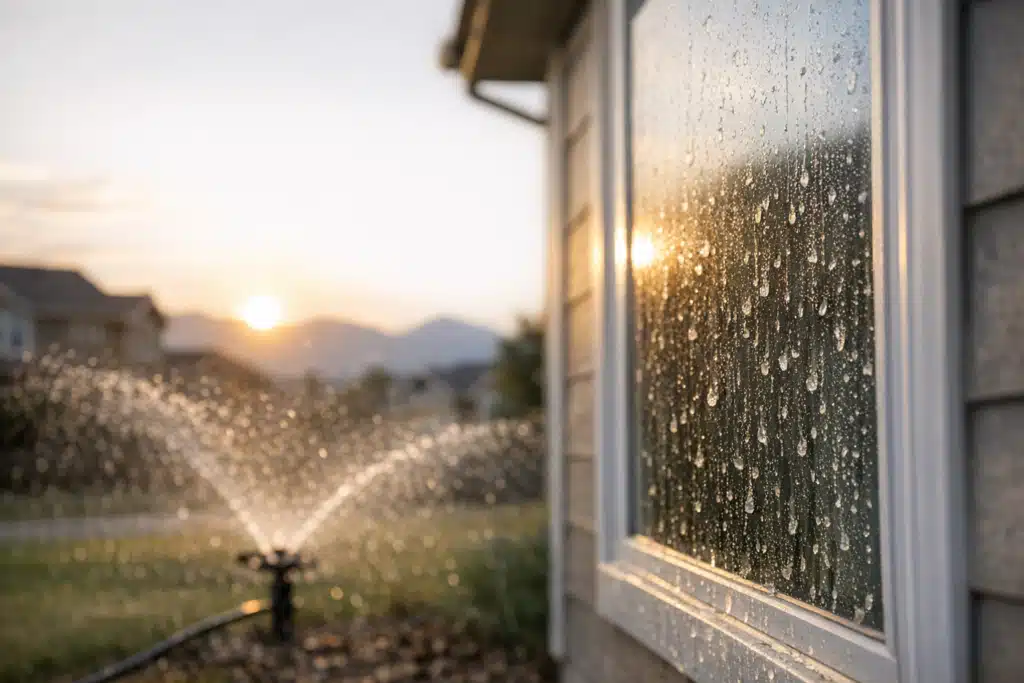
Along Colorado’s Front Range, water tends to run moderately hard to very hard. Municipal water here can measure well above 7 grains per hour of hardness. That mineral load shows up fast on untreated glass.
The Two Stages of a Stain
A hard water stain forms in two phases:
- Surface deposit: Minerals sit on top of the glass and wipe off with effort early on.
- Bonded scale: Left too long, deposits chemically bond to the silica in the glass and etch it.
Dry seasons push stains from stage one to stage two faster. Less ambient moisture means the deposit never gets diluted by humidity or rain.
Why Dry Seasons Make Hard Water Stains Worse
Low humidity is the main reason hard water stains spike in a dry season. The science comes down to evaporation speed and mineral concentration.
Faster Evaporation Means More Concentrated Minerals
In humid air, water on glass lingers and spreads thin before drying. In dry air, the same water flashes off in minutes. That quick dry-down concentrates the minerals into a tighter, thicker deposit.
A sprinkler splash that might rinse clear in June can bake a ring onto glass in a dry August afternoon. The faster the water vanishes, the harder the stain sets.
No Rain to Rinse the Glass
Rain acts as a mild, mineral-free rinse for your windows. Dry stretches remove that free cleaning. Deposits build layer on layer with nothing to wash them away.
Front Range winters bring long dry, windy spells. Those conditions let dust and minerals accumulate between the rare precipitation events.
Sun and Heat Speed Up Bonding
Direct sun heats the glass and drives evaporation even faster. Hot, dry, sunny days are the worst combination for mineral scale. South- and west-facing windows take the heaviest hit.
The Usual Culprits Behind Stained Windows
Most hard water staining traces back to a few repeat offenders. Knowing the source helps you stop the damage.
- Lawn sprinklers: Overspray hits ground-floor glass daily during dry-season irrigation.
- Pressure washing runoff: Mineral water sprayed near windows dries fast in low humidity.
- Hose rinsing: Washing a car or deck sends spray onto nearby panes.
- Hard-water misting systems: Patio foggers coat glass with fine mineral droplets.
- Roof and gutter runoff: Mineral-laden drips land on windows below.
During dry months, each of these drops leaves a mark instead of evaporating cleanly.
Why Dry-Season Stains Are Harder to Remove
A stain that sets in dry air bonds tighter than one left in humid weather. The deposit dries denser and reaches the etching stage sooner.
Once minerals etch the silica surface, basic cleaning will not fix it. The glass itself is pitted. At that point you need polishing compounds or glass restoration, not a squeegee.
Why Vinegar Alone Often Fails
Household vinegar can lift fresh surface deposits. It struggles with thick, dry-season scale. The acid gets neutralized before it dissolves the full layer.
Scrubbing harder with the wrong pads can scratch the glass permanently. Abrasive scouring makes a stain job into a replacement job.

 Posted on Google
How to Prevent Hard Water Stains During a Dry Season
Prevention beats restoration every time. A few habits keep minerals off your glass when the air is dry.
- Aim sprinkler heads away from windows. Check the spray pattern after any landscaping change.
- Water early in the morning. Cooler air slows evaporation and reduces deposit concentration.
- Rinse accidental overspray fast. Wipe glass before the droplets flash dry in the sun.
- Install a hose-end filter for outdoor washing. It cuts the mineral content hitting the panes.
- Schedule cleaning before deposits bond. Regular removal stops stage-one stains from etching.
On the Front Range, timing cleaning around the driest stretches gives the best protection.
How Pros Remove Set-In Hard Water Stains
Removing bonded mineral scale takes the right acid strength and the right tools. The goal is to dissolve deposits without pitting the glass further.
Our crews at Ease Your Panes use graduated mineral removers matched to the deposit thickness. Light staining gets a mild treatment. Heavy, etched glass gets a controlled polishing step.
The Steps We Follow
- Test a small corner to gauge deposit depth.
- Apply a mineral dissolver sized to the stain.
- Agitate with non-scratch pads, never steel wool.
- Neutralize and rinse to stop acid activity.
- Polish etched areas if the silica is pitted.
Each window gets checked under angled light. Angled light reveals leftover haze that straight-on viewing hides.
Local Water Hardness and Dry Climate: A Double Hit
Colorado combines hard municipal water with a dry, sunny climate. That pairing makes window staining a year-round concern here. Few regions stack both problems as sharply.
Homes near heavy irrigation zones see the fastest buildup. New construction glass is especially at risk because fresh panes lack protective coatings. Catching stains early keeps restoration costs down.
Key Takeaways
Hard water stains worsen in dry seasons because low humidity and heat speed up evaporation, concentrating minerals on glass. Without rain to rinse, deposits bond and etch faster. Prevention and early cleaning keep your windows clear and protect the glass itself.
Clouded glass that will not wipe clean usually needs more than vinegar. For hard water stain removal matched to Front Range conditions, reach Ease Your Panes at (720)-477-3273, text the same number, or email info@easeyourpanes.com. Visit https://www.easeyourpanes.com to book a window assessment.
Sources
- USGS – Hardness of Water
- EPA – Secondary Drinking Water Standards
- NOAA – Humidity and the Atmosphere




