

Why Late Summer is Critical for Gutter Maintenance
Late summer is the ideal time for gutter maintenance because spring debris like seeds, pollen, and pine needles has already compacted into a dense layer that blocks water flow before fall leaves even arrive.
- By August, gutters collect maple seeds, pine needles, pollen, and roof grit that bakes into a concrete-like mat in summer heat. This hardened layer traps autumn leaves and causes overflow during storm season.
- Clogged gutters lead to fascia rot, foundation damage from water pooling near the home, and pest nesting before winter. Colorado's clay soils are especially prone to shifting when drainage fails.
- A two-visit schedule - late summer and late fall - keeps gutters clear year-round. The late summer visit handles heavy compacted debris while the fall visit becomes a quick touch-up after leaves drop.
Late summer is the ideal time for gutter maintenance because cleaning gutters before fall prevents months of buildup during harsh weather. Most homeowners wait until after leaves drop in late fall, but this timing means gutters remain clogged throughout the worst seasonal conditions. Addressing gutter care in late summer allows proper water drainage when you need it most.
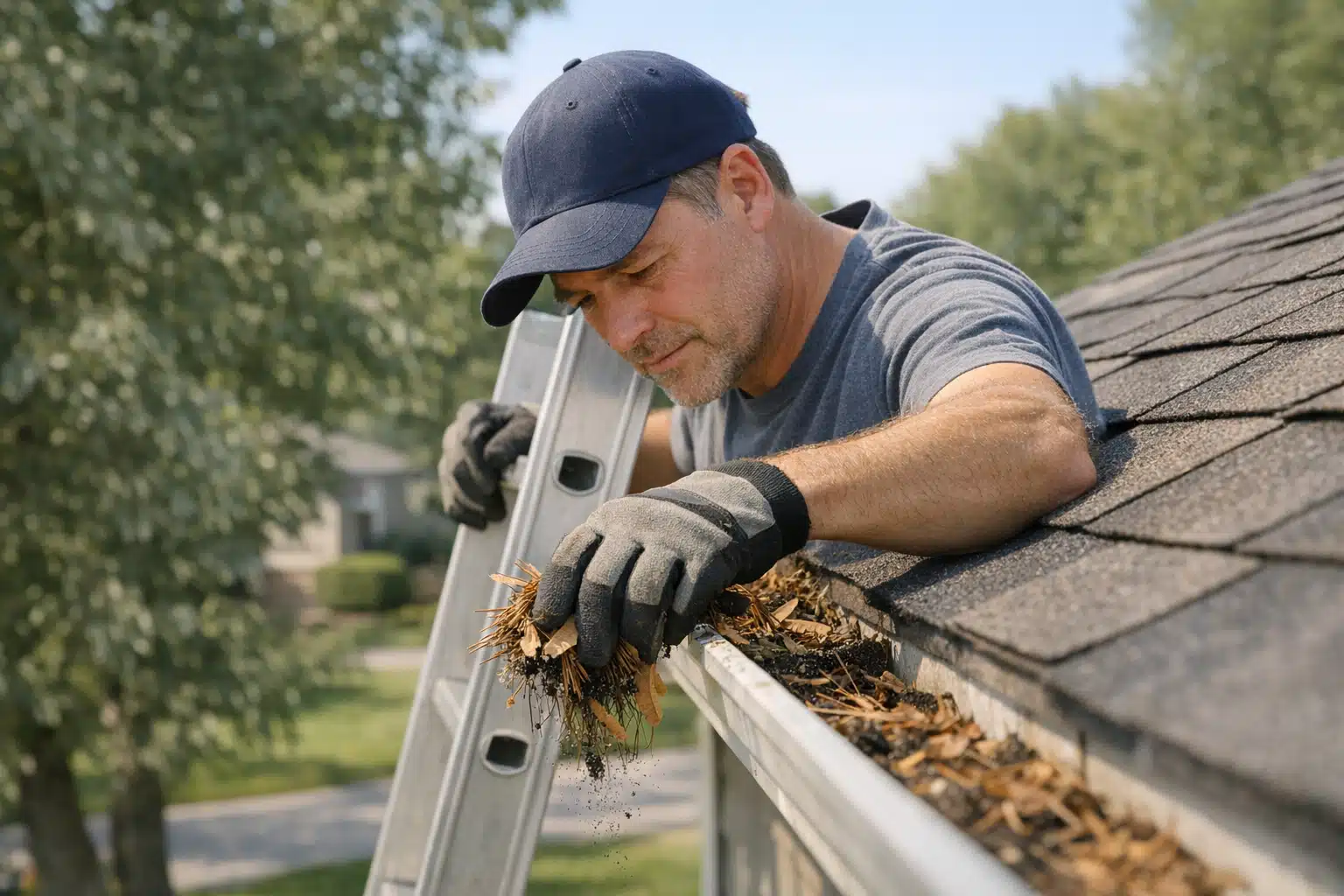
Late Summer is the Window Most Homeowners Miss for Gutter Maintenance
Most people schedule gutter maintenance in late fall, after every leaf has dropped. That timing leaves your gutters clogged for months during the worst weather of the year.
Late summer is the smarter checkpoint. By August and early September, spring growth has finished and seed pods, blossoms, and windblown debris have already piled up.
Below, you will learn what accumulates in your gutters by late summer, why clearing it early protects your home, and how to plan the two-visit schedule that actually keeps gutters clear year-round.
What Builds Up in Your Gutters by Late Summer
Gutters collect far more than autumn leaves. By late summer, a full season of growth has already dropped material into your troughs.
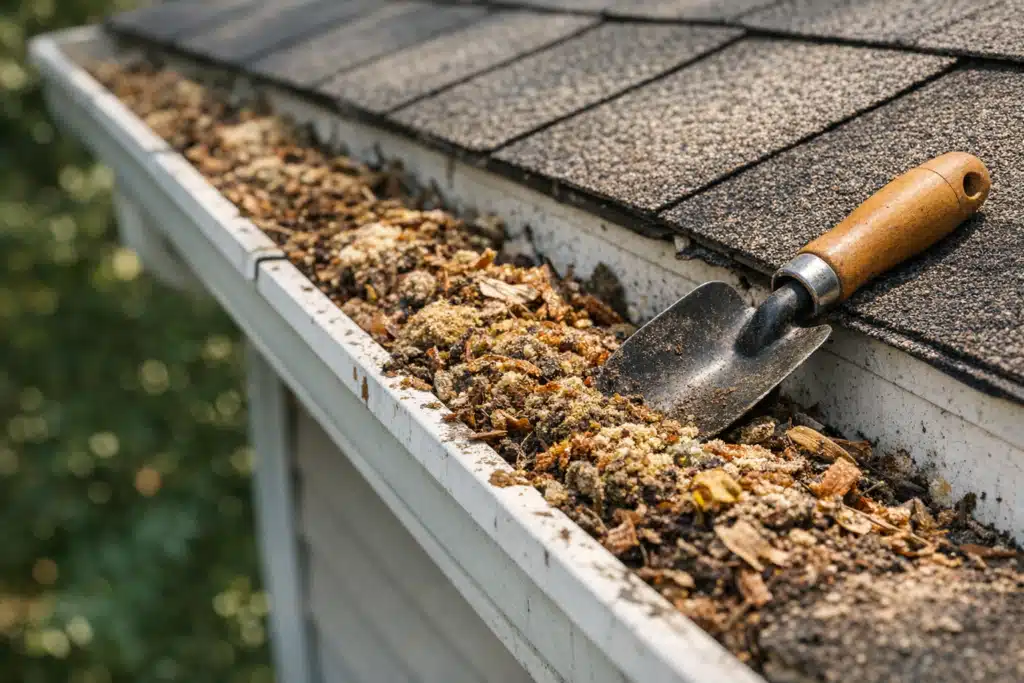
Homes in Colorado see a specific mix build up between May and August:
- Maple and cottonwood seeds that drop in late spring and lodge in downspouts
- Pine needles and spruce cones from surrounding evergreens
- Blossoms and pollen that harden into a paste after rain and heat
- Roof grit from asphalt shingles worn by summer sun
- Windblown dust and soil that settles into a sediment layer
This debris bakes in summer heat and compacts into a dense mat. Left alone, it becomes the base layer that traps every falling leaf come October.
Why Compacted Debris is Worse Than Loose Leaves
Loose autumn leaves rinse out with a hose. Baked-on spring debris does not.
When we clear gutters in September, we find sediment that has set like concrete. That hardened layer blocks water flow even before the first leaf falls.
Why Late Summer Gutter Maintenance Protects Your Home
Clearing gutters in late summer means your drainage works when you need it most. Colorado’s heaviest storm season runs from late summer into fall, and clogged gutters fail exactly when rain arrives.
Early clearing prevents several problems that compound over time.
Water Damage to Fascia and Soffits
Standing water in a clogged gutter rots the fascia board behind it. By the time you notice peeling paint, the wood underneath may already be soft.
A September clearing lets that wood dry out before autumn rain keeps it saturated.
Foundation and Basement Issues
Overflowing gutters dump water against your foundation. In Colorado’s expansive clay soils, that moisture causes shifting and cracks.
The Environmental Protection Agency notes that poor drainage near a foundation is a leading cause of basement moisture. Clear downspouts direct water away before the wet season starts.
Pest Nesting Before Winter
Wasps, mice, and birds build nests in debris-packed gutters during late summer. Clearing the troughs removes the shelter before these pests settle in for colder months.
The Two-Visit Schedule That Actually Works
One annual cleaning leaves your gutters clogged for half the year. A two-visit schedule keeps them clear across both major debris seasons.
Here is the timing we recommend for Front Range homes:
- Late summer visit (August–September): Clears spring seed debris, hardened sediment, and pollen buildup before storm season.
- Late fall visit (November): Removes the final leaf drop after deciduous trees are bare.
The late summer visit does the heavy lifting. It removes the compacted base layer, so the fall cleaning becomes a quick, low-cost touch-up.
Why Skipping the Late Summer Visit Costs More
Homeowners who wait until November pay for one hard cleaning against months of packed debris. That single visit takes longer and misses the storm-season protection entirely.
Splitting the work across two lighter visits protects your home when it matters and often costs less per visit.

 Posted on Google
How to Check Your Own Gutters in Late Summer
A quick ground-level inspection tells you whether your gutters need attention now. You do not need a ladder for the first checks.
Walk your home’s perimeter and look for these signs:
- Plant growth in the gutter — seedlings sprouting means soil has collected
- Sagging sections — the weight of wet debris pulls brackets loose
- Staining on the siding below gutter seams or joints
- Water marks on the fascia from past overflows
- Debris visible from an upstairs window looking down into the trough
If you spot any of these, your gutters are already carrying a summer’s worth of load. That load will only grow once leaves start falling.
When to Call Someone Instead of Climbing Up
Two-story homes, steep roofs, and older gutter systems are not worth the risk of a ladder. Falls from ladders send thousands of people to emergency rooms each year, according to the CDC.
Ground-level inspection is safe for anyone. Actual clearing on a two-story home is work to hand off.
Late Summer Gutter Maintenance Pairs Well With Window Cleaning
Late summer is the same window when exterior grime peaks on your glass. Pollen, dust, and hard-water spots accumulate over the dry months.
Scheduling gutter clearing and window cleaning together makes one trip cover both jobs. Our crews already work at the roofline for gutters, so reaching second-story windows adds little time.
This pairing gets your home’s exterior ready before autumn weather arrives.
Key Takeaways
Late summer gutter maintenance clears the hardened spring debris that fall cleanings leave behind and protects your home before storm season. A two-visit schedule keeps gutters flowing across both major debris periods with lighter, cheaper individual visits.
Ready to clear your gutters before autumn arrives? Call or text Ease Your Panes at (720)-477-3273, email info@easeyourpanes.com, or visit https://www.easeyourpanes.com to book your late summer service.
Sources
- US EPA – Mold Course Chapter 2: Why and Where Mold Grows
- Centers for Disease Control and Prevention – Facts About Falls
- U.S. Consumer Product Safety Commission – Ladder Safety




