

Why Clean Windows Enhance Outdoor Views in Late Spring
Late spring offers peak outdoor scenery, but pollen, rain spots, and grime build up on windows and mute the view. Clean windows restore color, sharpness, and brightness by removing light-scattering film.
- Pollen, sprinkler overspray, insect residue, and hard-water spots collect on glass in May and June - each layer scatters light and dulls what you see through the pane.
- Clear glass transmits close to 90 percent of visible light, but grime drops that number and flattens colors while blurring detail.
- DIY cleaning often fails in spring because warm sun dries cleaner too fast, and pollen-caked screens recontaminate glass quickly - both sides, frames, tracks, and screens need attention for lasting clarity.
Clean windows enhance outdoor views in late spring by removing the buildup of pollen, dust, and grime that accumulates on glass surfaces. This layer of debris acts like a filter that mutes colors and blurs details. When windows are properly cleaned, they allow you to see the full vibrancy of green foliage, blooming flowers, and golden evening light without distortion.
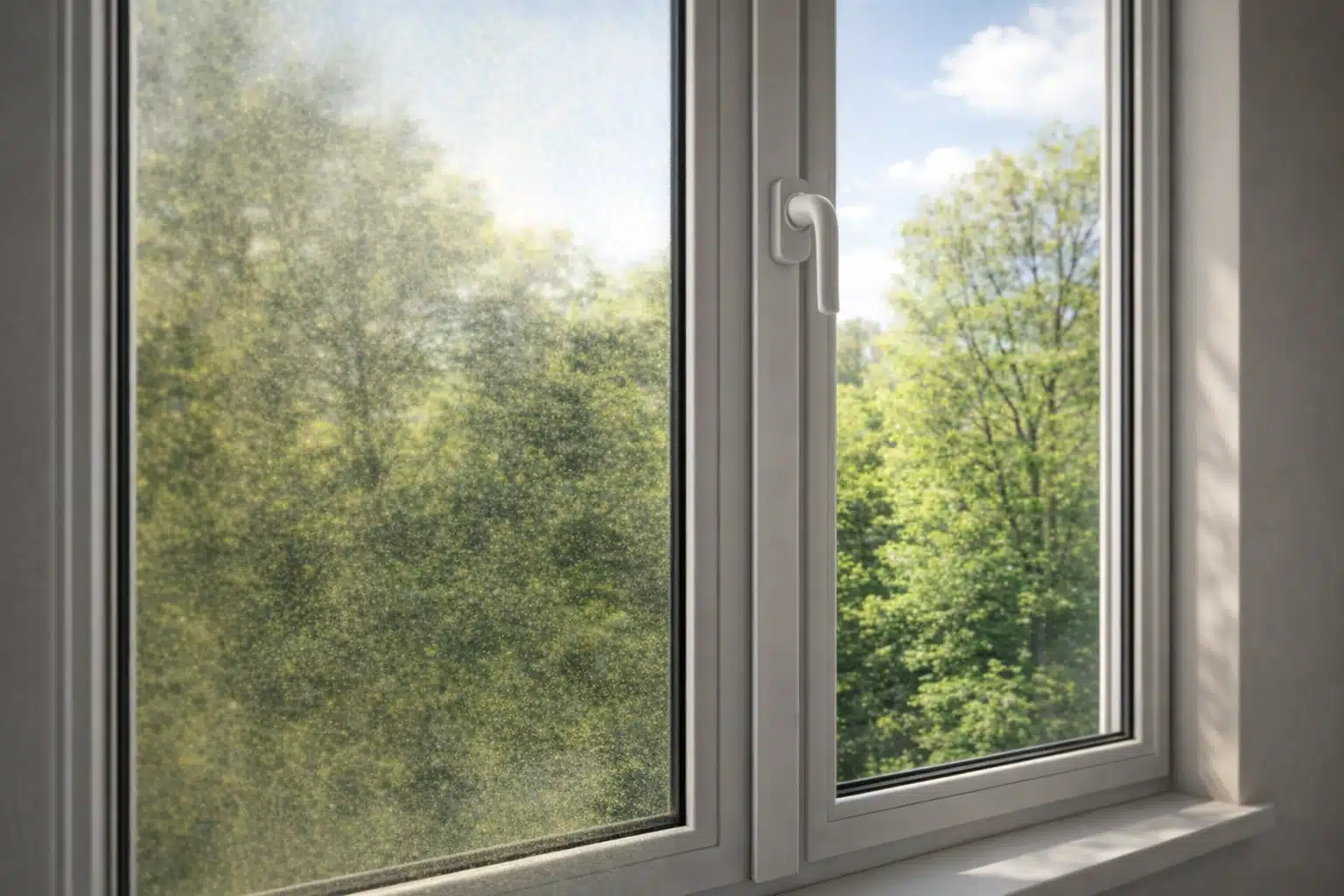
Late spring puts on a show outside your windows: green canopies, flowering shrubs, and long golden evenings. But a film of pollen and grime can mute all of it. Clean windows are the difference between a washed-out blur and a sharp, full-color view of the season.
This post breaks down why glass gets dirtiest right when the scenery peaks. You will learn what settles on your panes in May and June, how it dulls what you see, and how to get that clarity back.
Why Late Spring Is the Worst Time for Dirty Glass
Late spring loads your windows with more debris than almost any other stretch of the year. Pollen counts climb, storms kick up dust, and insects become active again.
The result is a layer you may not consciously notice. Your brain adjusts to the haze over weeks, so the view degrades without a clear moment of change.
What actually collects on your windows in May and June
- Tree and grass pollen — a fine yellow-green dust that bonds to glass, screens, and frames.
- Spring rain spotting — mineral residue left behind after droplets evaporate.
- Sprinkler overspray — hard-water marks near ground-floor windows once irrigation restarts.
- Insect residue — spider webs in corners and moth debris on outer sills.
- Construction and landscaping dust — from neighborhood projects that ramp up in warm weather.
Each layer scatters light differently. Pollen softens edges, and hard-water spots create bright pinpoints that pull your eye away from the scene beyond.
How Clean Windows Enhance Outdoor Views
Clean windows enhance outdoor views by removing the light-scattering film that flattens color and blurs detail. Glass is only as clear as its dirtiest layer allows.
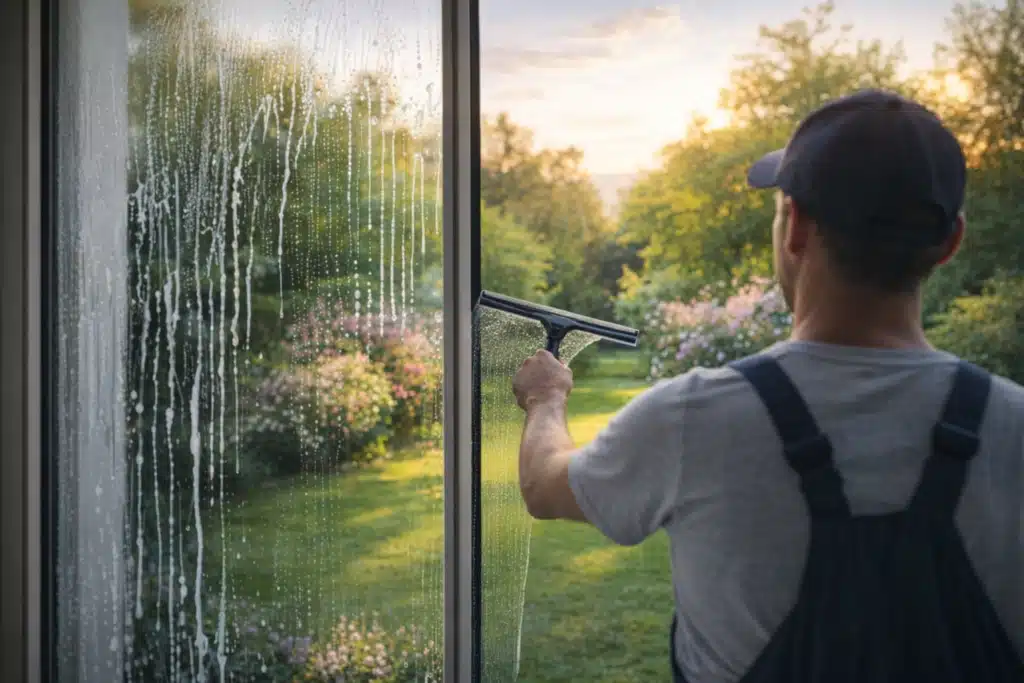
A pane coated in pollen acts like a soft filter. It cuts contrast, dulls greens, and grays out the blue of a spring sky.
The optics of a clean pane
Clear glass transmits close to 90 percent of visible light. Add grime and that number drops, taking your view’s brightness and sharpness with it.
Once the film is gone, three things happen at once:
- Color returns. Blooming dogwoods and fresh leaves read as saturated instead of muddy.
- Detail sharpens. You can pick out individual branches, birds, and distant ridgelines.
- Light increases. Rooms brighten because more daylight passes through the glass.
The change reads as instant when you compare a cleaned pane against a neighboring one. Most homeowners are surprised by how much color they had been missing.
The Recreational Payoff of a Clear View
Late spring is when your windows become recreation. Morning coffee on a screened porch, watching hummingbirds at a feeder, tracking a thunderstorm rolling in — all of it happens against your glass.
Dirty windows quietly tax those moments. You lean closer, squint, or step outside because the view indoors is not worth watching.
Where clear glass matters most this season
- Kitchen windows over a garden — where you check on tomatoes and flowers while cooking.
- Living room picture windows — the frame for sunsets that arrive later each evening.
- Home office panes — a green sightline that rests your eyes between screen time.
- Sunroom and patio doors — the boundary between indoor comfort and the yard in bloom.
A picture window facing a maple tree is a live painting in late May. Grime turns that painting into a smudge, and cleaning turns it back.
Interior Grime vs. Exterior Grime
Both sides of the glass dirty differently, and both cut your view. Knowing which is which helps you spot the real problem.
Outside the glass
The exterior takes the pollen, rain spotting, and sprinkler marks. Hard-water deposits are the toughest, since minerals etch and bond to the surface over time.
A quick rinse rarely removes them. They need proper technique and the right water, or they streak back within a day.
Inside the glass
Interior surfaces collect dust, cooking film, and fingerprints. Kitchen windows near a stove build a thin greasy layer that dulls afternoon light.
Cleaning one side and skipping the other leaves a persistent haze. A true clear view requires attention to both faces of every pane.

I totally recommend Ease Your Panes and will use them again.
 Posted on Google
Why DIY Cleaning Falls Short in Spring
Spring conditions work against a weekend cleaning attempt. Warm sun dries cleaner too fast, baking streaks into the glass before you can wipe them.
Pollen also returns quickly, so a rushed job looks hazy again within days. The window looks worse than before because streaks catch the low morning sun.
Common mistakes we see after a homeowner attempt
- Cleaning in direct sun — leaves dried cleaner and visible streaking.
- Reusing a dirty cloth — smears pollen paste across the pane.
- Ignoring frames and tracks — trapped debris washes back onto clean glass in the next rain.
- Skipping hard-water spots — regular cleaner cannot lift bonded minerals.
Screens are the missed step in most spring cleanings. Pollen-caked screens dust the glass again the moment wind picks up.
Getting the Full Season View Back
The goal is glass that disappears, leaving only the scene beyond it. That takes cleaning both sides, the frames, the tracks, and the screens in one pass.
A proper spring cleaning follows a clear order:
- Remove and wash screens so trapped pollen stops recontaminating the glass.
- Clean tracks and sills where debris and dead insects collect.
- Treat hard-water spots on the exterior before the general wash.
- Wash both glass faces with the sun off the surface.
- Detail edges and corners where film hides and streaks start.
Done right, one thorough cleaning holds up for most of the season. Your windows stay clear long enough to enjoy the late spring peak without a redo.
Key Takeaways
Late spring dirties your windows at the exact moment the view outside is at its best. Clean windows restore color, sharpness, and brightness, turning every pane into an open frame on the season.
Both sides of the glass, the screens, and the frames all matter for a truly clear result. Ease Your Panes handles that full cleaning so your late spring views stay sharp — call or text (720)-477-3273, email info@easeyourpanes.com, or visit https://www.easeyourpanes.com.
Sources
- Asthma and Allergy Foundation of America – Pollen Allergy
- U.S. Environmental Protection Agency – Introduction to Indoor Air Quality
- U.S. Department of Energy – Update or Replace Windows

