

How to Protect Your Windows from Summer Heat and Glare
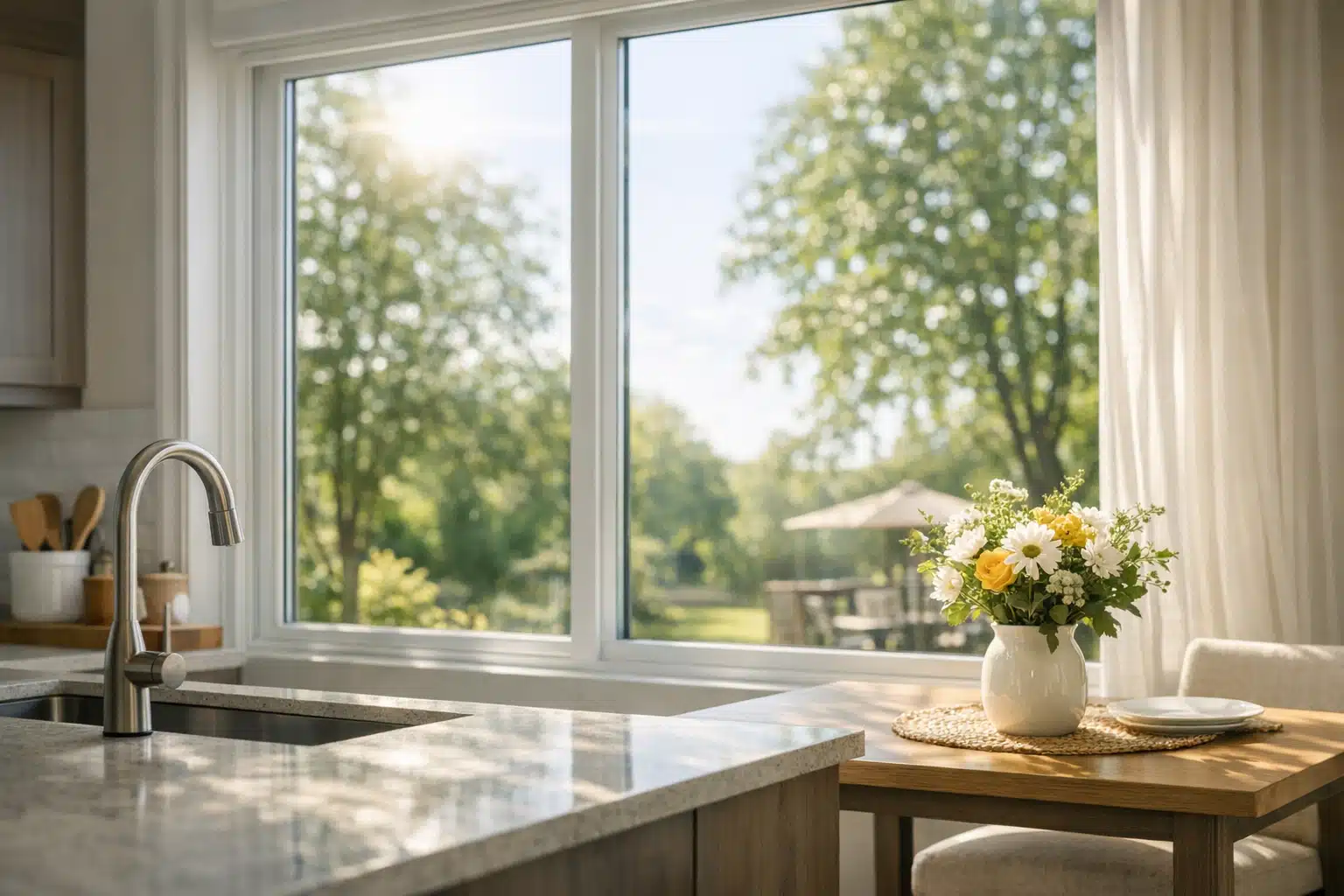
South-facing windows can push indoor temperatures up by 10 to 15 degrees on a hot July afternoon. That spike drives up cooling bills and fades your furniture. Good summer window protection keeps rooms cooler and shields your interior from sun damage.
This post covers the tactics that work: window films, exterior shading, glass condition, and treatment choices. Each one targets heat and glare in a different way.
Why Summer Window Protection Matters More Than People Think
Windows are the weakest point in your home’s defense against solar heat. Roughly 76% of sunlight hitting standard double-pane windows enters as heat, according to the U.S. Department of Energy.
That heat lands on your floors, couch, and countertops. It also forces your air conditioner to run longer.
Glare compounds the problem. Direct sun on a west-facing window at 5 p.m. can wash out a TV screen or make a home office unusable. Managing both heat and glare is what keeps a room livable during peak summer.
The Rooms That Suffer Most
West-facing and south-facing rooms take the hardest hit. In Colorado, where afternoon sun is intense at altitude, these rooms heat fast.
- West-facing living rooms: Brutal glare from 3 p.m. to sunset
- South-facing kitchens: Steady heat gain all day long
- Upper-floor bedrooms: Trapped heat rising from below
Start With Clean Glass
Clean windows reflect and transmit light more evenly than dirty ones. A film of dust and hard-water spots scatters sunlight, which makes glare worse, not better.
Mineral deposits from sprinklers etch into glass over time. Left alone, they create a permanent haze that no shade can fix.
We see this constantly on ground-floor windows near irrigation lines. Regular cleaning removes buildup before it bonds to the surface.
What Clean Glass Actually Does for Heat
Clean glass lets any applied film or coating perform as designed. Grime sitting on top of solar film blocks its reflective properties.
Streak-free windows also make natural light more pleasant. Even light means fewer harsh hot spots on your floor.
Window Films: The Most Effective Summer Window Protection
Solar window film is a thin layer applied to interior glass that rejects heat and reduces glare. Good films block up to 78% of solar heat while keeping most visible light.
Film works better than curtains for one reason: it stops heat at the glass. Curtains only block sunlight after it has already entered the room as heat.
Types of Film and What They Do
- Solar control film: Rejects heat and UV, moderate glare reduction
- Ceramic film: High heat rejection, no signal interference, clear view
- Tinted film: Strong glare control, darker appearance
- Low-e film: Reflects heat back in winter, blocks it in summer
Ceramic film costs more but keeps your view crisp. Tinted film saves money if you want maximum glare cut in a media room.
A Real Example
One client had a west-facing sunroom that hit 95 degrees by evening. After a ceramic film install, that same room stayed near 80 on identical days.
The family started using the space again. The film paid for itself in reduced cooling load within two summers.
Exterior Shading Beats Interior Shading
Blocking sun before it reaches the glass is the most effective heat strategy. Exterior shade stops heat outside your home entirely.
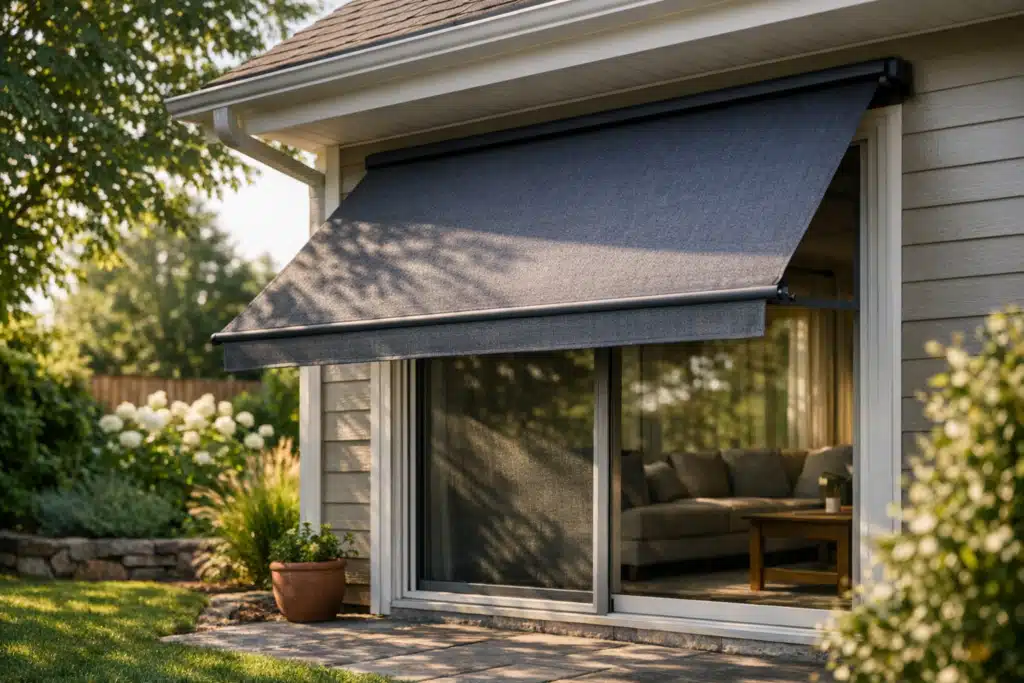
- Awnings: Cut south-facing heat gain by up to 65%
- Exterior solar screens: Block 80 to 90% of sun on the glass
- Deciduous trees: Shade in summer, bare branches let winter sun in
- Pergolas with slats: Adjustable shade over patio-facing windows
Trees take years to grow. Awnings and screens work the day they go up.
Where Exterior Screens Shine
Solar screens mount over the window exterior on a frame. They cut glare and heat without darkening the room the way heavy tint does.
They stand up to hail and wind better than most people expect. In our area, that matters during summer storm season.
Interior Treatments That Help
Interior treatments manage glare and add a second layer of insulation. They fall short on heat compared to film or exterior shade.
Ranked by Effectiveness
- Cellular shades: Trapped air pockets slow heat transfer
- Blackout curtains: Strong glare block, weak on heat already inside
- Reflective blinds: Bounce light back before full absorption
Cellular shades in the honeycomb style perform best. Their air chambers act like a thin wall of insulation.

 Posted on Google
How to Layer Your Summer Window Protection
The strongest results come from stacking methods. Each layer catches what the last one missed.
- Clean the glass so light transmits evenly and film adheres properly
- Apply solar or ceramic film to reject heat at the glass
- Add exterior shade on your hottest west and south windows
- Use cellular shades indoors for glare control during peak hours
You do not need all four on every window. Target the rooms that overheat and address the rest with basic cleaning.
A Simple Priority Order
Fix your worst room first. A west-facing living room with afternoon glare gives you the biggest comfort gain per dollar.
North-facing windows rarely need film or shade. Save your budget for the sun-exposed sides.
Maintenance Keeps Everything Working
Solar film and screens lose performance when coated in dust and pollen. Summer brings both in heavy amounts.
Clean the glass and screens twice during the season. Spring and midsummer cleanings keep reflective surfaces doing their job.
Use a gentle method on filmed glass. Abrasive pads and ammonia cleaners can scratch or cloud the film surface over time.
Key Takeaways
Effective summer window protection combines clean glass, solar film, and exterior shade on your hottest windows. Film stops heat at the glass, exterior screens stop it before it arrives, and cellular shades control glare inside.
Start with your west and south rooms for the fastest comfort gain. Clean glass makes every other layer perform better.
Ready to cut heat and glare in your home this summer? Call or text Ease Your Panes at (720)-477-3273, email info@easeyourpanes.com, or visit https://www.easeyourpanes.com to schedule a window cleaning.

