

The Benefits of Solar Panel Cleaning in Late Spring
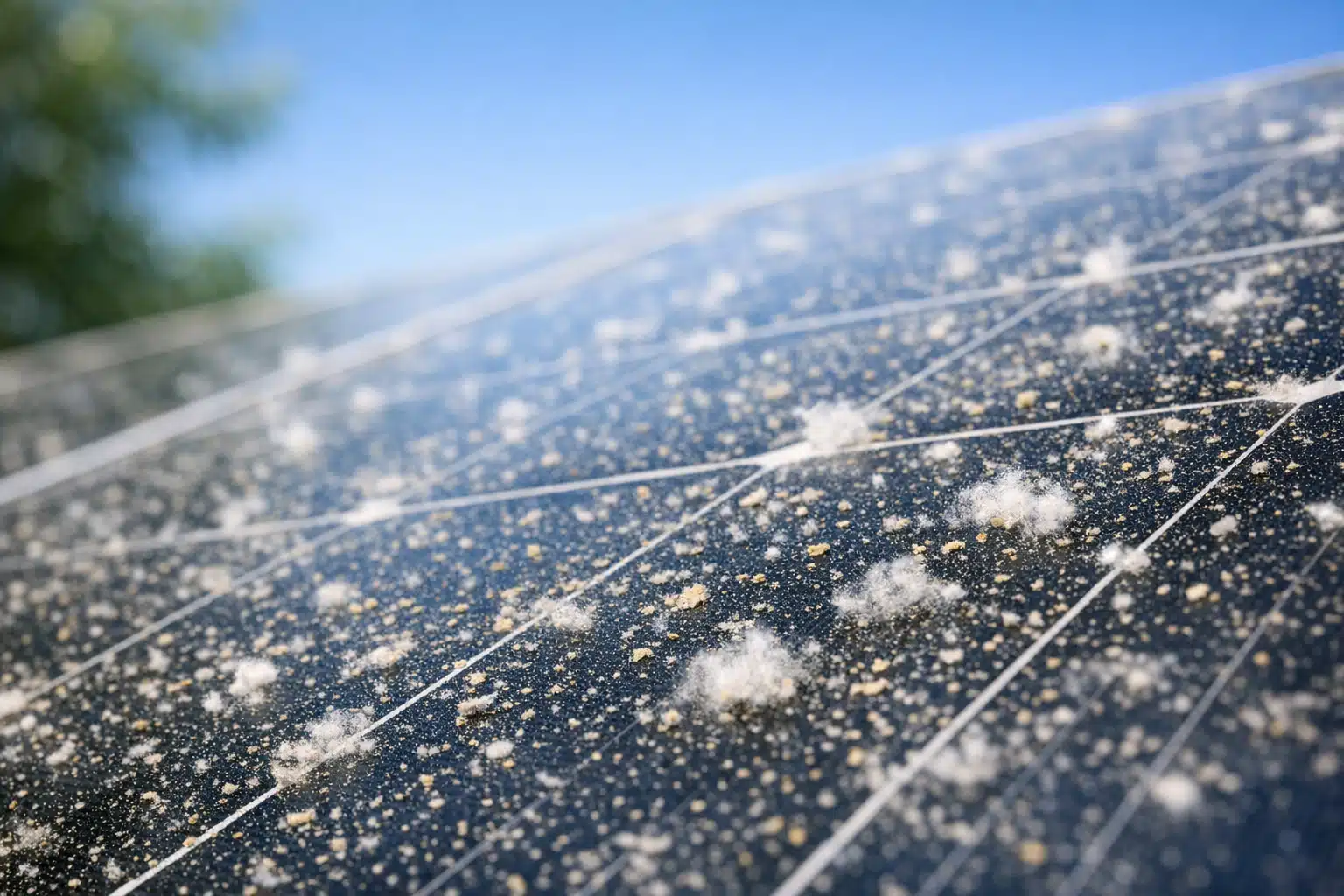
Solar panels lose measurable output when pollen, dust, and winter grime coat their surface. Late spring is the point where that buildup peaks, right as summer sun begins its strongest run of the year. A solar panel cleaning at this moment restores production before your system does its heaviest lifting.
This post covers why the weeks before summer matter most, how much dirt actually costs you, and what a proper clean involves.
Why Late Spring Is the Best Time for Solar Panel Cleaning
Late spring solar panel cleaning captures the largest efficiency gain of the year. Panels sit dirtiest at this point, and summer delivers the highest sunlight hours. Cleaning now means clean glass for the months that produce the most energy.
Winter and Spring Leave a Heavy Coating
Panels collect debris from two seasons by the time May arrives. Winter deposits mineral scale from rain and melting snow. Spring adds tree pollen, seed fluff, and airborne dust from dry, windy days.
In Colorado, cottonwood fluff and pine pollen are frequent culprits. Both stick to glass and bake on under warming temperatures. A film that looks light can still block a real share of sunlight.
Summer Sun Rewards Clean Glass
June, July, and August hold the longest daylight hours of the year. Every percent of blocked light during summer costs more kilowatt-hours than the same film in December. Cleaning before this stretch turns each sunny day into full production.
How Much Dirty Panels Cost You
Soiling reduces solar output by roughly 5 to 25 percent depending on buildup and climate. Dry, dusty regions with little rain sit at the higher end. That range translates into real dollars off a summer electric bill.
Here is a rough picture for a 7 kW home system in peak summer:
- Clean panels: full rated output during peak sun hours
- Light soiling (5%): a noticeable dip you may not spot on the meter
- Heavy pollen and dust (15-20%): hundreds of kilowatt-hours lost across the season
Rain does not fully clean panels either. It leaves streaks and concentrates dust at the lower edge of each cell. That bottom-row grime shades the row above it, dragging down the whole string.
What Solar Panel Cleaning Involves
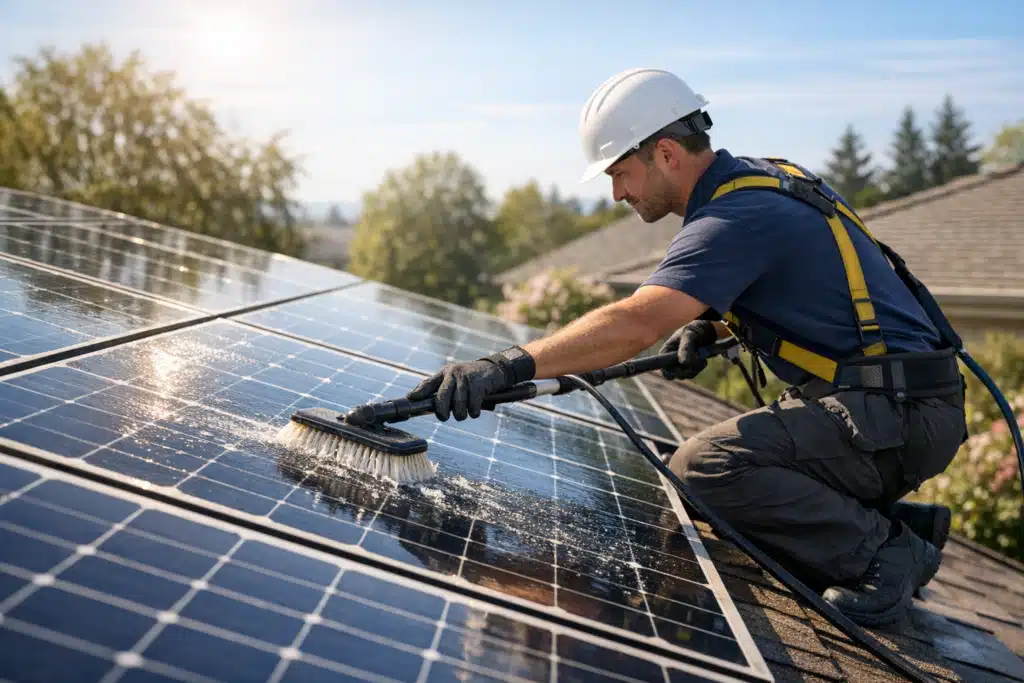
Solar panel cleaning is the removal of soiling using purified water and soft tools that protect the glass and anti-reflective coating. Done right, it uses no harsh chemicals and no abrasive pads. The method matters as much as the timing.
The Steps We Follow
- Inspect the array for cracks, loose clamps, and buildup patterns before touching the glass.
- Rinse with purified water to lift loose dust and pollen without scratching.
- Agitate stubborn spots using soft brushes designed for photovoltaic glass.
- Final rinse with deionized water that dries spot-free, leaving no mineral residue.
Deionized water is the detail most people miss. Tap water dries into white mineral spots that shade cells. Purified water leaves the surface clear as it dries in the sun.
Why Not Just Use a Garden Hose
A hose spreads water but rarely lifts baked-on pollen or bird droppings. It also leaves hard-water spotting once the sun dries the panels. Climbing a roof to reach an array adds real fall risk without the right footing and equipment.
Late Spring Maintenance Beyond the Cleaning
Late spring maintenance is a chance to catch problems before the heavy production season. A trained cleaner sees more than dirt while working across an array. Small issues found in May are cheaper than failures discovered in August.
Common things worth flagging during a visit:
- Hot spots or discoloration on individual cells
- Loose or corroded mounting hardware
- Bird nesting under panel edges, common in spring
- Cracked glass or delaminated coating from winter hail
Bird nests deserve extra attention. Spring is nesting season, and the gap under panels is prime real estate. Droppings and debris from a nest can shade cells and corrode wiring across the whole summer.

Ease Your Panes came out and gave me an estimate which was more than fair. 2 weeks later, Alex and Tony came out to clean the windows. It's a 2-story house and has lots of weird windows in hard to reach spots.
Tony and Alex did an AMAZING job. So much that I literally cannot tell that there is glass there anymore. And the best part? They cleaned out all the bug guts and junk between the window and the screen.
They did what I couldn't with my windex and paper towel. I will definitely use them again.
Thank you!
 Posted on Google
How Often Should Panels Be Cleaned
Most residential arrays benefit from cleaning once or twice a year. A single late-spring clean covers homes with light soiling and regular rain. Two visits suit properties near dirt roads, farms, or heavy tree cover.
Signs your array is due for a clean:
- Visible film, streaks, or pollen dusting on the glass
- A drop in output shown on your monitoring app
- Nearby trees dropping pollen, seeds, or sap
- More than a year since the last cleaning
Check your monitoring data against last summer’s numbers. A quiet decline of several percent usually points to soiling, not equipment failure.
The Timing Advantage in One Sentence
Cleaning in late spring means your panels enter their highest-producing months at full capacity. Wait until midsummer and you lose weeks of prime sunlight to a dirty surface. Clean before the peak, and every long summer day pays you back.
Key Takeaways
Late spring solar panel cleaning removes the year’s heaviest buildup right before summer’s strongest sun. Purified-water methods restore lost output and catch hardware or nesting issues early. The timing turns a routine clean into a season-long return.
Ease Your Panes handles solar panel cleaning across the front range with purified water and soft tools that protect your glass. Book your late-spring clean by calling or texting (720)-477-3273, emailing info@easeyourpanes.com, or visiting https://www.easeyourpanes.com.

