

How to Choose the Right Window Cleaning Tools for DIY Projects
This guide explains how to choose the right DIY window cleaning tools based on your window type and height, with a focus on avoiding common mistakes that cause streaks.
- The five basic tools needed are a brass or stainless squeegee, microfiber scrubber, bucket, low-suds soap, and lint-free cloths. A 12-inch squeegee handles about 80 percent of home windows.
- For second-story windows, use a telescoping pole or water-fed pole from the ground instead of balancing on a ladder. Water-fed poles with purified water dry spot-free without squeegeeing.
- Most streaks come from tool problems - worn rubber blades, dried gritty scrubbers, or cleaning in direct sun. Replace squeegee blades after 8 to 10 hours of use.
The right DIY window cleaning tools come down to five items: a brass or stainless steel squeegee, a microfiber scrubber, a bucket, low-suds soap, and lint-free cloths. Beyond these basics, your specific needs depend on your window height and glass type. Taller windows may require extension poles, while specialty glass might need gentler cleaning solutions.
What Tools Do You Need for DIY Window Cleaning?
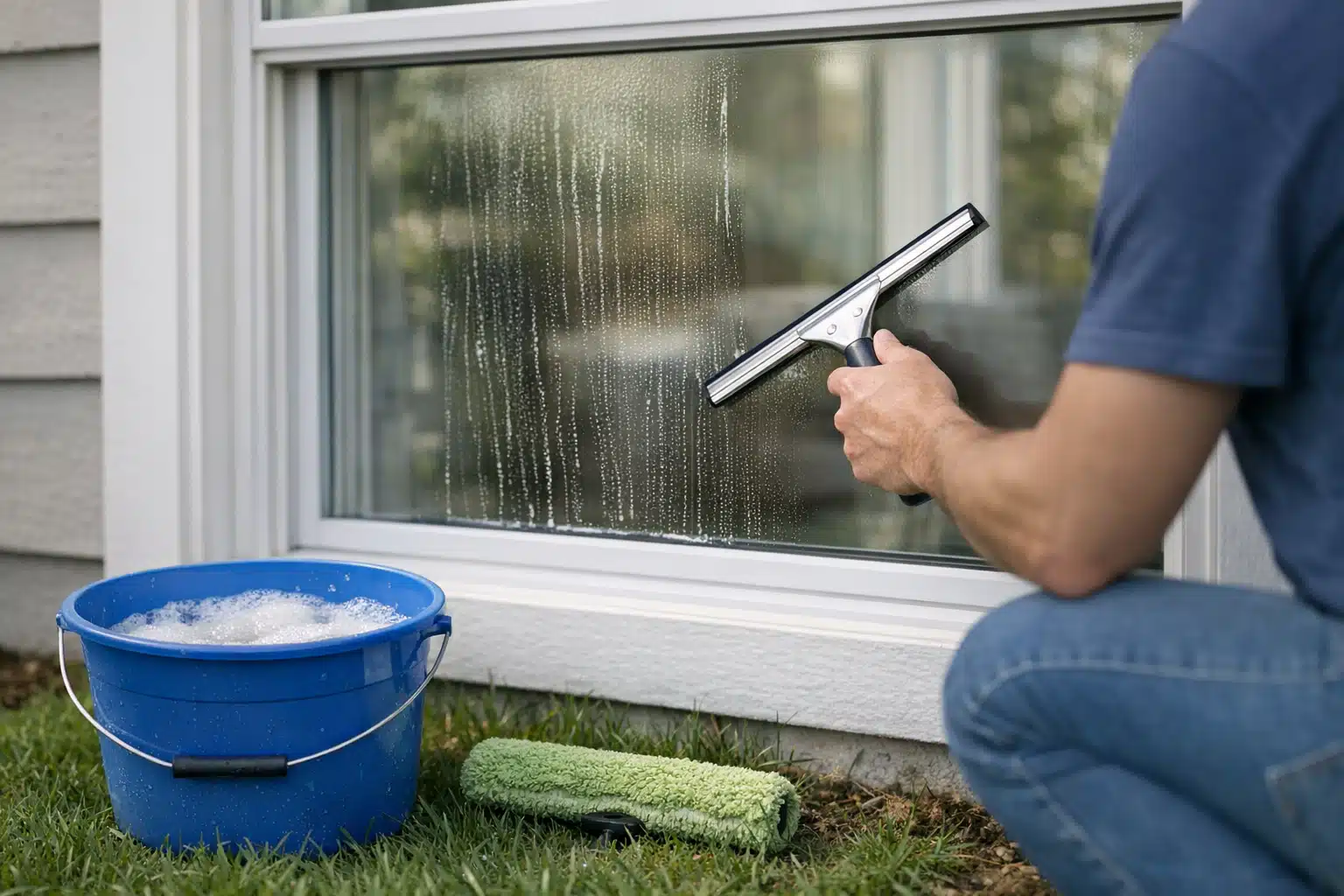
The right DIY window cleaning tools come down to five items: a brass or stainless squeegee, a microfiber scrubber, a bucket, a low-suds soap, and lint-free cloths. Everything past that depends on your window height and glass type.
Most homeowners buy the wrong squeegee first, then blame their technique for the streaks. This post walks you step by step through picking tools that match your actual windows, not a generic checklist.
You will learn which tools handle ground-floor glass, which reach second-story panes, and where cheap versions cost you more over time.
Start by Matching Tools to Your Window Type
Your glass and your reach decide your kit. A picture window over a kitchen sink needs different tools than a two-story bay window above a deck.
Ground-Floor and Interior Windows
Standard double-hung and casement windows need almost nothing exotic. A 12-inch squeegee, a scrubber, and a bucket handle most panes under six feet.
Interior glass gets less grime, so a spray bottle and microfiber cloth work fine. Save the bucket setup for exterior mud, pollen, and hard-water spray from sprinklers.
Second-Story and Hard-to-Reach Glass
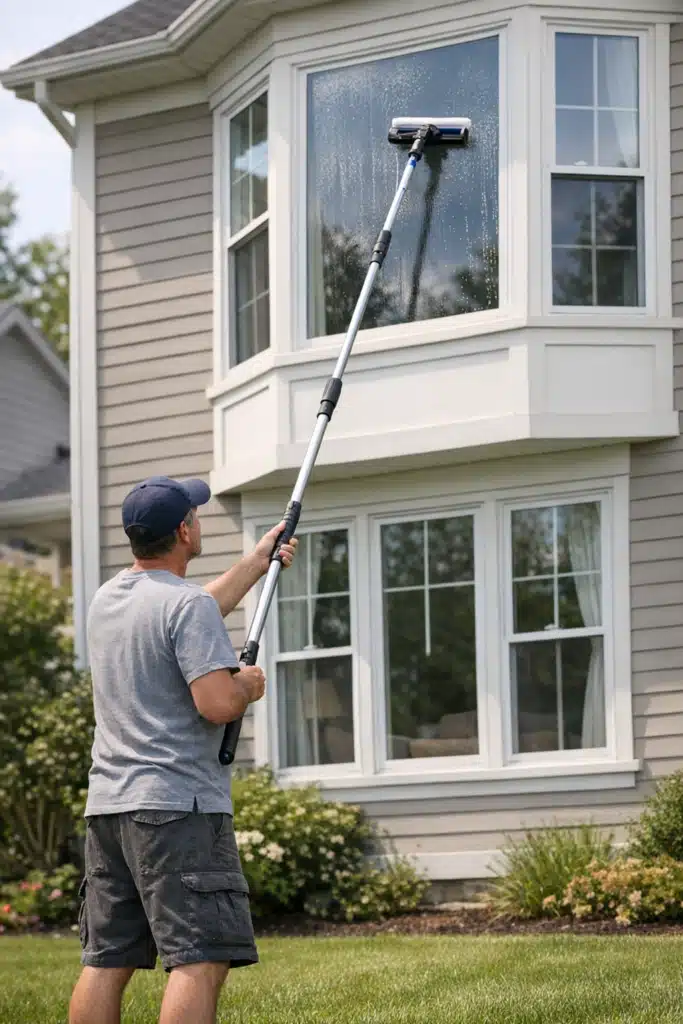
Windows above one story call for a water-fed pole or an extension pole with a swivel head. Never balance a squeegee on a ladder while stretching sideways.
A telescoping pole that reaches 20 feet lets you clean second-story exteriors from the ground. This is safer and faster than repositioning a ladder six times.
The Squeegee: Your Most Important Purchase
A squeegee is a handheld tool with a rubber blade that pulls water and cleaning liquid off glass in one stroke. It is the single tool that decides whether your windows dry clear or streaky.
Blade Material and Width
Buy a brass or stainless channel with a soft natural-rubber blade. Plastic channels warp, and the blade lifts unevenly after a few uses.
Match blade width to your panes:
- 6-inch blade: divided-light windows and small bathroom panes
- 12-inch blade: standard residential windows
- 18-inch blade: large picture windows and sliding doors
A 12-inch blade covers roughly 80 percent of home windows. Start there if you buy only one.
Replace the Rubber, Not the Whole Tool
Rubber blades dull after about 8 to 10 hours of use. A nicked blade leaves a thin line of water that dries into a streak.
Keep two or three replacement blades on hand. Flipping or swapping the rubber costs a dollar and fixes most streaking complaints.
Scrubbers and Washers That Lift Grime
A window washer is a T-bar with a sleeve that loosens dirt before you squeegee. Skipping this step drags grit across the glass and scratches it.
Microfiber sleeves hold more water and release dirt better than cotton. They also rinse clean instead of smearing residue back onto the pane.
For baked-on bird droppings or paint specks, add a plastic scraper with a fresh blade. Wet the glass first, then hold the scraper flat at a low angle.
Cleaning Liquids: Keep It Simple
You do not need a branded window formula. A few drops of dish soap in a gallon of water clears grime on most exterior glass.
Low-suds soap matters more than the brand. Heavy foam is hard to squeegee off and traps residue in the corners.
- Everyday dirt: a teaspoon of dish soap per gallon of warm water
- Hard-water spots: a 50/50 white vinegar and water mix, then rinse
- Greasy kitchen glass: add a second squirt of dish soap
Avoid ammonia products on tinted or Low-E coated glass. Ammonia can damage the coating over time.
Water-Fed Poles for Upper Windows
A water-fed pole feeds purified water up a telescoping shaft to a brush head. Purified water dries spot-free with no soap or squeegee needed.
This is how many home service crews clean upper stories from the ground. For a homeowner, a compact version pays off if you have several tall windows.
Two points before you buy one:
- Tap water leaves spots because of dissolved minerals. You need a filter or deionized water cartridge.
- Carbon-fiber poles weigh far less than aluminum at the same length. Your arms feel the difference at 20 feet.

 Posted on Google
Safety Tools You Should Not Skip
Ladder falls send thousands of people to the emergency room every year. Choosing the right reach tools removes most of that risk.
Keep this short list ready before any exterior project:
- A stabilizer bar that spreads ladder weight and keeps it off the glass
- Non-slip shoes with clean, dry soles
- A tool belt or bucket hook so both hands stay free on the ladder
If a window sits above a slope, stairwell, or roofline, use a pole from the ground instead. No pane is worth a fall.
Building Your First Kit on a Budget
A working DIY window cleaning tool kit costs about $40 to $60. Buying the best window cleaning tools upfront saves money over repeated cheap replacements.
Here is a starter list that handles a typical single-story home:
- 12-inch brass squeegee with two spare blades
- Microfiber T-bar washer
- Two-gallon bucket
- Dish soap and white vinegar
- Lint-free microfiber cloths for edges and corners
- An extension pole if any window sits above your reach
Add the water-fed pole later, only if second-story glass becomes a regular chore.
Common Tool Mistakes That Cause Streaks
Most streaks trace back to the tool, not the person. These are the errors we see most from homeowners.
- Reusing a dried, gritty scrubber that redeposits dirt
- A worn rubber blade that skips across the glass
- Wiping edges with a paper towel that sheds lint
- Cleaning in direct sun, which dries the water before you squeegee
Fix the tool first. Clean glass in shade, with a sharp blade and a fresh sleeve, and the streaks usually vanish.
When to Call a Pro Instead
DIY tools handle ground-floor and easy second-story glass. Steep rooflines, three-story homes, and post-construction cleanup need trained crews with the right access equipment.
Hard-water stains that resist a vinegar rinse also point to a specialist. Aggressive scrubbing can permanently etch the glass.
If a project feels unsafe or beyond a pole’s reach, that is the moment to hand it off.
Key Takeaways
Match your tools to your glass and reach, buy a brass squeegee with spare blades, and keep your cleaning liquid low-suds. The right DIY window cleaning tools cost little and remove almost every streak when used in shade.
For upper stories or stubborn hard-water spots, a trained crew is the safer choice. Ease Your Panes can handle the windows your tools cannot reach.
Call or text us at (720)-477-3273, email info@easeyourpanes.com, or visit https://www.easeyourpanes.com for a quote.
Sources
- U.S. Consumer Product Safety Commission – Ladder Safety
- Occupational Safety and Health Administration – Portable Ladder Safety
- U.S. Department of Energy – Window Types and Low-E Coatings

