

How Local Tree Pollen Affects Window Cleaning in Spring
Tree pollen from cottonwood, pine, and juniper coats Front Range windows each spring, creating a stubborn film that regular rinsing cannot remove. Ease Your Panes recommends timing cleanings after peak pollen season for longer-lasting results.
- Pollen grains have textured shells that grip glass tightly - water alone smears them into streaks rather than lifting them away. Morning dew binds pollen to surfaces, turning light dusty layers into a haze that dims indoor light.
- Different trees peak at different times - juniper releases pollen February through April, cottonwood and oak peak April to May, and pine pollen hits hardest May to June. Scheduling a cleaning in early June catches most trees after their peak.
- Left untreated, pollen buildup can etch glass over time, clog and damage screens, pack into window tracks, and allow allergens to drift indoors whenever windows open.
During spring, trees like cottonwood, pine, and juniper release billions of pollen particles that settle on windows as a yellow-green film. This sticky residue clings to glass surfaces and cannot be removed with regular dusting. Professional tree pollen window cleaning uses specialized techniques to break down and remove this seasonal buildup, restoring clarity to your windows.
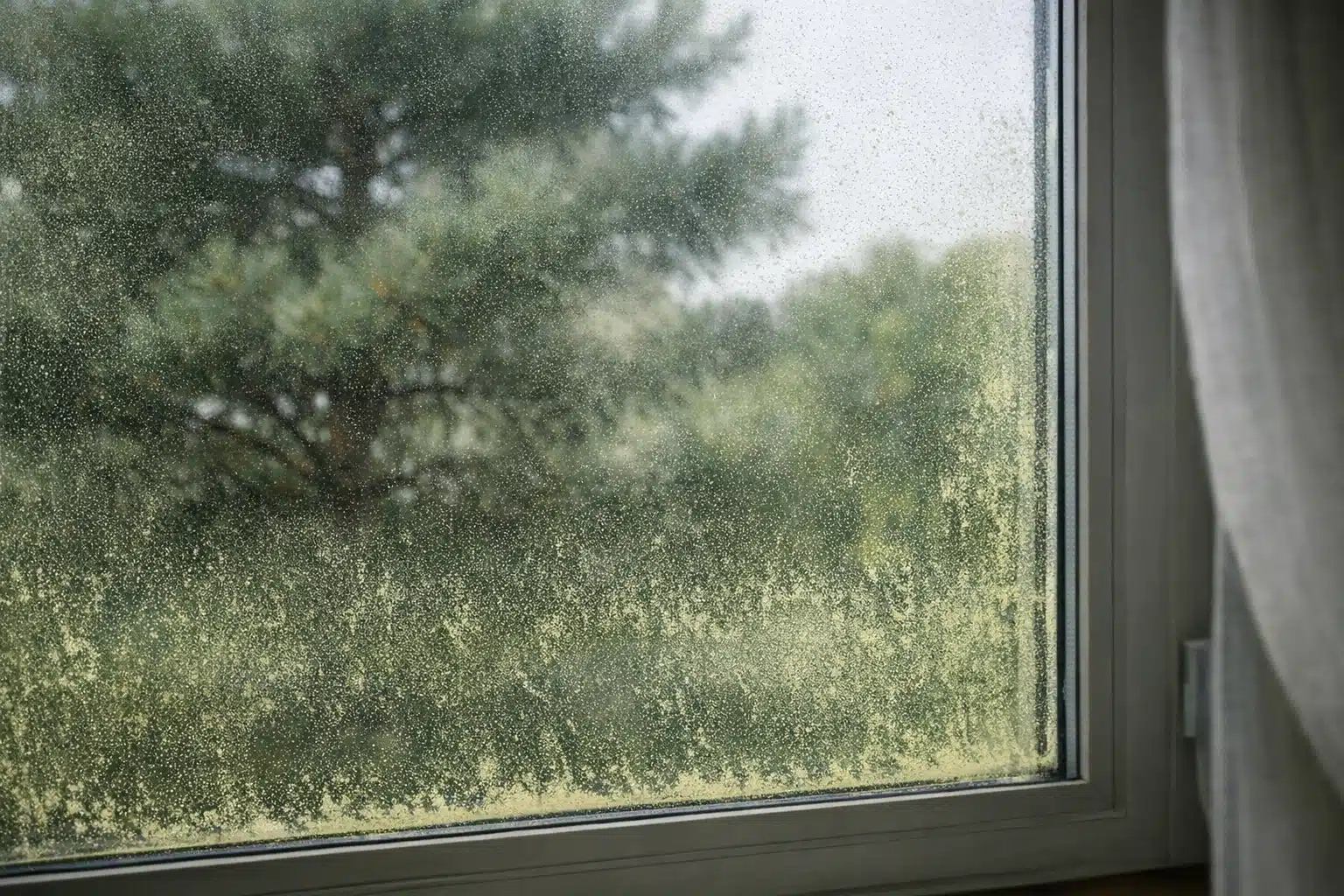
Every spring, a yellow-green film shows up on windows across the Front Range, and most of it comes from trees. Cottonwood, pine, and juniper release pollen by the billion, and your glass catches a fair share of it. Tree pollen window cleaning solves a seasonal problem that regular dusting cannot touch.
This post breaks down which local trees cause the worst buildup, why pollen film is harder to remove than ordinary dirt, and how to time your cleaning around peak pollen weeks.
What Tree Pollen Does to Your Windows
Tree pollen is a fine, sticky powder that plant cells produce to reproduce. When it lands on glass, moisture from morning dew binds it to the surface. That bond is what turns a light dusting into a stubborn haze.
A single pine tree can release several pounds of pollen in one season. Multiply that across a neighborhood, and your north-facing windows become a collection point.
The result is reduced visibility and a yellowish cast that dulls incoming light. Rooms feel dimmer, and the view looks permanently foggy even after a rinse.
Why Pollen Is Harder to Clean Than Regular Dust
Pollen grains have textured outer shells that grip glass tighter than plain dust. Water alone smears them rather than lifting them away.
Here is what happens when people try a quick hose-down:
- Streaking: Pollen mixes with water into a paste that dries in visible lines.
- Re-depositing: Rinsed pollen settles right back onto the lower panes.
- Screen clogging: Window screens trap pollen and release it onto clean glass with every breeze.
Proper removal needs the right cleaning agent and technique, not just more water.
Local Trees That Cause the Worst Window Buildup
Not all pollen behaves the same. The trees around your home decide how bad the problem gets and when it peaks.

Cottonwood
Cottonwood releases pollen in April, then follows with its famous cottony seed fluff in late May and June. That fluff carries pollen and sticks to damp glass fast.
Homes near rivers, ponds, or older neighborhoods see the heaviest cottonwood load. The seed fluff also clogs window tracks and sill corners.
Pine and Spruce
Pine pollen is the yellow powder that coats cars and patio furniture in May. It is lightweight and travels far on wind.
Pine pollen settles into an even film across every pane it touches. Because grains are so small, they work into tiny glass scratches and stay put.
Juniper and Cedar
Juniper pollinates earlier, with bursts from February into April. Its pollen is dusty and fine, and it coats screens and glass in dry waves.
Front Range juniper is a top allergy trigger, and the same pollen filming your windows is drifting into your home.
Oak, Birch, and Ash
These deciduous trees pollinate from April into May. Their pollen is heavier and tends to concentrate on windows under overhanging branches.
Oak catkins drop debris that collects in exterior sill corners and smears when wet.
How Pollen Timing Shapes Your Cleaning Schedule
The best time for tree pollen window cleaning is after peak pollen for your dominant local species. Clean too early, and fresh pollen coats the glass within days.
Here is a rough Front Range pollen calendar by tree type:
- February to April: Juniper and cedar release early. Expect dusty film on south-facing glass.
- April to May: Cottonwood, oak, birch, and ash pollinate. Heaviest yellow-green buildup.
- May to June: Pine pollen peaks, plus cottonwood seed fluff coats everything.
Scheduling a cleaning in early June catches most trees after their peak. A second touch-up in late spring keeps glass clear if you have mixed tree cover.
Spring Cleaning Challenges Pollen Adds
Pollen turns a straightforward wash into one of the bigger spring cleaning challenges homeowners face. Windows that looked clean at 8 a.m. can show a fresh haze by afternoon on a windy day.
The trick is timing the work to a low-wind window and after the worst of the pollen drop. Watching local pollen counts helps pick the right day.
What Pollen Buildup Costs You Beyond Appearance
Pollen film is more than an eyesore. Left in place, it causes problems that cost real money.
- Etching risk: Pollen holds moisture against glass, and acidic residue can leave faint marks over seasons.
- Screen damage: Clogged screens hold dampness and degrade faster.
- Track buildup: Cottonwood fluff and pollen pack into tracks, which strains window hardware.
- Indoor allergens: Pollen on screens drifts inside every time you open a window.
Clearing pollen early keeps glass, screens, and hardware in better shape for years.
How to Reduce Pollen Buildup Between Cleanings
You cannot stop trees from pollinating, but a few habits slow the buildup. Each step buys you clearer glass between visits.
- Rinse screens separately. Remove screens and spray them away from the glass to avoid re-depositing pollen.
- Clean on low-wind mornings. Less airborne pollen means your work lasts longer.
- Wipe sills weekly. A damp cloth on tracks stops fluff from packing into corners.
- Close windows on high-count days. Keep peak pollen outside and off interior glass.
- Schedule a post-peak deep clean. One thorough wash in June resets the whole house.
Routine upkeep handles the surface. A full cleaning handles the bonded film that upkeep leaves behind.

 Posted on Google
Why Local Pollen Knowledge Matters for Window Cleaning
A cleaner who knows the local tree mix times the work right. Ease Your Panes tracks Front Range pollen patterns and plans visits around them.
Cottonwood neighborhoods near water need different timing than pine-heavy foothill homes. Matching the schedule to your trees keeps results lasting longer.
Our crews use cleaning agents that break the pollen-to-glass bond instead of smearing it. Screens and tracks get attention, since those hold the pollen that re-dirties glass.
Signs It Is Time to Call for Pollen Cleaning
Watch for a few clear indicators that pollen has built past the point of a quick wipe:
- A yellow or green tint on the glass that a dry cloth cannot remove.
- Streaks that reappear after you rinse with water.
- Visible powder collecting in sill corners and on screens.
- Rooms that look dimmer than usual on bright days.
Any one of these means bonded pollen film, and that calls for a proper cleaning.
Conclusion
Cottonwood, pine, and juniper pollen coat Front Range windows every spring, bonding to glass and cutting your visibility. Timing your cleaning after peak pollen and clearing screens and tracks keeps the haze from coming back. Tree pollen window cleaning done at the right moment protects your view and your window hardware.
Ready to clear the spring pollen off your glass? Call or text Ease Your Panes at (720)-477-3273, email info@easeyourpanes.com, or visit https://www.easeyourpanes.com to book a post-peak cleaning.
Sources
- Asthma and Allergy Foundation of America – Pollen Allergy
- U.S. Environmental Protection Agency – Climate Change Indicators: Pollen Season
- Colorado State Forest Service – Colorado Trees


