

How to Prevent Window Damage During Summer Storms
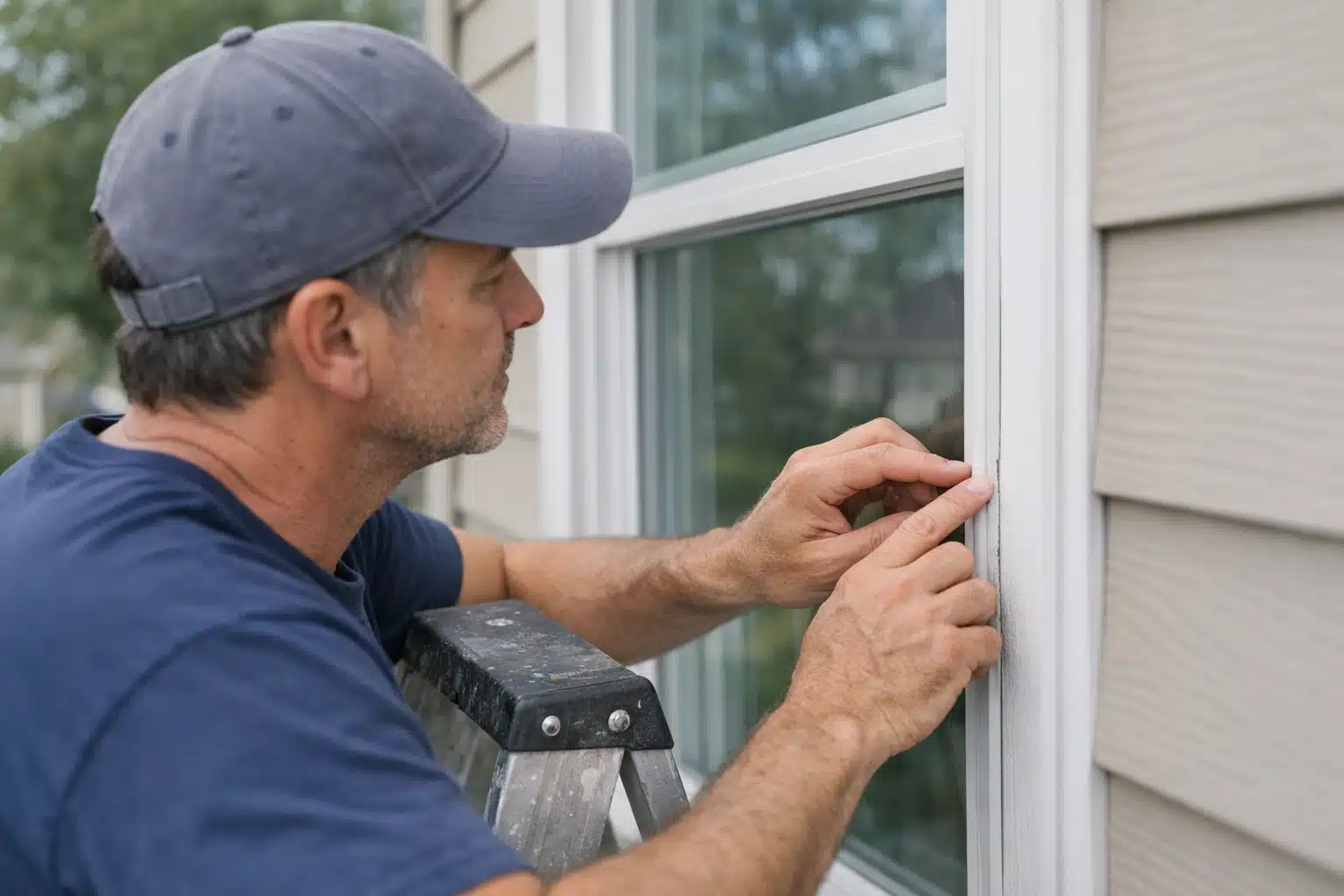
A single summer hailstorm can crack a pane in under a second. Wind-driven debris, sudden pressure changes, and swelling window frames all attack glass when storms roll in during July and August.
This post covers window damage prevention for the peak storm months, with specific steps you can take before, during, and after a storm.
You will learn how to spot vulnerable windows, reinforce weak points, and know when a cracked seal needs attention fast.
Why Summer Storms Hit Windows Harder Than You Think
Summer storms carry three threats that winter weather rarely combines: hail, high-velocity wind, and rapid temperature swings.
Hail the size of a quarter falls at roughly 50 mph. Golf-ball-sized hail can reach 70 mph or faster, according to the National Weather Service.
That speed turns ice into a projectile. A single strike on tempered glass may hold, but older single-pane windows crack on contact.
The Pressure Problem Most Homeowners Miss
Fast-moving storm fronts drop air pressure quickly. When outdoor pressure falls and your home stays sealed, the difference strains window seals.
This is why some windows fail without any debris hitting them. The glass flexes, the seal breaks, and moisture gets between double-pane layers.
Window Damage Prevention Before Storm Season Peaks
The best time to protect windows is mid-June, before the heaviest August storms arrive. Waiting until a warning issues leaves no time for repairs.
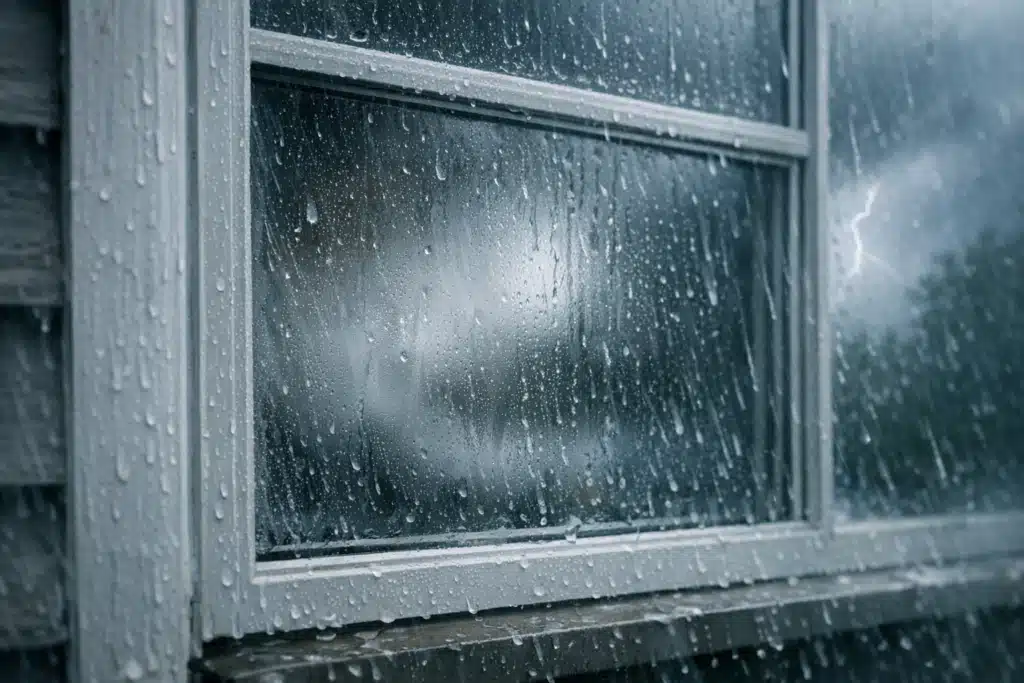
Start with an inspection of every exterior window. Look for the warning signs below.
- Cracked or dried caulk around the frame edge
- Foggy glass between double panes, which signals a broken seal
- Chips or hairline cracks that wind pressure can widen
- Loose or corroded window locks that let sashes rattle
- Rotting or swollen wood frames that no longer hold glass tight
Any of these weak points turns a survivable storm into a broken window.
Reseal and Recaulk Early
Fresh exterior caulk keeps water and wind pressure out of frame gaps. Use a paintable silicone or polyurethane sealant rated for outdoor use.
Apply it on a dry day above 50 degrees. Caulk needs several hours to cure, and a surprise storm on wet sealant undoes the work.
Check Your Weatherstripping
Weatherstripping seals the moving parts of a window. When it flattens or peels, wind whistles in and pressure builds unevenly.
Replace worn strips before storm season. This small step keeps sashes from rattling loose during 40 to 60 mph gusts.
How to Protect Windows When a Storm Is Coming
When a severe thunderstorm warning issues, you have minutes, not hours. Follow these steps in order.
- Close and lock every window. A locked sash resists wind pressure far better than a closed but unlocked one.
- Close blinds and curtains. If glass breaks, fabric and slats catch flying shards.
- Move outdoor items indoors. Patio chairs, planters, and grills become projectiles in high wind.
- Apply temporary window film if you keep a roll on hand. It holds broken glass together.
- Board large windows with plywood if you face a hail or tornado warning.
The order matters. Locking windows first buys pressure resistance while you handle the rest.
The Myth of Cracking Windows Open
Some homeowners crack windows during storms to “equalize pressure.” Skip this.
Modern homes are not airtight enough for pressure to shatter closed windows. An open window instead invites rain, wind, and debris straight inside.
Hail Defense for Vulnerable Glass
Hail causes more window claims in summer than any other storm event. Colorado sits in a stretch of the country with frequent large hail, per NOAA data.
If you live where hail is common, consider these upgrades between storm seasons.
- Impact-resistant glass withstands strikes that shatter standard panes
- Security window film holds broken glass in place, reducing injury and water intrusion
- Storm shutters or screens block direct hits on the most exposed windows
- Exterior awnings deflect vertical hail from lower-floor glass
West- and south-facing windows take the worst of storm-driven hail. Prioritize those first if budget is limited.
What to Do After the Storm Passes
Post-storm inspection catches damage before it worsens. Water that seeps into a cracked seal causes mold and frame rot within days.
Walk every window and check for the following.
- Visible cracks or chips from debris or hail impact
- New fogging between double panes, signaling a fresh seal break
- Water pooling on interior sills
- Grit or scratches on the glass surface from blowing dirt
Blowing grit during storms leaves fine scratches that trap dirt and weaken clarity. A thorough cleaning removes debris before it etches deeper.
Why Clean Glass Reveals Hidden Damage
Dirty windows hide hairline cracks and seal failures. A storm can leave a small chip that grows into a full crack over the next hot afternoon.
Heat expands glass, and a hidden chip becomes a running crack in direct sun. Cleaning after every major storm lets you catch these early.

 Posted on Google
A Storm-Season Window Checklist
Keep this short routine through July and August, the peak months for severe weather.
- June: Inspect, recaulk, and replace worn weatherstripping
- Before each storm: Lock windows, close coverings, secure loose outdoor items
- After each storm: Inspect glass and seals, clean off grit, note any new damage
- End of season: Book a full cleaning and inspection to catch cumulative wear
Small, repeated checks beat one panicked scramble during a warning.
When to Call a Professional
Some damage needs trained hands. Call for help if you see fogging between panes, running cracks, or water inside the frame.
A cleaning visit doubles as an inspection. Our team spots chips, seal failures, and grit damage that homeowners miss from ground level.
Regular cleaning during storm season keeps glass clear and catches small problems before they spread across the pane.
Conclusion
Effective window damage prevention starts before storm season peaks, with early inspection, fresh caulk, and locked windows when warnings hit. Post-storm cleaning reveals hidden chips and seal breaks that grow worse in summer heat.
Ease Your Panes can inspect and clean your windows before and after the storms roll in. Call or text us at (720)-477-3273, email info@easeyourpanes.com, or visit https://www.easeyourpanes.com to book a storm-season window check.
Sources
- National Weather Service – Thunderstorm Safety
- NOAA Storm Prediction Center – Hail Frequently Asked Questions
- U.S. Department of Energy – Weatherstripping




