

Why Regular Window Cleaning is Essential During Allergy Season
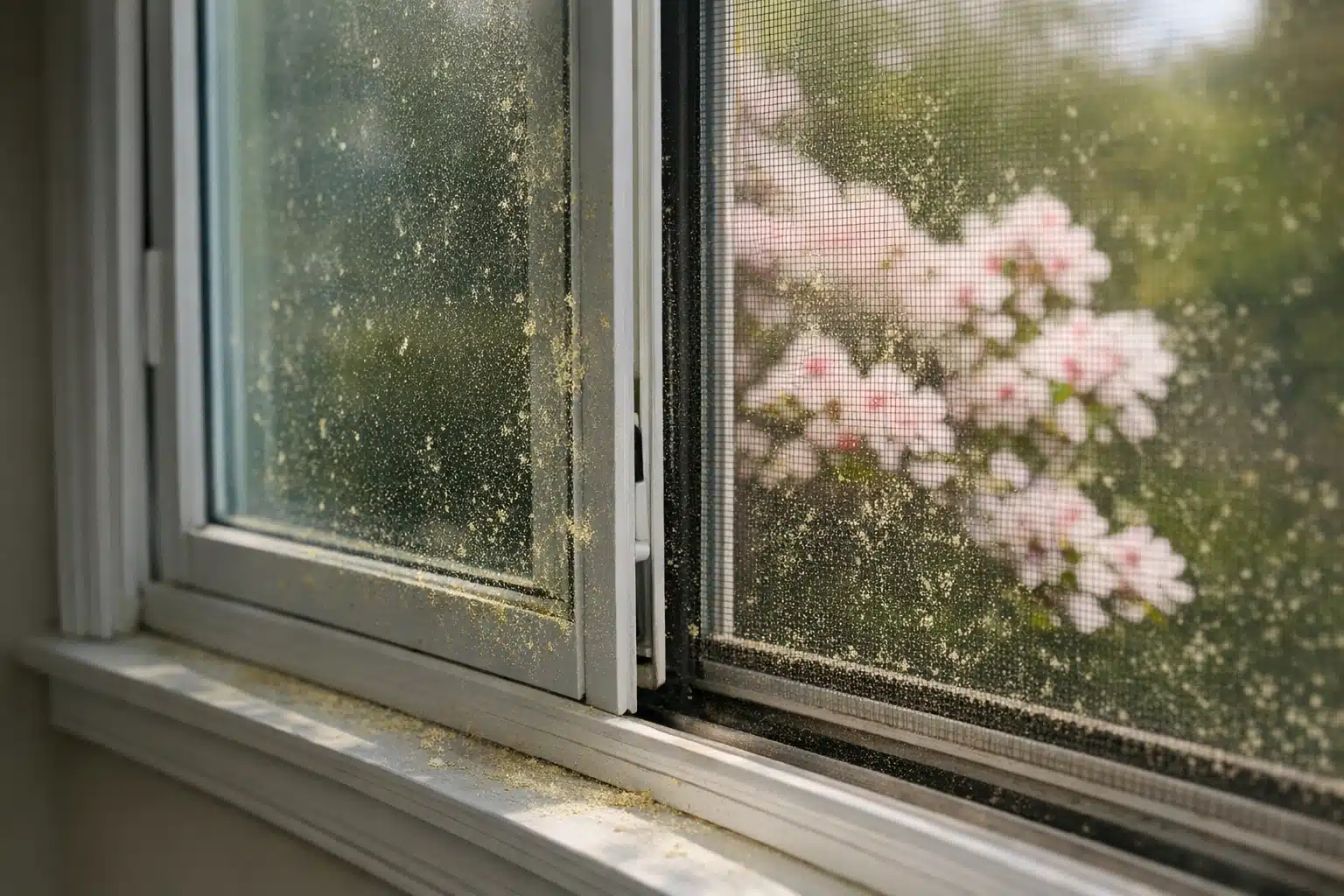
Pollen Collects on Your Windows, Not Just in the Air
Allergy season window cleaning targets one of the most overlooked sources of indoor allergens: the glass, screens, and tracks around your home. Pollen drifts onto these surfaces and stays there for weeks. Every time you open a window, that buildup blows back inside.
Most people fight allergies with air filters and medication. Few think about the dusty film coating their window panes. That film holds pollen, mold spores, and outdoor grime that aggravate symptoms daily.
This post covers how dirty windows trap allergens, which parts of your window hold the most pollen, and a cleaning schedule that keeps your indoor air cleaner during peak pollen months.
How Dirty Windows Trap and Spread Allergens
Window glass carries a static charge that attracts airborne particles. Pollen, dust, and spores cling to that surface and accumulate over time. A single pane near a flowering tree can collect a visible yellow coating in days.
The screen does more damage than the glass. Mesh screens act like a net, catching pollen as wind pushes air against them. Open that window and the trapped pollen sheds straight into your living space.
The Window Track Is the Worst Offender
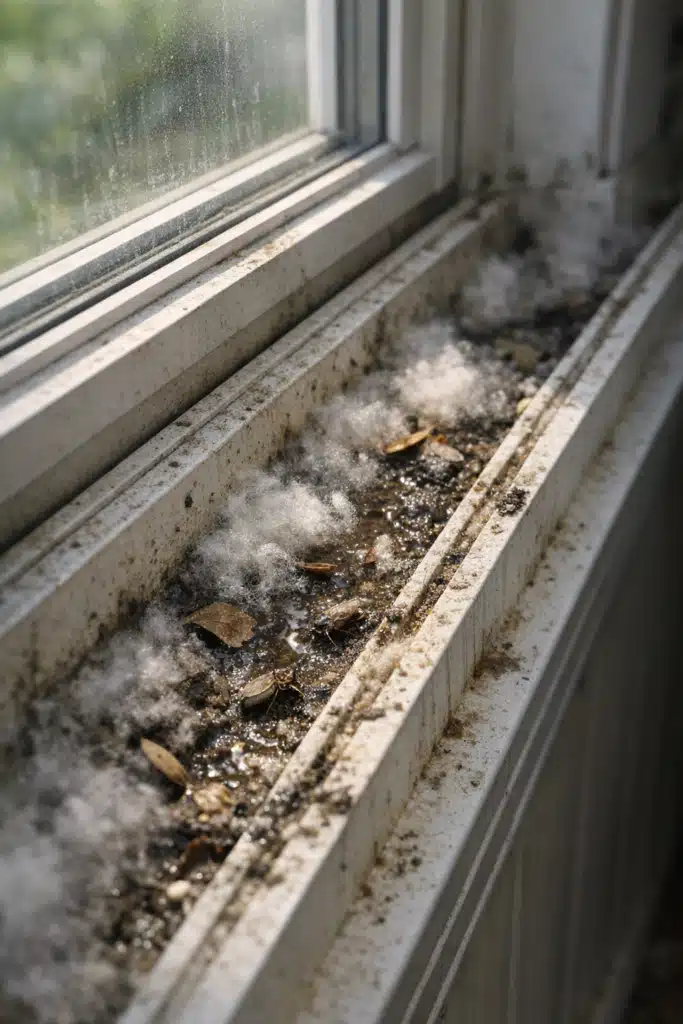
The bottom track of a sliding or double-hung window collects standing water, dirt, and dead insects. That moist debris becomes a breeding ground for mold. Mold spores rank among the most aggressive indoor allergy triggers.
In Colorado homes, we find tracks packed with cottonwood fluff and pine pollen every spring. The fluff traps moisture and accelerates spore growth. Cleaning the glass alone leaves this hidden source untouched.
Why Allergy Season Window Cleaning Reduces Symptoms
Allergen removal works best when you eliminate the source, not just filter the result. Clean windows stop pollen and spores from re-entering your air supply. Air purifiers help, but they only catch what is already floating.
Here is what regular cleaning addresses during peak pollen months:
- Glass surfaces: Removes the pollen film that sheds dust indoors.
- Screens: Clears the mesh that funnels allergens into rooms.
- Tracks and sills: Eliminates mold-friendly debris and standing moisture.
- Frames and corners: Wipes out cobwebs that trap floating particles.
Each step cuts the total allergen load near your windows. Fewer particles at the entry point means fewer particles in the air you breathe.
Indoor Air Quality and the Window Connection
The EPA reports indoor air can hold two to five times more pollutants than outdoor air. Windows are a direct pathway for those pollutants. Dirty glass and clogged screens add to the indoor pollen count every time air moves across them.
Cleaning your windows before allergy season peaks gives you a head start. A clean surface collects less and sheds less. The difference shows up in how your home feels by mid-spring.
When to Schedule Window Cleaning for Allergy Season
Timing matters more than frequency. Pollen counts climb sharply from March into June, then again in late summer for ragweed. Cleaning at the right moments keeps allergen buildup from compounding.
Follow this schedule to stay ahead of the worst pollen periods:
- Early spring (March): Clean before tree pollen peaks. This clears winter grime and resets your surfaces.
- Late spring (May): Tackle grass pollen and cottonwood fluff. A mid-season cleaning stops buildup from accumulating.
- Late summer (August): Address ragweed, which triggers fall allergies. Clean screens and tracks again here.
- Post-storm: Heavy wind drives extra pollen onto glass and screens. A quick cleaning after major storms helps.
Homes near cottonwoods, junipers, or grass fields need cleaning more frequently. The closer the pollen source, the faster your windows coat over.
What a Thorough Allergy-Season Cleaning Includes
Surface wiping does not remove embedded pollen and spores. A complete cleaning reaches the parts that hold the most allergens. Each component needs separate attention.
Screen Removal and Washing
Screens require removal and a full rinse, not just a brush-off. Brushing pushes pollen deeper into the mesh. Washing with water flushes the particles out entirely.
We pull each screen, rinse both sides, and let them dry fully before reinstalling. Damp screens trap fresh pollen faster. Dry, clean mesh keeps your airflow clear.
Track and Sill Detailing
Tracks need vacuuming first, then a wet wipe to lift mold and grime. We remove standing debris that breeds spores. A dry track resists future mold growth.
Glass Cleaning Inside and Out
Both sides of the glass collect allergens. Outdoor faces hold pollen; indoor faces hold settled dust. Cleaning one side without the other leaves half the problem behind.

 Posted on Google
The Allergen-Reduction Benefits You Notice
Households that clean windows on a regular schedule report fewer morning symptoms. Less sneezing, clearer breathing, and reduced eye irritation are common. The change comes from cutting the pollen that windows would otherwise release.
Clean windows also let in more sunlight. Sunlight helps dry out damp sills that breed mold. A brighter, drier window area discourages the conditions allergens love.
Regular allergy season window cleaning works as part of your home defense, alongside HVAC filters and frequent vacuuming. Targeting the windows closes a gap most allergy plans miss.
Why DIY Falls Short During Peak Season
Wiping the inside glass feels productive but ignores the real culprits. The exterior pane, the screen mesh, and the track hold most of the allergens. Reaching all three takes the right tools and access.
Upper-floor windows pose a safety problem for ladder work. Screens removed without care bend or tear. A trained crew handles every window without damaging frames or screens.
Ease Your Panes cleans glass, screens, tracks, and sills as one job. That full treatment removes the allergen sources a quick wipe leaves behind.
Key Takeaways
Pollen, dust, and mold spores collect on your glass, screens, and tracks, then re-enter your air every time you open a window. Allergy season window cleaning removes these sources at the entry point and reduces the allergen load inside your home. Schedule cleanings in early spring, late spring, and late summer to stay ahead of peak pollen.
Ready to cut allergens at the source this season? Call or text Ease Your Panes at (720)-477-3273, email info@easeyourpanes.com, or visit https://www.easeyourpanes.com to book your allergy-season cleaning.

