

How Pine Sap Affects Your Windows in Forested Areas
Pine sap bonds quickly to window glass and hardens with heat, becoming difficult to remove and potentially causing etching, cloudiness, and frame staining. Proper removal requires softening the resin with solvents before carefully lifting it with appropriate tools on wet glass.
- Fresh sap becomes rock-hard within hours on sun-exposed windows and attracts sooty mold that creates dark streaked patches. Homes near conifers face constant reapplication as new droplets land weekly during warm months.
- Safe removal involves warming the sap, applying rubbing alcohol or citrus cleaner, letting it dwell, then using a plastic scraper or razor blade on wet glass only. Avoid dry scraping or acetone on tinted glass.
- Prevent buildup by trimming overhanging branches, cleaning regularly during sap season, and applying glass sealant. For second-story windows or heavy buildup, professional cleaning teams can handle coated glass safely.
Pine sap lands on windows as a sticky smear and quickly hardens into a stubborn amber crust within days. The resin clings to glass surfaces and resists standard wiping methods. Over time, the hardened sap becomes increasingly difficult to remove and can potentially damage the glass if scraped improperly during cleaning attempts.
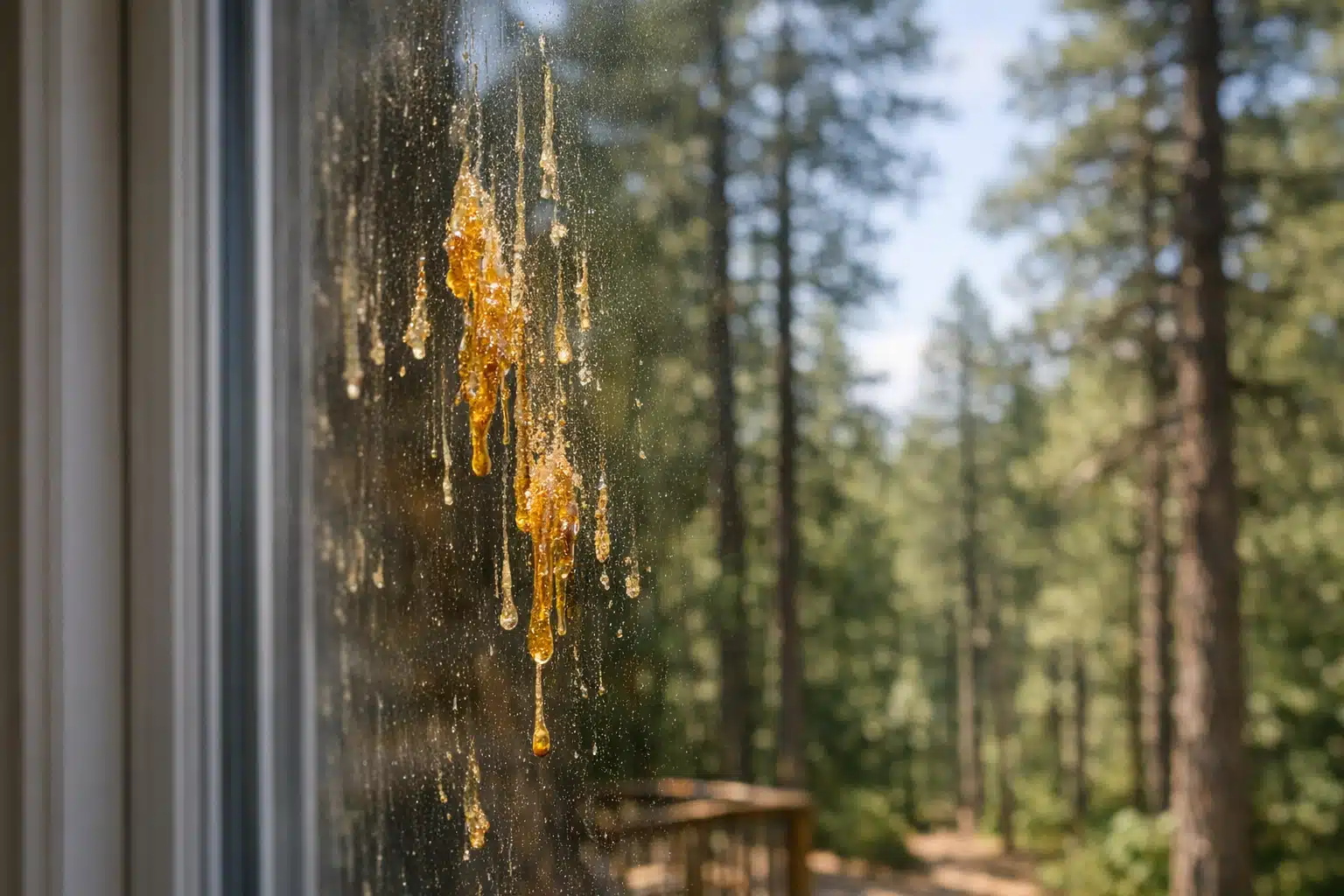
Pine sap on your windows starts as a sticky smear and hardens into a stubborn, amber crust within days. If your home sits near ponderosa, lodgepole, or spruce trees, you have seen those tacky droplets cling to the glass and refuse to wipe away. This post covers what pine sap does to windows, why it is so hard to remove, and how to handle it without scratching the glass.
Homeowners in wooded areas across Colorado deal with this every warm season. The window effects go beyond appearance, and the wrong cleaning method can leave permanent marks.
What Pine Sap Does to Window Glass
Pine sap is a thick resin trees release to seal wounds and defend against insects. When it lands on glass, it bonds fast and cures into a hard, sticky film.
Warm summer temperatures speed this up. Sap that drips onto a south-facing window at 10 a.m. can be rock-hard by mid-afternoon.
The Physical Damage It Causes
Fresh sap is a nuisance. Cured sap becomes a real problem for your glass and frames.
- Etching and cloudiness: Sap holds acidic compounds that dull glass over time.
- Trapped grit: Sticky resin catches pollen, dust, and pine needles, forming an abrasive layer.
- Frame staining: Sap seeps into vinyl and wood frames, leaving yellow-brown marks.
- Scratch risk: Scraping hardened sap with the wrong tool gouges the glass surface.
Sap also attracts a black mold called sooty mold. That combination leaves streaked, dark patches that ordinary cleaning cannot lift.
Why Pine Sap Is So Hard to Remove From Windows
Pine sap resists water because it is not water-soluble. Soap and a squeegee push it around without breaking the bond.
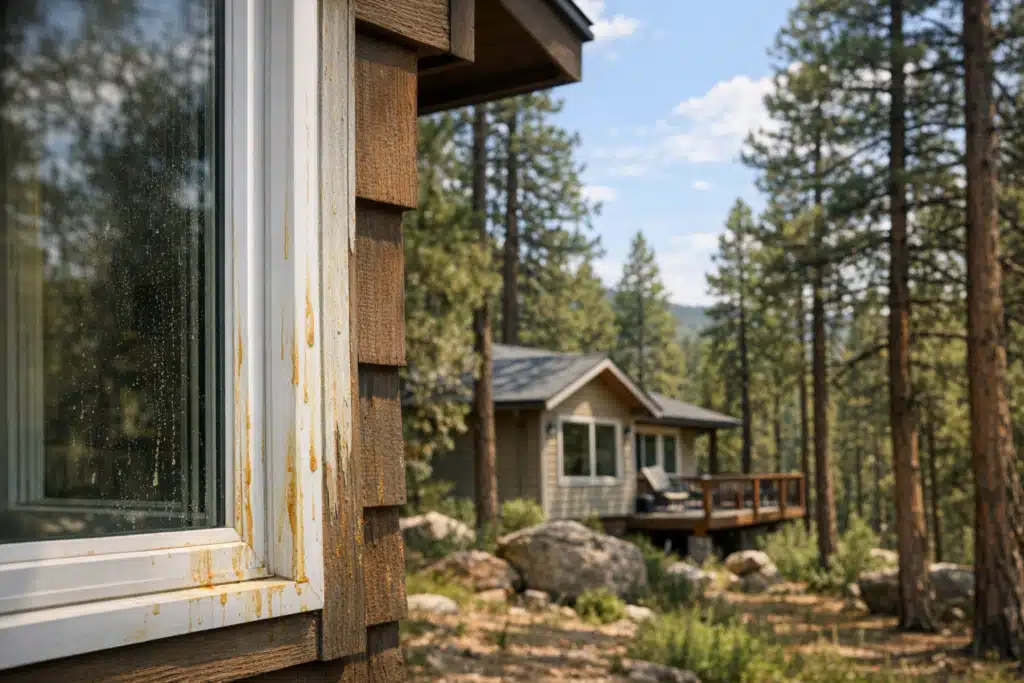
The resin’s chemistry is the issue. It cures into a polymer-like film that grips glass tighter as it dries and ages.
The Forested-Area Challenge
Homes surrounded by conifers face constant reapplication. You clean a window, and fresh droplets land the same week.
In Front Range foothill neighborhoods, we see three patterns repeat:
- Overhang drip zones: Windows under branches collect the heaviest, most layered buildup.
- Seasonal timing: Late spring through early fall produces the most sap flow.
- Heat baking: Sun-exposed panes cure sap into a near-permanent glaze.
Skylights and second-story windows make matters worse. Sap sits untouched for months because those panes are hard to reach.
How to Remove Pine Sap From Windows Safely
Pine sap comes off glass when you soften the resin first, then lift it with a controlled tool. Never dry-scrape hardened sap.
Here is a method that works without damaging the surface:
- Warm the sap. A warm, damp cloth held on the spot for 30 seconds loosens the bond.
- Apply a solvent. Rubbing alcohol or a citrus-based cleaner breaks the resin down.
- Let it dwell. Give the solvent two to three minutes to penetrate.
- Lift with a plastic scraper. Use a plastic blade or credit card at a low angle.
- For cured spots, use a razor. A new razor blade held flat, on wet glass only, shears hard sap cleanly.
- Wash and rinse. Follow with a standard glass cleaner to clear residue and streaks.
What Not to Do
The wrong approach makes the damage permanent. Avoid the mistakes we see most often after DIY attempts.
- Do not use a dull or dirty razor. Trapped grit under the blade drags scratches across the pane.
- Do not scrape dry glass. Always keep the surface wet to float debris away from the blade.
- Do not use acetone on tinted or coated glass. It strips films and Low-E coatings.
- Do not scrub with steel wool. It leaves fine, cloudy scratches you cannot buff out.
Solvents That Work on Pine Sap
Different solvents suit different situations. Match the product to the sap’s age and the glass type.
- Isopropyl alcohol (70%+): Best all-around choice for fresh and medium-cured sap.
- Citrus degreasers: Effective on thick buildup and safe for most frames.
- Mineral oil or cooking oil: Softens sticky spots on treated wood frames without staining.
- Commercial sap removers: Formulated for automotive and glass use, stronger on layered resin.
Test any solvent on a small corner first. Coated and tinted panes react badly to harsh chemicals.

 Posted on Google
Preventing Pine Sap Buildup on Windows
You cannot stop trees from producing sap, but you can reduce how much reaches your glass. A few habits cut down the workload.
- Trim overhanging branches away from windows and rooflines where safe to do so.
- Clean on a schedule during sap season instead of waiting for heavy buildup.
- Rinse panes early in the day before the sun bakes fresh droplets.
- Apply a glass sealant that makes future sap easier to wipe away.
Regular attention beats a once-a-year rescue. Thin, fresh sap wipes off in seconds; thick, aged layers take an hour per window.
When to Call a Window Cleaning Team
Some sap situations need trained hands and the right tools. Second-story glass, skylights, and heavily layered panes fall into that group.
At Ease Your Panes, we work in forested Colorado neighborhoods where conifer sap is a year-round reality. We know which solvents are safe on Low-E and tinted glass, and how to scrape cured resin without leaving a mark.
We also spot early etching before it becomes permanent. Catching sap damage at the right stage saves the pane.
Key Takeaways
Pine sap bonds fast, hardens with heat, and resists water, making it one of the toughest residues to clear from windows in wooded areas. Soften it with a solvent, lift it with the right tool on wet glass, and clean on a schedule during sap season. For high, layered, or coated windows, skip the risk and let a team handle it.
Ready to clear the sap from your windows? Call or text Ease Your Panes at (720)-477-3273, email info@easeyourpanes.com, or visit https://www.easeyourpanes.com to book a cleaning.
Sources
- USDA Forest Service – Tree Biology and Resin Production
- Colorado State University Extension – Yard and Garden Resources
- U.S. EPA – Mold and Moisture




