

Why Monsoon Dust Requires Special Window Cleaning Techniques
Monsoon dust mixes with rain to form a mineral crust that bonds to glass, requiring special cleaning techniques to avoid scratches and streaks. Ease Your Panes uses a two-stage removal process with purified water for spot-free results.
- Monsoon dust contains abrasive silica that scratches glass when wiped dry, and hard tap water leaves white mineral film when used for rinsing.
- Proper cleaning requires pre-rinsing to float grit off glass, soaking with surfactant, gentle agitation with soft pads, and rinsing with purified deionized water.
- Two passes are needed because the first removes visible mud while the second clears the mineral haze underneath, and screens, tracks, and frames must also be cleaned to prevent dust from returning.
Monsoon dust arrives wet and sticks to glass surfaces, then dries into a mineral crust that bonds with the window. Unlike fine dry powder that settles during other months, this hardened residue cannot be removed with standard washing routines. Special cleaning methods are needed to break down and lift the mineral deposits without scratching or damaging the glass.
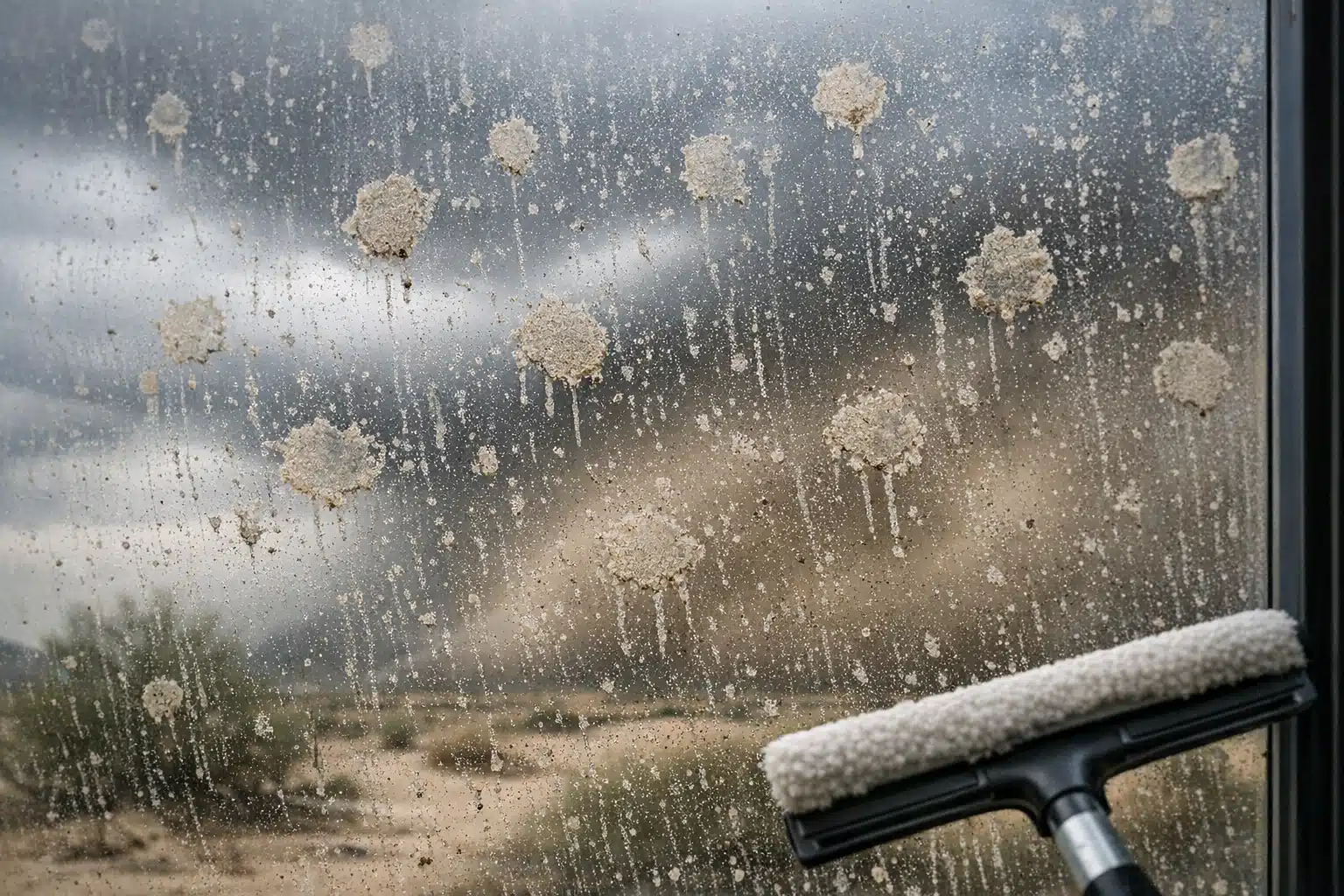
Monsoon dust behaves nothing like the fine powder that settles on your windows in dry months. It arrives wet, sticks fast, and dries into a mineral crust that bonds with your glass. That is why monsoon dust cleaning demands methods most standard washing routines skip entirely.
In this post, you will learn what makes storm-season grime different, which techniques remove it safely, and how to avoid the scratches and streaks that come from treating it like ordinary dust.
What Makes Monsoon Dust Different From Regular Dust
Monsoon dust is a mix of fine desert silt, clay particles, and dissolved minerals carried by high winds ahead of a storm. When rain hits, the storm turns airborne dust into muddy droplets that splatter across glass. These droplets dry into hard, cloudy spots.
In regions like the Front Range and desert Southwest, haboob-style dust storms push this material for miles. The result is a coating that behaves like a thin layer of cement once it dries in the sun.
Why Standard Cleaning Fails Against It
Wiping dry monsoon dust drags abrasive silica across the glass surface. Silica is harder than glass and leaves fine scratch marks called micro-marring. Over a season, these marks build into permanent haze.
Regular tap water makes it worse. Hard water in dry regions carries calcium and magnesium. When you rinse mineral dust with mineral water, both dry together and leave a stubborn white film.
Why Monsoon Dust Cleaning Requires Special Techniques
Monsoon dust cleaning works only when you lift and float the grit off the glass before any wiping happens. Dragging equals scratching. The right sequence keeps abrasive particles suspended in water until they rinse away.
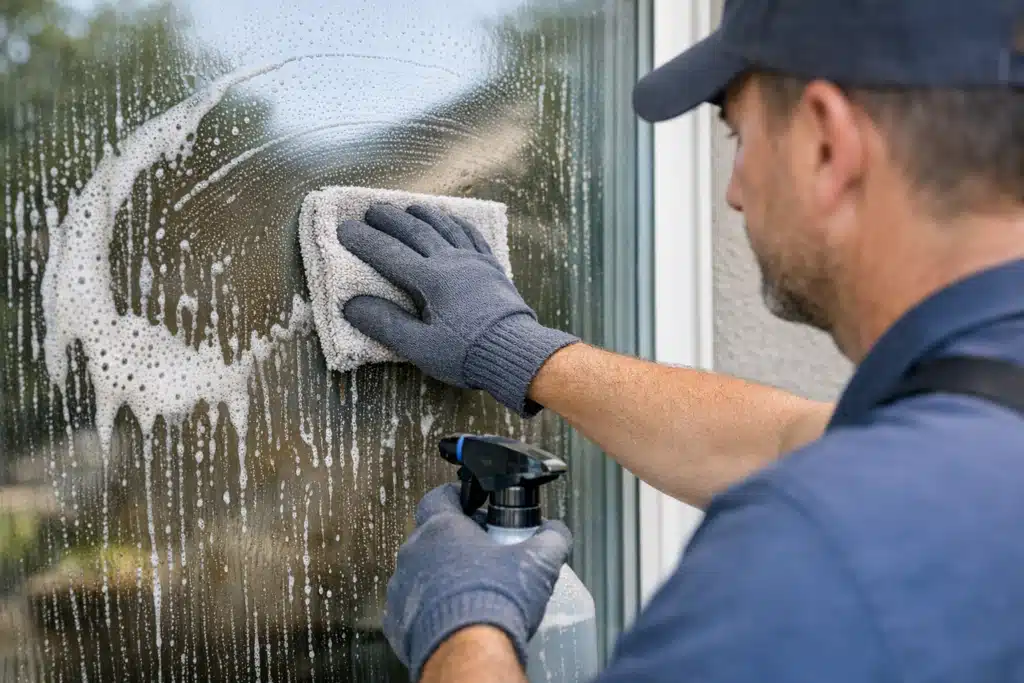
Here is the order that protects your glass:
- Pre-rinse first. Flood the glass with water to loosen and float dried mud before touching it.
- Soak the crust. Let a mild surfactant sit two to three minutes to break the mineral bond.
- Agitate gently. Use a soft microfiber pad, never a dry cloth or stiff brush.
- Rinse with purified water. Deionized water carries no minerals, so it dries spot-free.
- Do a second pass. Monsoon film almost always needs two rounds to fully clear.
The Two-Pass Rule
One pass removes the visible mud. It rarely removes the mineral haze underneath. A second pass with clean pads and fresh water catches the film that the first round smears around.
Skipping the second pass is the most common reason windows look cloudy after a storm cleanup. The dirt is gone, but the mineral ghost stays behind.
The Purified Water Advantage
Deionized or reverse-osmosis water is the single biggest difference in cleaning storm dust. Purified water has near-zero total dissolved solids. That means nothing is left on the glass when it evaporates.
Standard hose water in the arid West can read 200 to 400 parts per million in dissolved minerals. Those minerals settle into every water droplet and dry as spots. Purified water sidesteps the problem completely.
Why Water-Fed Poles Help After a Storm
Water-fed pole systems push purified water and scrub in one motion. They rinse from top to bottom so grit flows downward and off the pane. This matters on second-story and hard-to-reach windows where mud dries fastest.
- No ladders leaning against dust-caked siding
- Consistent rinse that leaves no mineral edge
- Less contact pressure, which means less scratch risk
Timing Your Cleaning Around Monsoon Season
Cleaning at the wrong moment wastes your money. The best window techniques account for storm timing, not just dirt levels. A cleaning done the day before a dust event lasts hours.
When to Schedule
- Wait for a break in the storm pattern. Clean during a stable stretch, not between two systems.
- Clean within a few days after a major storm. Fresh dust lifts easier than dust baked on for weeks.
- Avoid midday heat. Water and cleaner dry too fast on hot glass and leave streaks.
Early morning gives you cooler glass and slower evaporation. That extra working time is what lets the surfactant break the mineral crust.
Screens, Tracks, and Frames Trap the Most Dust
Storm dust does not stop at the glass. It packs into window screens, sill tracks, and frame corners. Cleaning only the pane leaves a reservoir of grit that blows back onto clean glass with the next breeze.
What Full Storm Cleanup Includes
- Screen removal and rinsing to clear caked mud from mesh
- Track vacuuming before any water touches the sill
- Frame wiping to stop dust runoff onto fresh glass
Vacuuming tracks before wetting them is a detail many people miss. Adding water to dry track dust makes mud that hardens in corners and jams the window.

 Posted on Google
Mistakes That Damage Glass After a Dust Storm
Most storm-cleanup damage comes from good intentions and the wrong method. Knowing what not to do protects your windows for years.
- Dry-wiping the dust. This grinds silica into the glass and causes permanent scratches.
- Using paper towels. They shed lint and drag grit across the surface.
- Cleaning in direct sun. Fast evaporation locks minerals onto the pane.
- Reusing dirty water. One dirty bucket spreads grit from window to window.
- Ignoring the frame. Trapped dust re-coats the glass within days.
The Cost of Getting It Wrong
Scratched glass cannot be polished out on residential panes. Once micro-marring sets in, the only fix is pane replacement. That turns a routine cleaning into a costly repair.
How Ease Your Panes Handles Monsoon Dust
Our crews treat storm dust as a two-stage removal, not a single wipe. We pre-soak the crust, agitate with soft pads, and rinse with purified water for a spot-free finish. Second passes are standard, not an upsell.
We clean screens, vacuum tracks, and wipe frames so the dust does not return with the next gust. That full-window method is what keeps glass clear through storm season.
Key Takeaways
Monsoon dust bonds to glass and carries abrasive silica, so pre-rinsing, soaking, and purified-water rinsing matter more than elbow grease. Two passes and full-frame cleanup stop the mineral haze from coming back. Timing your cleaning around the storm cycle makes the results last.
For storm-season window cleaning done the right way, contact Ease Your Panes at (720)-477-3273, text the same number, or email info@easeyourpanes.com. You can also visit https://www.easeyourpanes.com.
Sources
- National Weather Service – Dust Storm Safety and Haboobs
- U.S. Environmental Protection Agency – Particulate Matter (PM) Basics
- U.S. Geological Survey – Hardness of Water




