

Why Fall is the Best Time for Solar Panel Maintenance
Fall solar panel maintenance removes summer buildup before winter's shorter daylight hours arrive, when every bit of sunlight matters most. Clean panels capture more light during low-sun months and shed snow faster after storms.
- Panels collect pollen, dust, bird droppings, and sap over summer - this hardened layer can reduce output by up to 25% and costs more during winter when sunlight is already limited.
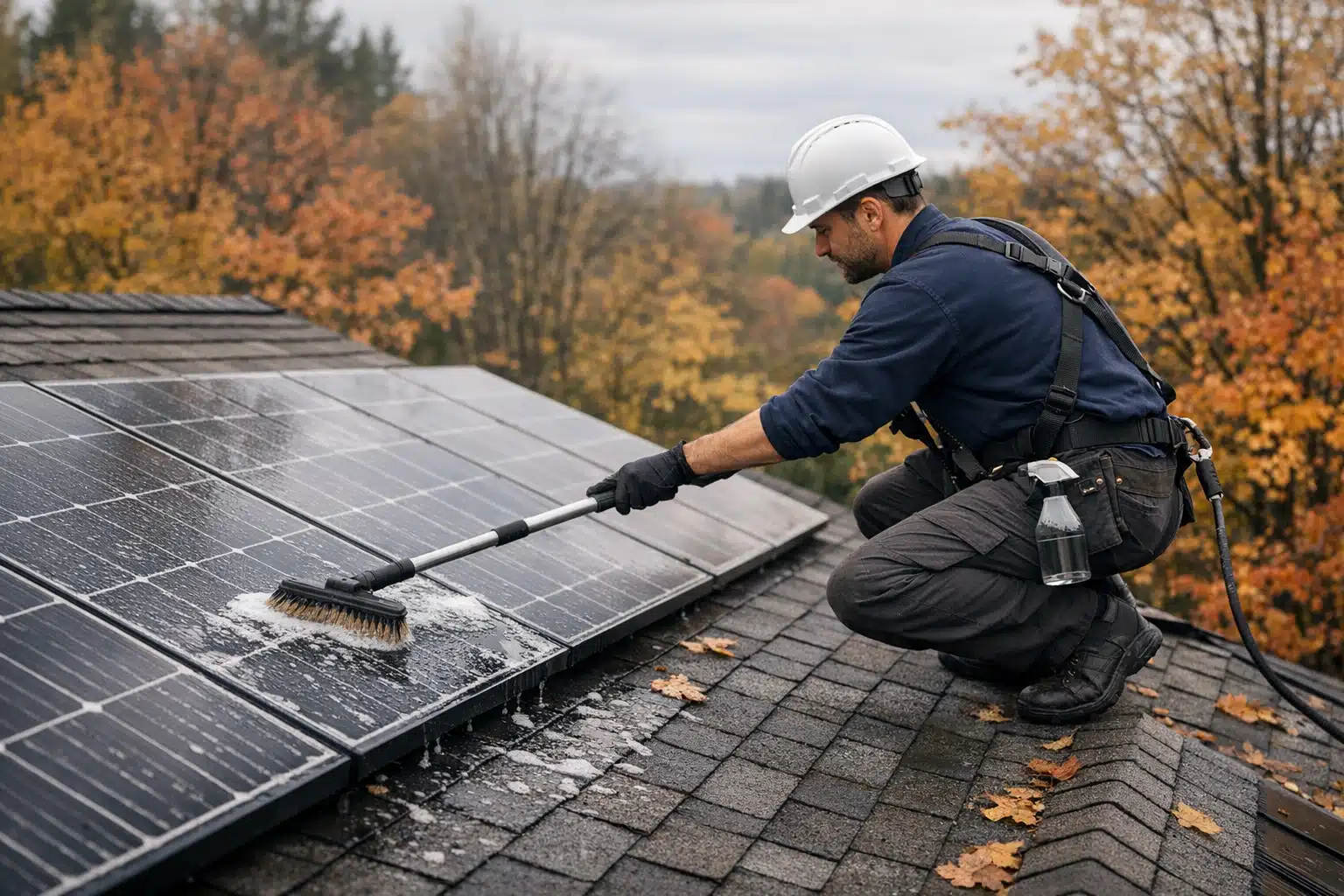
- Clean panels using soft water and a gentle brush on a cool overcast morning - avoid dish soap, pressure washers, and abrasive pads that can damage glass or leave residue.
- Beyond cleaning, check mounting hardware for loose bolts, clear gutters and overhanging branches, and review monitoring data to catch failing panels before winter arrives.
Fall is the ideal time for solar panel maintenance because panels can lose up to 25% of their output when covered with dust, pollen, and summer grime. Cleaning them between September and November removes this buildup right before winter, when daylight hours are shortest and maximizing energy capture from every available ray of sunlight becomes most valuable.
Solar panels lose up to 25% of their output when coated with dust, pollen, and summer grime. Fall solar panel maintenance clears that buildup right before daylight hours shrink and every photon counts more. The weeks between September and November give you a short window to prepare panels for the lowest-light season of the year.
This post walks you through why autumn beats every other season for panel care. You will learn what accumulates on panels over summer, how to clean them safely, and when to call in help.
Why Fall Solar Panel Maintenance Matters More Than Any Other Season
Fall solar panel maintenance matters because winter sun sits low and weak, leaving no room for lost output. In December, Denver sees roughly 9.5 hours of daylight compared to 15 hours in June. Clean panels capture more from each of those scarce hours.
Summer leaves behind a specific set of residues. Pollen from spring, dust from dry months, and bird droppings bake onto the glass under high heat. By September, that layer is hardened and reduces light absorption.
The Shorter-Daylight Penalty
A dirty panel in July still produces reasonable power because the sun is strong and high. The same dirt in January costs you far more as a percentage of available light.
Dirty panels hurt most when the sun is weakest. Fall cleaning removes that penalty before it compounds across the darkest months.
Ice and Debris Prevention
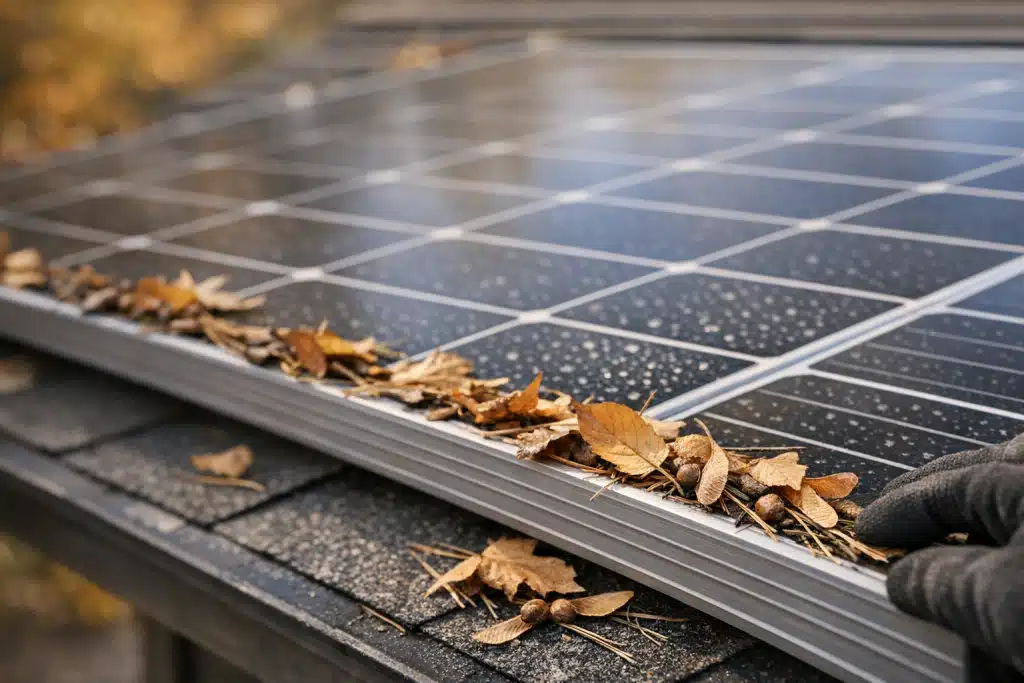
Leaves and seed pods settle into panel frames during autumn. Left in place, they trap moisture that freezes and expands overnight. Clearing debris in fall stops ice from forming around mounting hardware.
What Builds Up on Solar Panels by the End of Summer
Panels collect a predictable mix of material over a warm season. Knowing what is on the glass helps you clean it correctly.
- Pollen and tree sap: Sticky residue from spring that hardens under summer heat.
- Dust and mineral film: Airborne particles that settle during dry stretches and bond after rain evaporates.
- Bird droppings: Acidic spots that block entire cells and can etch the glass if left for months.
- Pollen-laced water spots: Mineral rings left by sprinklers or brief summer storms.
- Early leaf litter: Organic matter that holds moisture against the panel surface.
Bird droppings cause the most damage per spot. A single dropping can shade a full cell string and cut a panel’s output by a measurable margin.
How to Clean Solar Panels in Fall: Step by Step
Clean solar panels using soft water, a gentle brush, and no abrasive chemicals. Follow these steps for a safe, effective result.
- Pick a cool, overcast morning. Cold glass and warm water can crack panels. Cloud cover keeps the surface from heating.
- Shut the system down. Turn off the inverter and isolate the array per your installer’s instructions before touching panels.
- Rinse first with plain water. Loosen dust and pollen before any contact to avoid scratching the glass.
- Use a soft brush or microfiber mop. Work in straight strokes with a long-handled tool from the ground when you can.
- Spot-treat droppings with warm water. Let water soak the spot, then wipe gently. Skip metal scrapers.
- Rinse with deionized or soft water. Hard water leaves mineral rings that block light once dry.
- Let panels air dry or squeegee gently. Streak-free drying keeps the glass clear for maximum absorption.
What Not to Use
Avoid dish soap, pressure washers, and abrasive pads. Detergents leave a film that attracts more dust. High pressure can force water past seals and into junction boxes.
Plain soft water and a soft brush handle almost every fall cleaning job. Stubborn sap may need a drop of isopropyl alcohol on a cloth, applied sparingly.
Fall Panel Maintenance Beyond Cleaning
Cleaning is one part of preparing an array for winter. A short inspection catches problems before snow and ice arrive.
Check Mounting and Seals
Freeze-thaw cycles stress brackets and roof penetrations. Look for loose bolts, lifted flashing, or cracked sealant around mounts. Tighten or flag anything that moved over summer.
Clear Gutters and Nearby Branches
Overhanging branches drop leaves onto panels all autumn. Trimming them reduces shading and keeps debris off the glass. Clean gutters stop water from backing up under roof-mounted arrays.
Review Your Monitoring Data
Compare this September’s output against last year’s. A steady drop that cleaning does not fix may point to a failing panel or connection. Catch it before winter hides the problem under snow.
Fall vs. Spring Cleaning: A Direct Comparison
Both seasons have their place, but fall timing protects the months when output matters most.
- Fall cleaning: Removes baked-on summer grime right before low-light winter. Maximizes energy efficiency when daylight is shortest.
- Spring cleaning: Clears winter grit and bird activity before the strong summer sun. Useful, but the sun is already climbing and forgiving of minor dirt.
Fall gives you the bigger return per cleaning dollar. The dirt you remove in October pays off across every short winter day that follows.

 Posted on Google
Why Snow Does Not Clean Your Panels For You
Many owners assume snow melts off and rinses panels clean. In practice, snow slides off and leaves dust and film behind. Melting snow can also cement debris into place as it refreezes overnight.
Starting winter with clean glass means snow melts faster. Dark, clean panels absorb more heat and shed snow sooner than grimy ones, recovering output quickly after a storm.
When to Call Ease Your Panes
Ground-level panels are a reasonable task for most owners. Roof-mounted arrays change the math entirely.
Call for help when panels sit on a steep or high roof, when output has dropped without obvious cause, or when droppings and sap resist a gentle rinse. Working on a wet roof in fall carries real fall risk.
Our team cleans panels with soft water systems that leave no mineral residue. We inspect mounts and flashing during the same visit, catching winter problems early.
Key Takeaways
Fall solar panel maintenance clears summer buildup right before daylight hours shrink, protecting your energy efficiency when the sun is weakest. A simple soft-water cleaning plus a mount and gutter check prepares any array for winter. Clean panels shed snow faster and recover output sooner after every storm.
Prepare your panels before the shortest days arrive. Contact Ease Your Panes at (720)-477-3273, text the same number, or email info@easeyourpanes.com to schedule fall panel cleaning. Visit https://www.easeyourpanes.com to book online.
Sources
- National Renewable Energy Laboratory – Solar Research
- U.S. Department of Energy – Solar Energy Saver
- National Weather Service – Daylight and Seasonal Data


