

The Impact of Altitude on Summer Window Cleaning Schedules
Windows in Denver and other high-altitude areas get dirty faster due to stronger UV rays, drier air, and more airborne dust during summer months. Homes above 5,000 feet need more frequent cleaning and adjusted methods to prevent permanent damage.
- UV radiation increases about 4% for every 1,000 feet of elevation gain, baking contaminants into glass and breaking down window seals faster. Denver metro homes typically need three cleanings per year instead of the standard two.
- Hot glass at altitude dries cleaning solution too quickly, causing streaks. Scheduling washes for early morning and using purified water helps lift hard mineral spots without leaving residue.
- Homeowners should adjust sprinklers away from windows, rinse glass after dust storms, and book mid-summer cleanings in July to prevent permanent etching on south and west-facing windows.
Homes above 5,000 feet require more frequent window cleaning during summer due to stronger UV exposure, drier air, and increased airborne dust. These high-altitude conditions cause windows to accumulate grime faster than those at sea level. Both cleaning frequency and methods need adjustment to account for rapid evaporation and mineral deposits common in elevated locations.
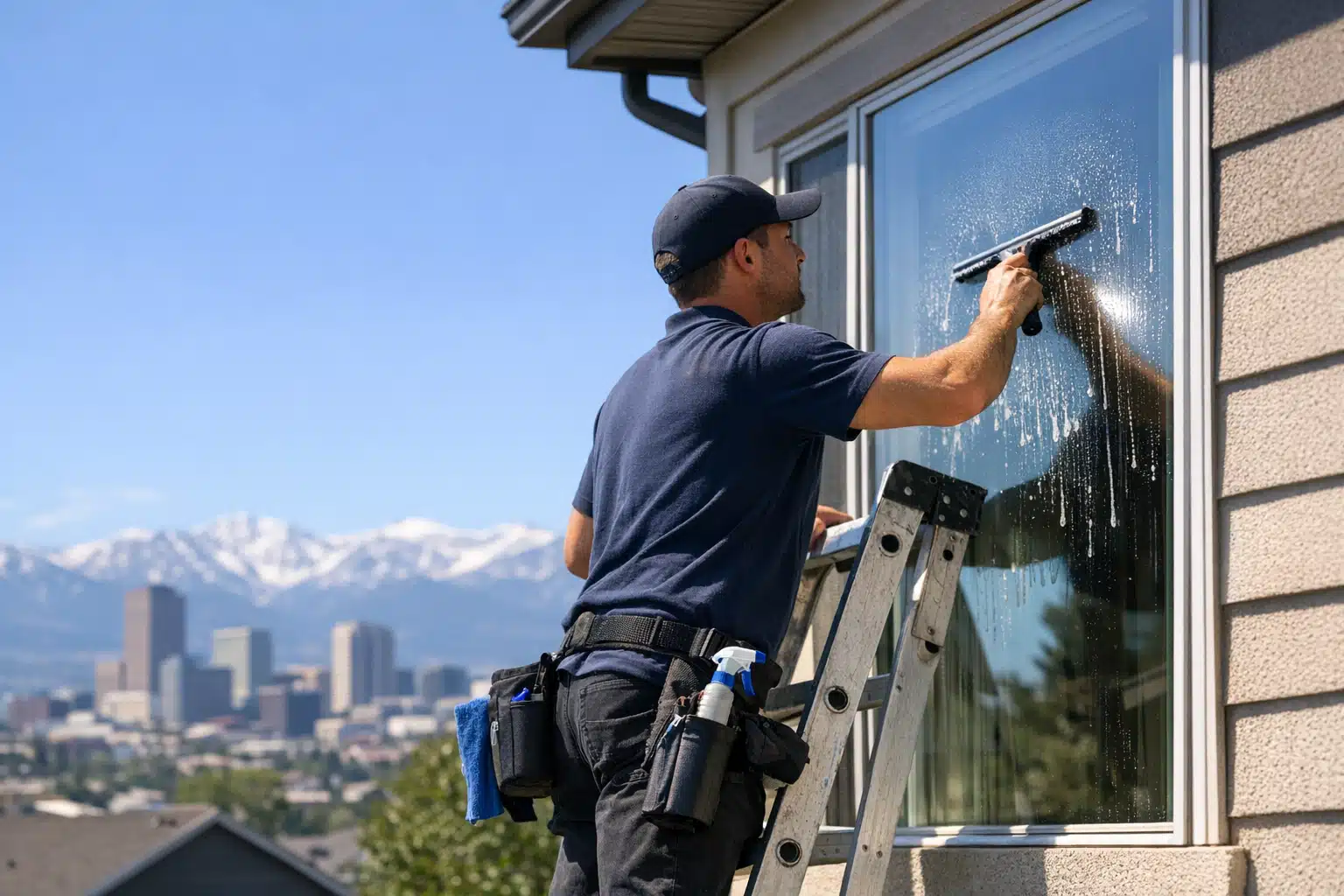
Windows in Denver get dirty faster than windows at sea level, and altitude is the reason. Homes above 5,000 feet face stronger UV, drier air, and more airborne dust during summer months. The altitude impact on your glass changes both how often you clean and which methods work best.
This post breaks down why elevation matters, how it affects summer cleaning frequency, and what adjustments keep your windows clear. If you live along Colorado’s Front Range, the numbers here apply directly to your home.
Why Altitude Impact Matters for Summer Window Cleaning
Altitude impact is the effect that higher elevation has on air quality, sunlight intensity, and moisture levels around your windows. At 5,280 feet—Denver’s elevation—the atmosphere is thinner and filters out less UV radiation. That combination speeds up how quickly grime, hard water spots, and mineral deposits build on glass.
Summer makes the effect stronger. Longer daylight hours and dry heat pull dust into the air and bake it onto warm glass surfaces.
Thinner Air Means Stronger UV Exposure
UV radiation increases roughly 4% for every 1,000 feet of elevation gain. A home in Golden or Evergreen absorbs far more UV than one in Kansas City. Stronger UV bakes contaminants into glass and accelerates the breakdown of old sealants around window frames.
Baked-on residue does not rinse away with a garden hose. It needs a proper wash before it etches the glass permanently.
Dry Mountain Air Concentrates Dust
Front Range summers bring low humidity and frequent wind. Dry air holds fine particulate longer, and that dust settles on every south- and west-facing window. Construction growth across Douglas and Jefferson counties adds even more airborne grit.
How the Altitude Impact Changes Your Cleaning Frequency
Homes at high elevation need cleaning more often than the standard twice-a-year recommendation. The dry, dusty, high-UV summer is the season when the gap shows most clearly.
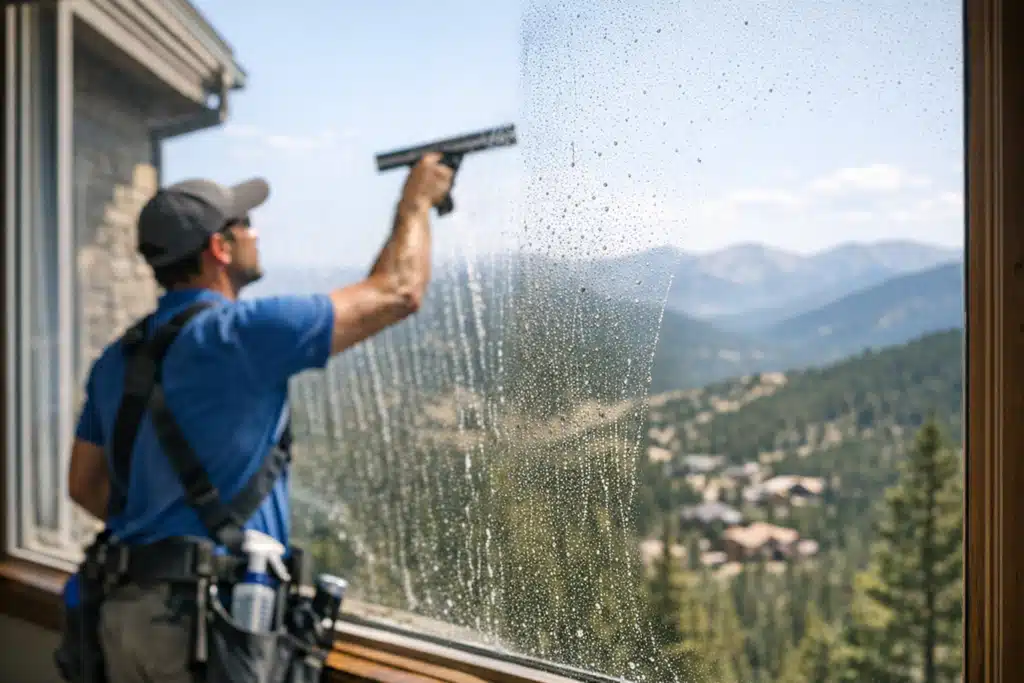
Here is a practical frequency comparison based on what we see across Denver-area properties:
- Sea-level suburban home: Two cleanings per year handle most buildup.
- Denver metro home (5,280 ft): Three cleanings per year, with one mid-summer.
- Foothills home (7,000–8,000 ft): Three to four cleanings, plus spot treatment after wind events.
- Homes near new construction: Add one extra cleaning during active building seasons.
A mid-summer visit matters most at altitude. It removes the pollen and dust layer before UV bakes it into a permanent film.
Signs Your Elevation Is Cutting Cleaning Cycles Short
Watch for these markers that altitude is aging your glass faster:
- Chalky white spots that resist a quick wipe—mineral deposits from hard well water or sprinklers.
- A hazy film on south-facing windows within weeks of a cleaning.
- Gritty texture when you run a finger across the lower pane.
- Faded or cracked frame seals from sustained UV exposure.
Two or more of these signs mean your window cleaning schedule needs a summer addition.
How Altitude Impact Changes Cleaning Methods
Frequency is only half the story. The methods that work at sea level fall short at elevation, and the difference matters in summer heat.
Timing the Wash Around Heat and Sun
Hot glass dries cleaning solution too fast at altitude. Water evaporates before a squeegee clears it, leaving streaks and spots. Early morning or shaded-side work avoids this problem on 90-degree days.
We schedule Front Range summer jobs before mid-morning whenever the layout allows. Cooler glass holds solution long enough for a clean pass.
Purified Water for Hard Mineral Spots
Colorado’s hard water and high-mineral sprinkler spray leave stubborn deposits. Standard soap and water spread the minerals instead of removing them. Deionized or reverse-osmosis water lifts spots without leaving residue behind.
This method matters more at altitude because dry air lets sprinkler overspray dry instantly onto glass.
Handling UV-Damaged Seals With Care
Sun-worn frame seals crack and flake under pressure washing. A gentler hand protects aging gaskets around older mountain homes. Cleaners familiar with high-altitude wear know where to ease off.
Elevation-Specific Tips for Front Range Homeowners
A few adjustments keep summer glass clear between visits:
- Adjust sprinkler heads so spray never reaches ground-floor windows.
- Rinse windows lightly after major wind or dust storms to prevent baked-on grit.
- Book your mid-summer cleaning for July, after peak pollen and before late-summer dust peaks.
- Track your south and west windows separately—they take the hardest UV hit.
These small habits stretch the results of each cleaning and reduce permanent etching risk.

 Posted on Google
What This Means for Your Summer Schedule
Altitude impact makes a set-it-and-forget-it cleaning plan a poor fit for Denver homes. Elevation demands more frequent attention and adjusted methods during the dry summer stretch. A mid-summer wash, purified-water treatment, and cooler-hour timing keep glass clear despite the thin air.
Match your cleaning cadence to your elevation, and your windows stay sharp all season.
Keep Your Windows Clear This Summer
Altitude speeds up grime, UV damage, and mineral spotting on Front Range glass. Building a summer cleaning cadence around your elevation protects both clarity and window lifespan. A single mid-summer visit often prevents permanent staining.
Ease Your Panes builds elevation-aware summer schedules for Denver-area homes. Call or text (720)-477-3273, email info@easeyourpanes.com, or visit https://www.easeyourpanes.com to set your summer plan.
Sources
- U.S. EPA – UV Index Scale and Altitude Effects
- National Weather Service – Heat and Sun Safety
- U.S. Geological Survey – Hardness of Water




