

How to Maintain Clean Windows During Pollen Season
Maintaining clean windows during pollen season is a daily task that requires specific strategies to keep them clear and improve indoor air quality. This guide provides effective methods for homeowners to manage pollen buildup without excessive scrubbing.
- Pollen particles can easily stick to glass, making regular cleaning essential during peak pollen months. Morning rinses and evening cleaning routines help prevent heavy buildup.
- Using microfiber cloths and specialized solutions can enhance cleaning effectiveness and prevent streaks. Avoid ammonia-based cleaners to reduce stubborn residue.
- Professional cleaning services can provide deeper cleaning when pollen buildup becomes challenging, ensuring windows remain clear and enhancing indoor air quality.
To maintain clean windows during pollen season, homeowners should regularly wash their windows to remove pollen buildup. Using a soft cloth or squeegee along with a gentle cleaning solution can help keep windows clear. Additionally, closing windows during peak pollen times and using air purifiers indoors can improve air quality.
Spring brings blooming flowers and fresh air, but it also delivers a yellow-green coating of pollen that transforms crystal-clear windows into hazy barriers. Pollen season window cleaning becomes a daily challenge for homeowners who want to maintain their view and indoor air quality.
The key to winning the pollen battle lies in understanding when, how, and how often to clean during peak pollen months. This guide reveals specific maintenance strategies that keep your windows clear without endless scrubbing.
Understanding Pollen’s Impact on Windows
Pollen particles measure between 10-100 microns, making them small enough to stick to glass surfaces but large enough to create visible buildup. Tree pollen hits first in early spring, followed by grass pollen in late spring and early summer.
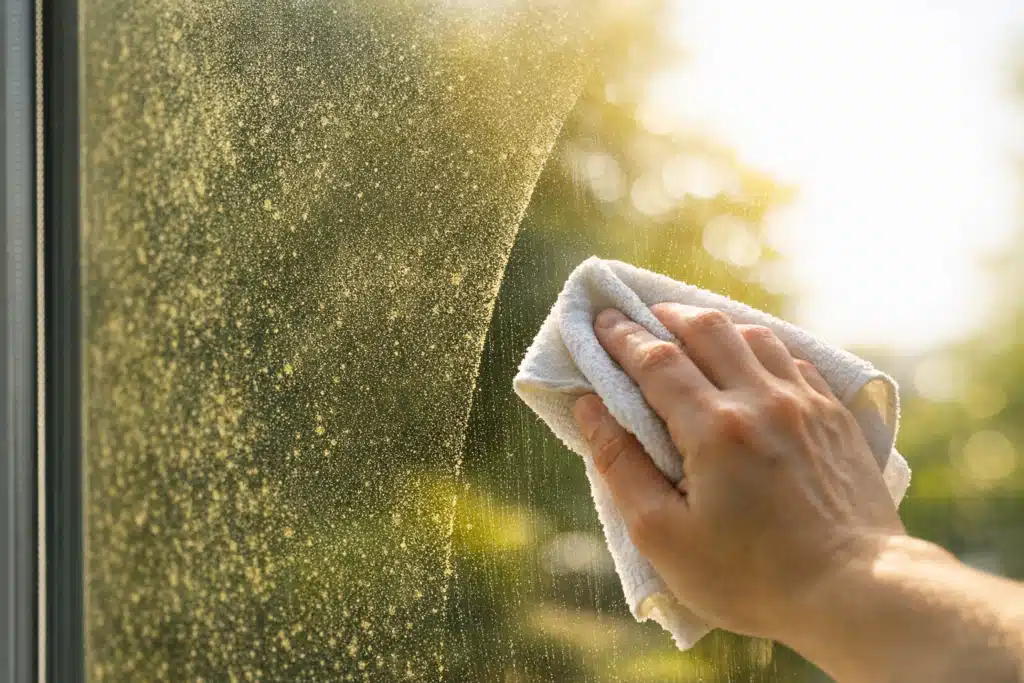
Morning dew acts like glue, binding pollen to your windows overnight. When the sun rises, this mixture dries into a film that requires more than a simple hose spray to remove.
Peak Pollen Times
Pollen counts spike between 5 AM and 10 AM on dry, windy days. Rain provides temporary relief, but pollen levels often surge the day after rainfall as plants release accumulated pollen.
Daily Pollen Season Window Cleaning Strategies
Effective pollen management requires shifting from weekly window cleaning to daily maintenance during peak season. Light daily attention prevents the heavy buildup that demands aggressive scrubbing.
The Morning Rinse Method
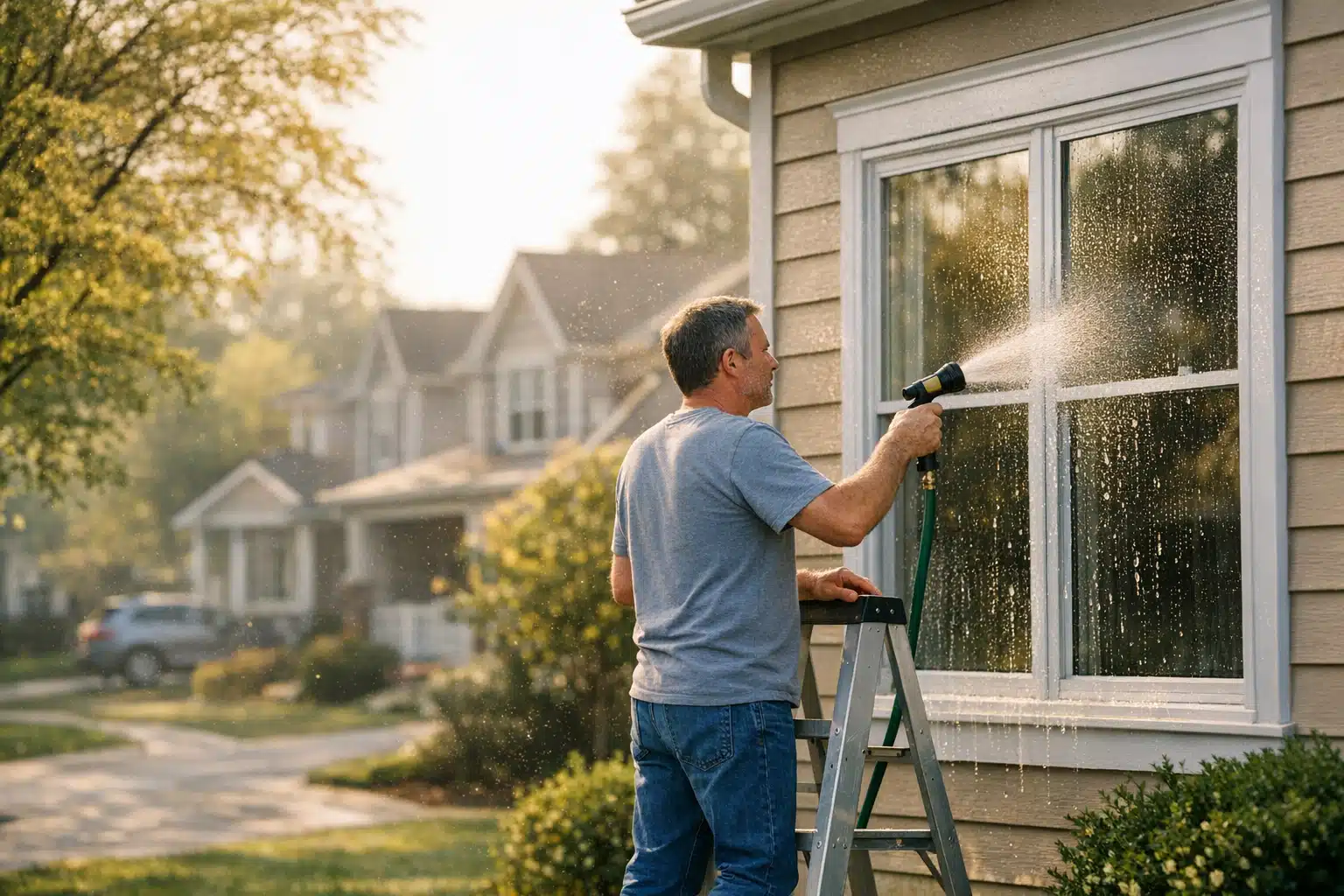
Start each day with a gentle water rinse before pollen hardens in the sun. Use your garden hose with a spray nozzle set to “shower” rather than “jet” to avoid driving pollen into window screens or frames.
Target the rinse between 6 AM and 7 AM when pollen is still damp from dew. This timing allows easy removal before heat sets the particles into place.
The Two-Step Evening Clean
Evening cleaning removes the day’s pollen accumulation and prepares windows for the next morning’s collection. Follow this sequence:
- Rinse – Spray windows with clean water to loosen surface pollen
- Squeegee – Use a microfiber squeegee in overlapping strokes from top to bottom
- Detail – Wipe frames and sills with a damp microfiber cloth
Tools That Handle Pollen Effectively
Standard window cleaning tools often spread pollen rather than removing it. Pollen-specific tools make the difference between clear windows and streaky disappointment.
Microfiber vs. Traditional Materials
Microfiber cloths trap pollen particles in their fibers instead of pushing them around the glass surface. Traditional cotton cloths lack the electrostatic charge needed to grab microscopic pollen.
Use separate microfiber cloths for different tasks – one for initial pollen removal, another for final polishing. This prevents cross-contamination that creates streaks.
Specialized Pollen Removal Solutions
Mix one tablespoon of white vinegar with one cup of distilled water for an effective pollen-cutting solution. The mild acidity breaks down pollen’s waxy coating without damaging window tinting or frames.
Avoid ammonia-based cleaners during pollen season. Ammonia can react with certain pollen types to create stubborn residue that requires professional removal.
Indoor Air Quality and Allergen Removal
Clean windows directly impact indoor air quality by reducing the pollen reservoir around your home’s entry points. Pollen clinging to exterior windows gets stirred up by wind and enters through door openings.
Allergen removal from windows becomes critical for families with pollen sensitivities. Each cleaning session eliminates millions of pollen particles that would otherwise become airborne near your home.
Window Screen Maintenance
Screens collect more pollen than glass surfaces due to their mesh structure. Remove and rinse screens weekly during peak pollen season using a soft brush and mild soap solution.
Let screens air dry completely before reinstalling to prevent mold growth in trapped moisture. Consider removing screens entirely on high pollen days to reduce collection points.

 Posted on Google
Weather-Based Cleaning Timing
Successful pollen season maintenance depends on working with weather patterns rather than against them. Different weather conditions require adjusted cleaning approaches.
Pre-Rain Preparation
Clean windows thoroughly before predicted rainfall to maximize rain’s natural rinsing effect. Rain hitting pollen-covered windows often creates streaky residue that’s harder to remove than dry pollen.
Apply a thin coat of commercial rain repellent to clean windows before storms. This treatment helps rain sheet off more effectively, carrying pollen with it.
Post-Rain Recovery
The day after rain typically brings the heaviest pollen deposits as trees and plants release stored pollen into humid air. Plan your most thorough cleaning for these high-impact days.
Use this timing strategy:
- Day of rain – Light rinse only
- Day after rain – Full cleaning with solution and squeegee
- Following days – Daily maintenance rinses until next rain
Professional Maintenance During Peak Season
Even dedicated homeowners benefit from professional intervention during the heaviest pollen periods. Professional cleaners use commercial-grade tools and solutions that remove embedded pollen ordinary cleaning misses.
Schedule professional cleaning at the season’s start to establish a clean baseline. This initial deep clean makes daily maintenance more effective throughout pollen season.
When to Call Professionals
Contact professional cleaners when pollen buildup creates permanent-looking stains or when daily cleaning stops producing clear results. These signs indicate pollen has bonded with dirt or minerals, requiring specialized removal techniques.
High windows and skylights need professional attention since incomplete cleaning allows pollen to accumulate in unreachable areas. This buildup eventually washes down to lower windows, undermining your cleaning efforts.
Long-Term Window Protection Strategies
Protective treatments applied before pollen season reduce daily cleaning requirements. These preventive measures create barriers that make pollen removal easier when it does occur.
Protective Coatings
Professional-grade protective coatings create a smooth surface that prevents pollen from adhering strongly to glass. These treatments last 6-12 months with proper maintenance.
Apply coatings during low-pollen periods (late fall or winter) for maximum effectiveness. The coating needs clean glass to bond properly, making timing crucial for success.
Maintaining clean windows during pollen season requires consistent daily attention rather than intensive weekly cleaning. The combination of proper timing, appropriate tools, and weather awareness keeps your view clear without exhausting effort.
For professional pollen season window cleaning that protects your home’s clarity and indoor air quality, contact Ease Your Panes at (720)-477-3273 or visit https://www.easeyourpanes.com.
Sources
- EPA – Introduction to Indoor Air Quality
- Asthma and Allergy Foundation of America – Pollen Allergy
- Asthma and Allergy Foundation of America – Pollen Allergy




