

How Local Water Hardness Affects Solar Panel Cleaning
Hard water along Colorado's Front Range leaves mineral deposits on solar panels that block sunlight and reduce energy output. Purified water cleaning removes these minerals without leaving spots or damaging the anti-reflective coating.
- Water above 7 GPG counts as hard, and Denver metro area water ranges from 5 to 12 GPG. When hard water dries on panels, minerals form white cloudy spots that can lower output by 2% to 7% annually.
- Cleaning with tap water and soap makes panels worse by depositing fresh calcium and magnesium. Repeated hard water exposure can permanently etch the anti-reflective coating.
- Pure water systems strip minerals to near zero PPM, lifting dirt and rinsing clean without toweling. Most Front Range panels need cleaning one to two times per year to prevent buildup.
Hard water leaves behind a chalky mineral film on solar panels that blocks sunlight and reduces energy output. In areas with high water hardness, like Colorado's Front Range, standard cleaning methods can actually make panels dirtier over time. Using purified or deionized water, along with proper squeegee techniques, prevents mineral deposits and keeps panels producing at peak efficiency.
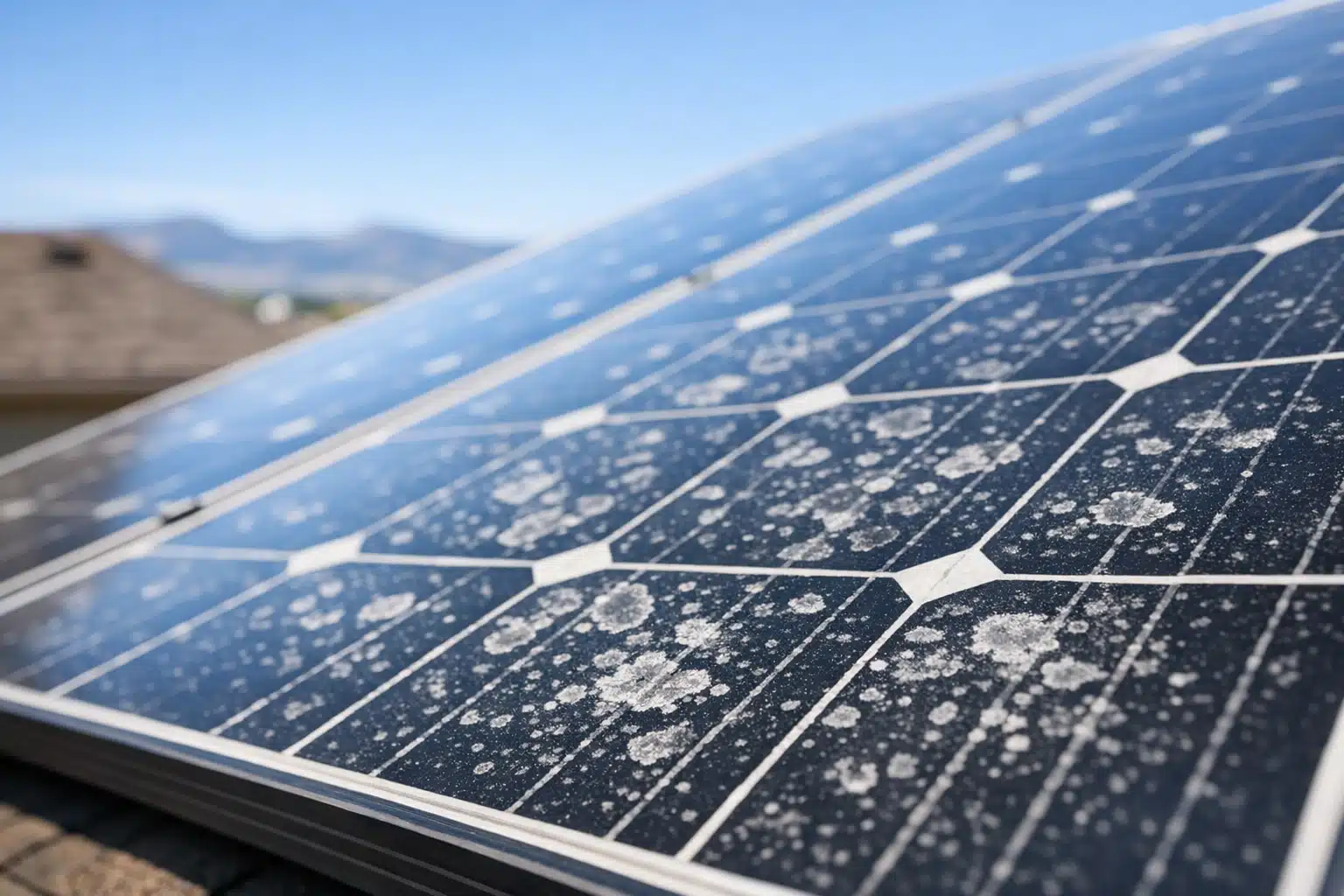
Hard water leaves behind a chalky film on solar panels that can block sunlight and cut energy output. Along Colorado’s Front Range, water hardness ranks among the highest in the country, which changes how solar panels should be cleaned.
This post covers what water hardness is, how it interacts with photovoltaic glass, and why the wrong cleaning method leaves spots that reduce panel performance.
You will learn what those white marks are, how local mineral levels affect results, and which method removes deposits without damage.
What Water Hardness Means for Solar Panel Cleaning
Water hardness is the measure of dissolved calcium and magnesium in your water supply. It is measured in grains per gallon (GPG) or parts per million (PPM).
Water above 7 GPG counts as hard. Much of the Denver metro area sits between 5 and 12 GPG, depending on the source.
When hard water dries on glass, the water evaporates but the minerals stay behind. Those minerals form the white, cloudy spots you see on windows and panels.
Why Solar Panels Are More Sensitive Than Windows
Solar panels sit at a fixed angle and heat up during the day. Water dries fast on a hot panel, which locks minerals onto the surface quickly.
The tempered glass on a panel has an anti-reflective coating. Mineral buildup on that coating scatters light before it reaches the cells below.
A thin layer of hard water residue can lower output by a measurable margin. Studies on soiling losses put annual production drops between 2% and 7% for panels left dirty.
How Local Water Hardness Changes the Cleaning Result
Cleaning solar panels with hard tap water often makes them look worse than before. The rinse water dries and deposits a fresh layer of calcium and magnesium.
Here is what happens on a typical Front Range roof:
- Spotting: Droplets dry into round mineral rings across the glass.
- Filming: A hazy sheet forms when hard water sheets off unevenly.
- Etching: Repeated hard water exposure can permanently scar the anti-reflective coating.
The harder the local supply, the faster and heavier the buildup. In areas near well water sources, hardness can exceed 15 GPG, and spotting appears within minutes.
Why Dish Soap and a Hose Fail
Many homeowners reach for soap and a garden hose. Soap leaves a residue that attracts dust, and the hose water carries the same minerals that caused the problem.
You end up trading dirt for mineral spots. On a south-facing array, those spots bake on within an hour on a summer afternoon.
The Method That Solves Hard Water Spotting
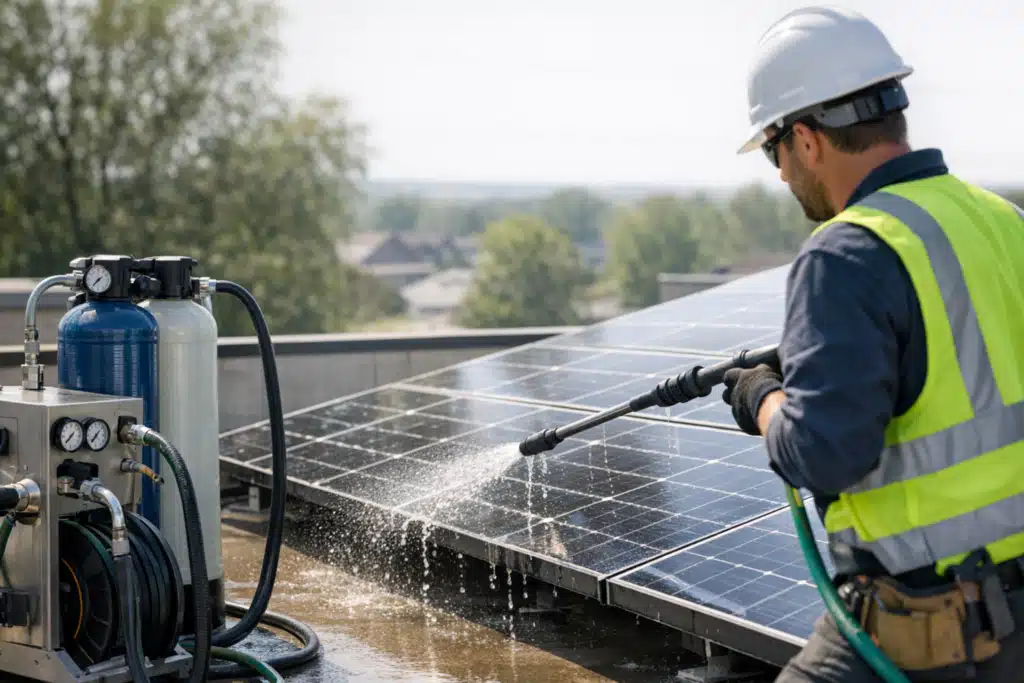
Purified water removes minerals before they can dry on the glass. A deionization or reverse osmosis system strips calcium and magnesium down to near zero PPM.
Pure water acts as a magnet for dirt. It lifts grime and rinses away without leaving anything behind, which means no spots and no toweling.
How Pure Water Cleaning Works
- Tap water passes through a filter and resin tank to remove dissolved minerals.
- The purified water reads at or near 000 PPM on a meter.
- A water-fed pole with soft bristles agitates the panel surface.
- The pure water rinses the loosened dirt off the glass.
- The panel dries spot-free with no towel contact.
This method matches what most panel manufacturers recommend. Abrasive pads and mineral-heavy tap water fall outside warranty guidelines.
Why Pure Water Matters More in Hard Water Regions
In a soft water area, tap water might dry clean enough to pass. In Colorado, the mineral load makes purified water the practical choice for a spotless finish.
The difference shows up in the numbers. A panel cleaned with pure water holds its finish for weeks, not hours.
How to Tell If Hard Water Damaged Your Panels
Look for these signs during a bright morning when the sun hits the array:
- Cloudy patches that do not wipe off with a dry cloth.
- Rainbow sheen where the coating has started to etch.
- Circular rings left by dried droplets.
- Reduced output on your monitoring app compared to prior seasons.
Light spotting rinses away with pure water. Etching from years of hard water buildup can be permanent, which is why early cleaning protects your investment.

 Posted on Google
How Often Should Front Range Panels Be Cleaned?
Most residential arrays in the Denver area need cleaning one to two times per year. Dry seasons, pollen, and wildfire smoke raise that frequency.
Homes near dirt roads, farms, or construction sites see faster buildup. Panels with a low tilt angle collect more dust because rain runs off slowly.
A consistent schedule keeps soiling losses low and stops mineral layers from compounding. Waiting until output drops means you have already lost production.
Key Takeaways
Hard water leaves mineral spots that block sunlight and can etch panel coatings over time. Front Range water hardness makes purified water cleaning the reliable way to get a spot-free result. Regular cleaning protects both your energy output and the anti-reflective coating.
Ease Your Panes uses pure water systems built for Colorado’s hard water conditions. Call or text us at (720)-477-3273, email info@easeyourpanes.com, or visit https://www.easeyourpanes.com to schedule a solar panel cleaning.
Sources
- U.S. Geological Survey – Hardness of Water
- National Renewable Energy Laboratory – PV Soiling and Cleaning
- U.S. Department of Energy – Solar Photovoltaic System Maintenance




