

How Hard Water Affects Your Windows in the Dry Season
Hard water window stains form faster during dry months because low humidity causes rapid evaporation, leaving concentrated mineral deposits that bond to glass. Sprinkler overspray is the main cause of buildup on Front Range homes, and untreated stains can permanently etch windows.
- Surface spots can be removed with mild acidic cleaners like white vinegar, but bonded scale requires professional treatment. Standard glass cleaners fail because they cannot dissolve alkaline mineral deposits.
- Prevention includes adjusting sprinkler heads away from windows, watering before dawn, rinsing windows weekly, and applying hydrophobic coatings to reduce mineral adhesion.
- We recommend full window cleaning at the start and end of each dry season. Ignoring buildup can lead to permanent etching that requires pane replacement within a year or two.
Hard water stains form faster and set deeper on windows during dry months due to rapid evaporation. When moisture evaporates quickly from glass surfaces, mineral-rich water leaves behind concentrated deposits that bond strongly to the window. These deposits become more difficult to remove the longer they remain, making dry season window maintenance especially challenging for homeowners.
Why Hard Water Hits Your Windows Harder When It’s Dry
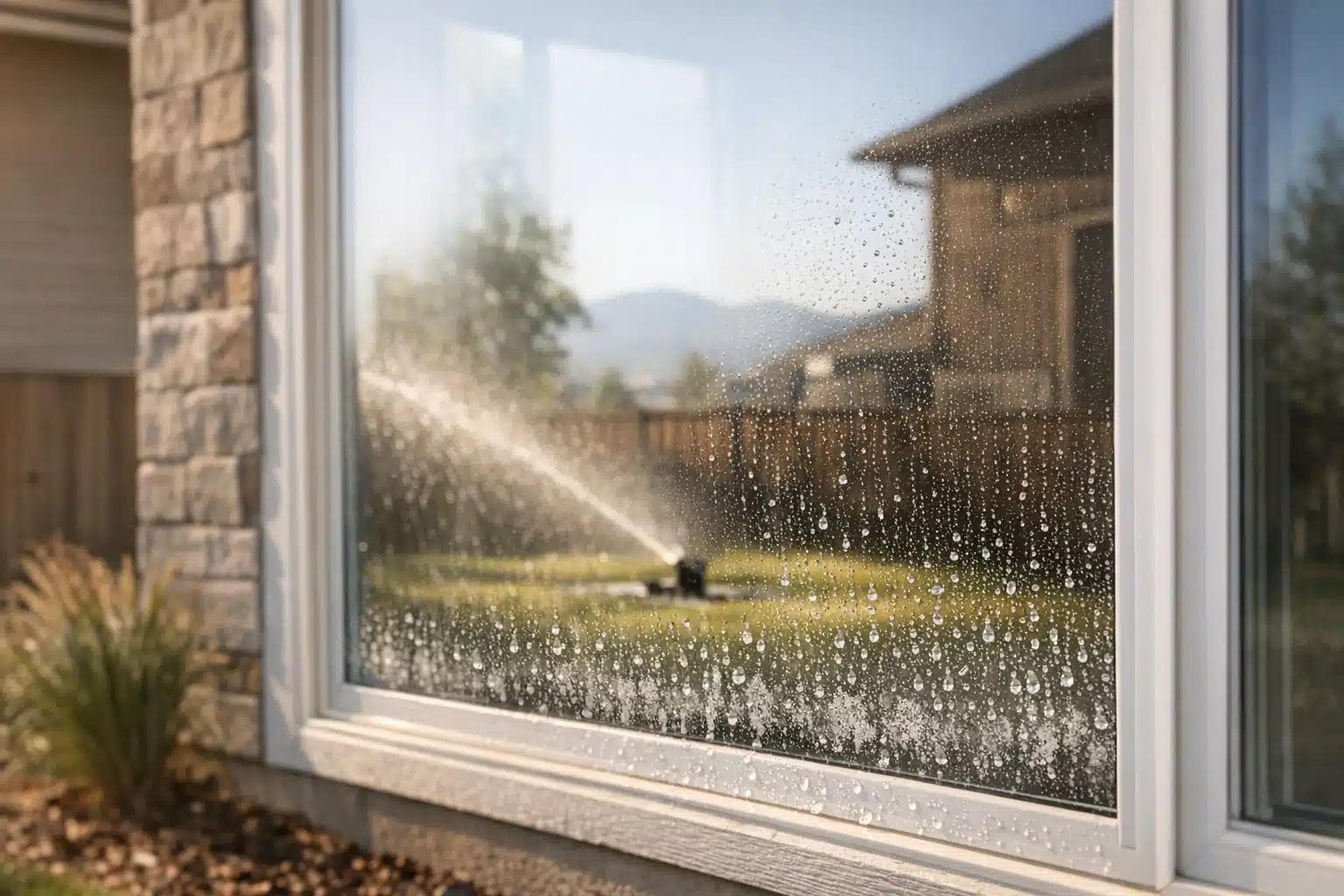
Hard water window stains form faster and set deeper during dry months than at any other time of year. The reason is evaporation. When the air pulls moisture off your glass quickly, mineral-rich water leaves behind concentrated deposits that bond to the surface.
Across Colorado’s Front Range, tap water carries heavy loads of calcium and magnesium. In arid stretches, sprinkler overspray and runoff dry on your windows in minutes. That short drying window is exactly what makes spots cling and harden.
This post breaks down how local water hardness damages glass, why dry conditions accelerate the problem, and what removes the buildup without scratching your panes.
What Hard Water Window Stains Are
Hard water window stains are mineral deposits left on glass when water evaporates instead of being wiped away. The water carries dissolved calcium, magnesium, and silica. When it dries, those minerals stay behind as a chalky white film.
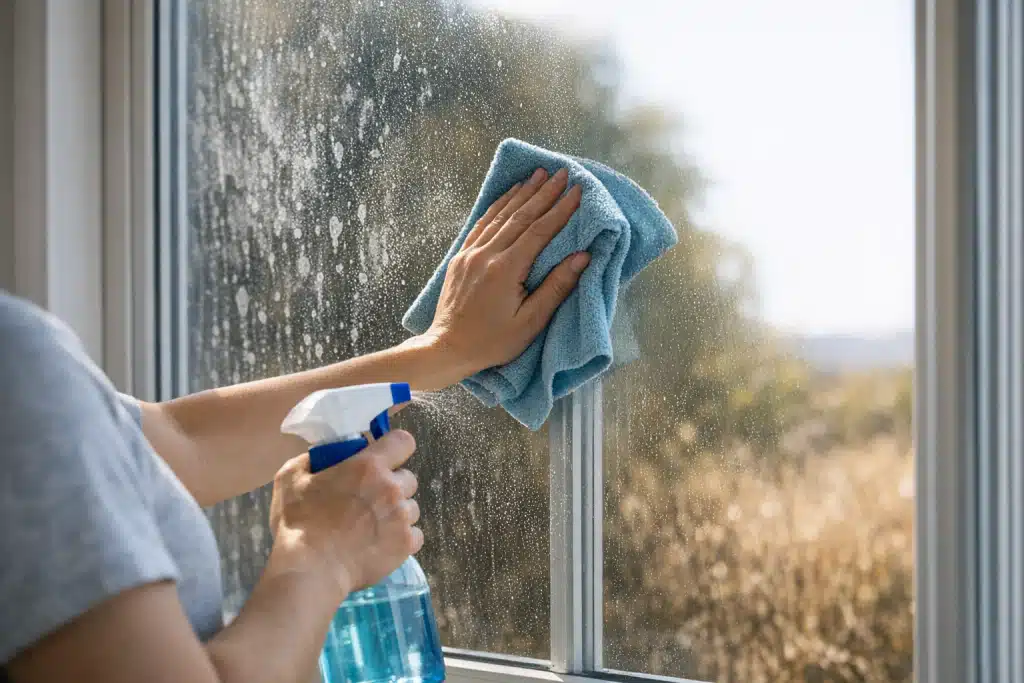
Most homeowners spot three types of buildup:
- Surface spots — fresh deposits that rinse or wipe off with the right cleaner.
- Bonded scale — hardened layers that resist standard glass cleaner.
- Etching — permanent surface damage where minerals corrode the glass itself.
The last stage matters most. Once glass etches, no cleaner reverses it. Prevention and early removal are the only real defenses.
How Colorado’s Dry Season Speeds Up the Damage
Dry air changes the math on water evaporation. Humidity in Denver drops below 30% for long stretches in summer and fall. Lower humidity means faster evaporation, and faster evaporation means more concentrated mineral residue.
The Sprinkler Problem
Lawn irrigation is the biggest culprit we see on Front Range homes. Sprinkler heads spray the lower third of windows every morning. In July heat, that overspray dries before 8 a.m.
Each cycle adds a fresh layer of minerals. Over a single dry season, daily watering can build visible scale on ground-floor glass. By fall, those windows look permanently fogged near the base.
Dust and Mineral Bonding
Dry conditions also raise airborne dust. Dust settles on damp glass and mixes with the mineral film. The result is a gritty crust that holds moisture against the surface longer and deepens the bond.
Why Standard Cleaning Fails on Hard Water Stains
Regular glass cleaner removes dirt, not minerals. Calcium and magnesium deposits are alkaline and bonded to the glass. Soap and ammonia slide right over them.
People then reach for abrasive pads, which is the common mistake. Scrubbing bonded scale with the wrong material leaves fine scratches. On a sunny Colorado afternoon, those scratches catch the light and look worse than the stain did.
The right approach uses mild acids that dissolve the mineral bond without harming the glass. Order and technique matter as much as the product.
How to Remove Hard Water Window Stains Safely
Follow these steps to clear mineral buildup without risking etch marks or scratches:
- Rinse first. Flood the glass with clean water to lift loose dust and grit before anything else touches the surface.
- Apply a mild acidic cleaner. White vinegar or a dedicated mineral remover breaks the calcium bond. Let it sit two to three minutes.
- Agitate with a soft pad. Use a non-scratch nylon pad or 0000 steel wool rated for glass. Work in small circles.
- Rinse again. Remove dissolved minerals so they don’t re-deposit as the water dries.
- Dry immediately. Squeegee or wipe with a clean microfiber cloth before evaporation starts a new spot.
That final step is the one most people skip. In dry heat, letting cleaned glass air-dry invites fresh spotting within minutes.
When the Stain Won’t Budge
If the deposit resists vinegar and gentle agitation, you are past surface staining. Bonded scale and etching need stronger acids and controlled technique. At that point, aggressive home scrubbing does more harm than good.

 Posted on Google
Preventing Hard Water Stains During Dry Season Cleaning
Prevention beats removal every time. These habits keep mineral buildup from setting on your glass during the driest months:
- Adjust sprinkler heads so spray never reaches the windows. This single change stops most ground-floor scaling.
- Water before dawn when it’s cooler, giving overspray a slim chance to run off instead of baking on.
- Rinse windows weekly during peak dry stretches to clear minerals before they bond.
- Add a protective coating that makes glass hydrophobic, so water beads and rolls off instead of pooling and drying.
Coatings are worth a closer look for Front Range homes. A quality sealant can cut mineral adhesion for months, which pairs well with scheduled dry season cleaning.
Why Timing Your Cleaning Matters
We recommend a full window cleaning at the start and end of each dry season. The first visit removes spring buildup and applies protection. The second clears the summer’s accumulated scale before it hardens over winter.
Homes on well water or near agricultural runoff may need more frequent attention. Mineral loads vary block to block across the region.
What Happens If You Ignore It
Untreated mineral buildup moves from cosmetic to costly. Early spots wipe away in minutes. Months of neglect lead to bonded scale that takes hours of careful acid work to clear.
Left longer, the minerals etch the glass permanently. At that stage, the only fix is pane replacement. A dry season of daily sprinkler overspray can push untreated windows toward that outcome within a year or two.
Key Takeaways
Dry air concentrates minerals and bonds hard water window stains to glass faster than any other season. Standard cleaners won’t touch bonded scale, and abrasive scrubbing scratches the surface. Mild acids, immediate drying, and smart sprinkler adjustments keep your windows clear.
Protect your glass before mineral buildup etches it for good. Call or text Ease Your Panes at (720)-477-3273, email info@easeyourpanes.com, or visit https://www.easeyourpanes.com to schedule your dry season cleaning.
Sources
- U.S. Geological Survey – Hardness of Water
- U.S. Environmental Protection Agency – Ground Water and Drinking Water
- National Weather Service – Denver/Boulder Forecast Office


