

Understanding the Impact of Tree Sap on Windows
Tree sap can severely damage windows by bonding aggressively and creating permanent etching if not addressed promptly. Homeowners face significant challenges in cleaning sap, especially during peak seasons, making professional help often necessary.
- Tree sap contains natural acids that etch glass surfaces, leading to permanent damage if left untreated. Pine, fir, and spruce trees are the main culprits for sap issues, particularly in spring and summer.
- Removing fresh sap is manageable with rubbing alcohol, while hardened sap requires ice or specialized solvents for safe removal. Mistakes like using metal scrapers can cause more harm than the sap itself.
- Regular inspections and applying car wax can help prevent sap from bonding to windows. Professional cleaning services are recommended for severe cases to avoid costly window replacements.
Tree sap is a sticky substance produced by trees that can accumulate on windows, creating a challenging cleaning issue for homeowners. This amber coating not only obstructs visibility but also hardens over time, making it difficult to remove, particularly during the growing seasons from spring to early fall.
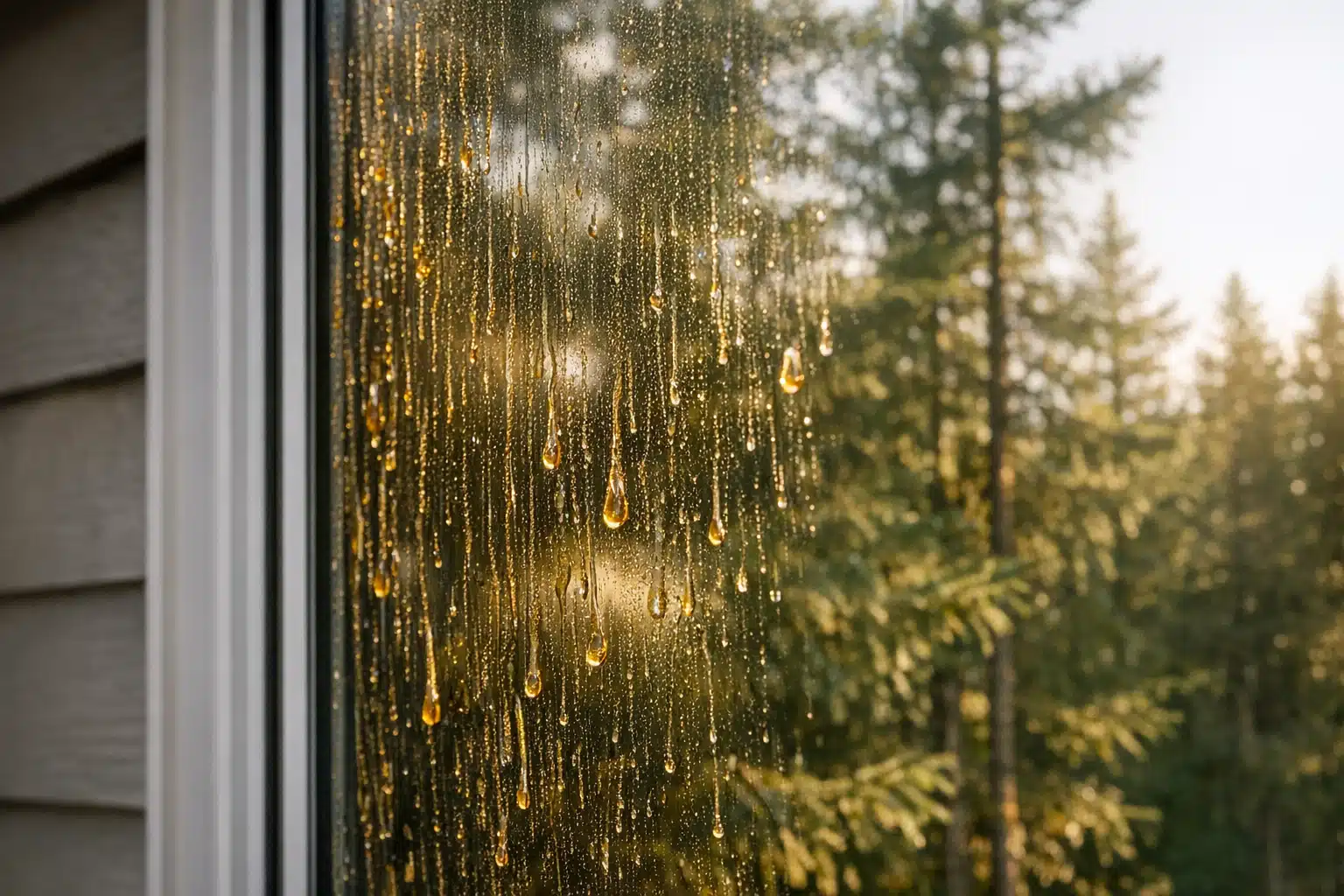
That sticky amber coating on your windows isn’t just an eyesore. Tree sap windows present one of the most stubborn cleaning challenges homeowners face, especially during peak growing seasons from spring through early fall.
Tree sap bonds aggressively to glass surfaces and hardens over time into a cement-like substance. Left untreated, it creates permanent etching and staining that standard cleaning methods cannot remove.
How Tree Sap Damages Glass Surfaces
Tree sap contains natural acids and sugars that create a dual threat to your windows. The acidic compounds begin etching microscopic pits into the glass surface within days of contact, while the sugars act as a magnet for dirt, pollen, and other airborne particles.
Summer heat accelerates this damage process significantly. When temperatures reach 80°F or higher, tree sap hardens into a resin-like coating that penetrates these microscopic pits. This creates the brown or amber staining that homeowners notice on south and west-facing windows.
The damage timeline follows a predictable pattern:
- Days 1-3: Fresh sap remains soft and removable with proper techniques
- Days 4-7: Sap begins hardening and requires specialized solvents
- Week 2+: Permanent etching occurs, requiring glass restoration or replacement
Which Trees Cause the Most Window Damage
Pine, fir, and spruce trees produce the most problematic sap for windows. These evergreen species release sap year-round, with peak production during spring growth spurts and summer stress periods.
Maple trees create seasonal sap issues during late winter and early spring tapping season. Oak trees typically only release sap when branches are damaged by storms or pruning.
Removing Tree Sap from Windows Safely
Fresh tree sap responds well to rubbing alcohol applied with a microfiber cloth. The alcohol dissolves the sticky compounds without damaging window tinting or protective coatings.
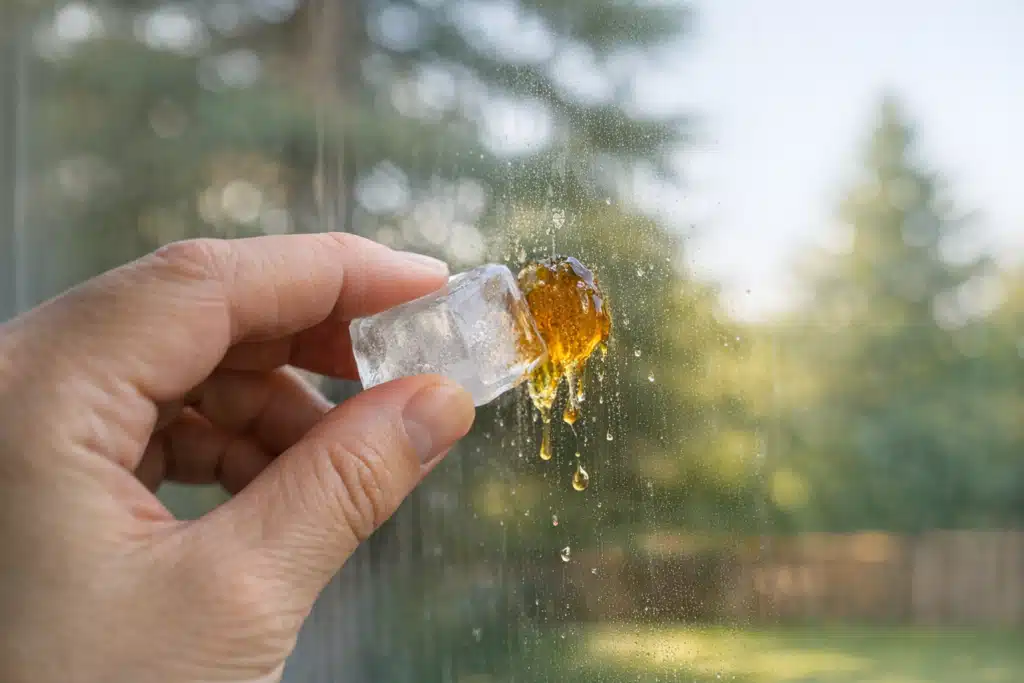
For hardened sap, ice cubes provide the safest removal method. Hold an ice cube against the sap deposit for 30-60 seconds until it becomes brittle, then gently scrape with a plastic putty knife held at a 45-degree angle.
Professional-Grade Removal Techniques
Commercial tree sap removers contain specialized solvents designed for automotive and glass applications. Apply these products sparingly with a cotton swab to avoid spreading the sap across clean glass areas.
Heat application works for stubborn deposits but requires extreme caution. A hair dryer on low heat can soften aged sap, but excessive temperature creates thermal stress that cracks windows.
The step-by-step professional approach follows this sequence:
- Test removal method on an inconspicuous corner first
- Apply ice or solvent to soften the deposit
- Scrape gently with plastic tools only
- Clean residue with ammonia-free glass cleaner
- Rinse thoroughly with clean water
Common Tree Sap Removal Mistakes
Using metal scrapers or razor blades creates permanent scratches that are more noticeable than the original sap stains. Glass surfaces require plastic or wooden removal tools exclusively.
Ammonia-based cleaners react chemically with tree sap to create a cloudy film that requires professional restoration to remove. This reaction occurs within minutes of contact and cannot be reversed with home cleaning methods.
Why Standard Glass Cleaners Fail
Traditional window cleaning solutions contain water and mild detergents designed for dirt and fingerprints. Tree sap’s resinous composition repels water-based cleaners, causing them to bead up and roll off without dissolving the deposit.
Paper towels spread softened sap across clean glass areas instead of removing it. The rough texture also scratches the glass surface when used with any pressure.
Seasonal Prevention Strategies
Applying car wax to windows creates a protective barrier that prevents sap from bonding directly to glass. This treatment requires reapplication every three months but reduces cleaning time significantly.
Strategic tree trimming eliminates overhanging branches that drip sap onto windows below. Professional arborists recommend maintaining a 10-foot clearance between tree canopies and structures.
Timing Your Window Maintenance
Weekly inspections during spring and summer catch fresh sap deposits before they harden. Early morning checks work best because overnight dew makes fresh sap more visible against the glass.
Post-storm cleaning prevents extended sap exposure when damaged branches increase resin production. Wind-driven rain often spreads tree sap across multiple window panes during severe weather events.

 Posted on Google
When Professional Help Becomes Necessary
Permanent etching from aged tree sap requires glass restoration techniques beyond typical homeowner capabilities. Professional window cleaners use specialized compounds and equipment to remove embedded stains without replacement.
Multiple sap deposits covering large window areas present window cleaning challenges that consume entire weekends for homeowners. Professional services complete these projects efficiently while protecting surrounding landscaping and building surfaces.
Cost Comparison: DIY vs Professional Treatment
Homeowner sap removal attempts often damage windows beyond repair. Replacement costs for a single large window range from $200-500, while professional cleaning typically costs $15-25 per window.
Professional equipment includes heated cleaning solutions and specialized scrapers that remove sap without surface damage. These tools cost thousands of dollars and require training to operate safely.
Long-Term Glass Protection
Regular professional maintenance creates a protective routine that prevents sap damage accumulation. Quarterly cleanings cost less than emergency restoration services for severely damaged windows.
Documentation of sap damage helps with insurance claims when tree removal becomes necessary. Professional cleaning services provide detailed reports showing progression of glass deterioration over time.
Tree sap windows require immediate attention to prevent permanent damage that reduces your home’s value and appearance. Professional intervention saves both time and money compared to DIY attempts that often worsen the problem.
Ease Your Panes specializes in safe tree sap removal techniques that protect your windows while restoring crystal-clear visibility. Contact us at (720)-477-3273 for expert assessment and treatment of your sap-damaged windows.
Sources
- Penn State Extension – Tree Sap and Resin
- USDA Forest Service – Tree Resin Production Research
- International Glass Consortium – Glass Maintenance Guidelines

