

Eco-Friendly Window Cleaning Solutions for Earth-Conscious Homeowners
Eco-friendly window cleaning methods provide effective, streak-free results while prioritizing health and environmental safety. These sustainable practices utilize natural ingredients and tools that minimize waste and reduce harmful chemical exposure.
- Biodegradable cleaning recipes and energy-efficient tools are highlighted for effective window care. Eco-friendly methods significantly lower environmental impact compared to traditional cleaners. Professional services often match traditional pricing while enhancing sustainability and health benefits.
- Chemical fumes shouldn’t be the price of sparkling windows.
- Eco-friendly window cleaning methods deliver streak-free results while protecting your family’s health and the environment.
Eco-friendly window cleaning solutions are methods that utilize non-toxic, biodegradable products to clean windows without harmful chemical fumes. These solutions provide streak-free results while prioritizing the health of your family and the environment, making them an ideal choice for environmentally conscious homeowners.
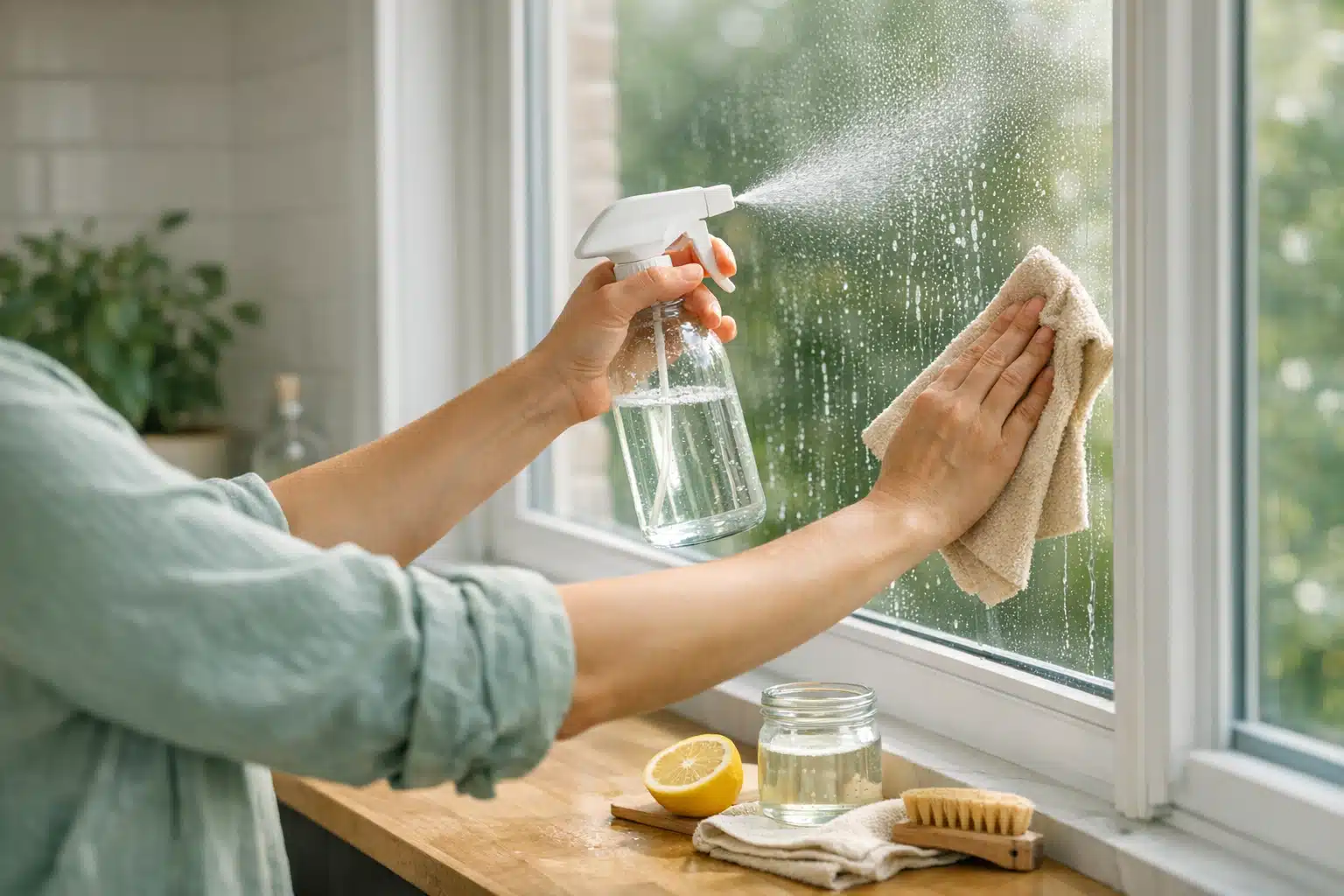
Chemical fumes shouldn’t be the price of sparkling windows. Eco-friendly window cleaning methods deliver streak-free results while protecting your family’s health and the environment.
You’ll discover biodegradable cleaning recipes, energy-efficient tools, and water conservation techniques that rival traditional methods. These sustainable practices reduce your environmental footprint without compromising window clarity.
Why Traditional Window Cleaners Harm the Environment
Commercial window cleaners contain ammonia, phosphates, and synthetic surfactants that contaminate waterways. These chemicals persist in groundwater for years, affecting aquatic ecosystems and drinking water supplies.
Paper towels create massive waste streams. Americans discard over 13 billion pounds of paper towels annually, with window cleaning contributing significantly to this environmental burden.
Aerosol sprays release volatile organic compounds (VOCs) into the atmosphere. These emissions contribute to ground-level ozone formation and indoor air pollution that triggers respiratory issues.
Natural Ingredients That Clean Windows Effectively
White Vinegar Solutions
White vinegar dissolves mineral deposits and soap residue without toxic fumes. Mix one part vinegar with ten parts water for regular cleaning, or use a 1:4 ratio for heavily soiled windows.
The acetic acid in vinegar cuts through grime while evaporating cleanly. This prevents the streaking caused by synthetic detergents that leave residual films.
Castile Soap Formulations
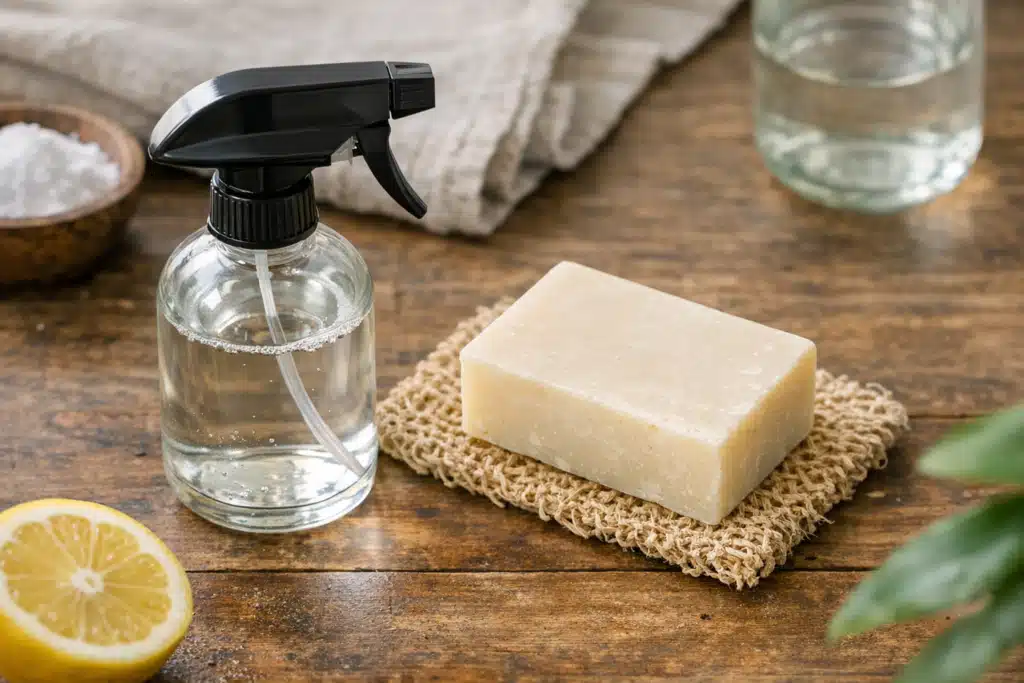
Plant-based castile soap creates effective green cleaning solutions for grimy windows. Add two tablespoons per gallon of water for basic cleaning power without environmental damage.
Castile soap biodegrades completely within weeks of disposal. Traditional detergents can take decades to break down in natural systems.
Rubbing Alcohol Blends
Isopropyl alcohol speeds drying time and prevents freezing in winter conditions. Mix equal parts water and 70% rubbing alcohol with one tablespoon of vinegar per cup of liquid.
This combination evaporates quickly in cold weather when water-based cleaners would freeze on glass surfaces. The alcohol content eliminates bacteria without persistent chemical residues.
DIY Eco-Friendly Window Cleaning Recipes
All-Purpose Glass Cleaner
This versatile formula handles most residential window cleaning tasks:
- 2 cups warm water
- 1/2 cup white vinegar
- 1 tablespoon liquid castile soap
- 10 drops essential oil (optional, for scent)
Combine ingredients in a spray bottle and shake before each use. This mixture costs approximately 30 cents per bottle compared to $4-6 for commercial cleaners.
Heavy-Duty Grease Remover
Kitchen windows and heavily soiled glass require stronger formulations:
- 1 cup warm water
- 1 cup rubbing alcohol
- 1 tablespoon cornstarch
- 2 tablespoons white vinegar
The cornstarch acts as a mild abrasive that dissolves when rinsed. This prevents scratching while removing stubborn deposits that standard cleaners cannot penetrate.
Winter-Resistant Formula
Cold-weather cleaning demands freeze-resistant ingredients:
- 1 cup rubbing alcohol
- 1 cup water
- 2 tablespoons vinegar
- 1 teaspoon liquid dish soap (biodegradable)
This blend remains liquid at temperatures down to 10°F. The alcohol content prevents ice formation while maintaining cleaning effectiveness in harsh conditions.
Sustainable Tools and Equipment
Microfiber Cloths vs. Paper Products
Quality microfiber cloths last 500-1000 wash cycles compared to single-use paper towels. One microfiber cloth replaces approximately 300 paper towels over its lifespan.
Microfiber’s electrostatic properties trap dirt and moisture more effectively than paper. The synthetic fibers create a capillary action that pulls debris from glass surfaces without chemical assistance.
Natural Rubber Squeegees
Natural rubber squeegee blades outperform synthetic alternatives in streak prevention. The material conforms to glass irregularities while maintaining flexibility in varying temperatures.
Replace squeegee blades every 6-12 months rather than discarding entire units. This reduces waste while maintaining optimal performance for professional-quality results.
Bamboo Scrubbers
Bamboo fiber scrubbers remove stuck-on debris without scratching glass surfaces. These biodegradable tools decompose completely within 180 days in compost systems.
Bamboo grows 35 times faster than trees, making it a rapidly renewable resource. The natural antimicrobial properties reduce bacteria buildup during storage.
Water Conservation Techniques
Spray Application Methods
Targeted spray application reduces water consumption by 60% compared to bucket washing. Focus spray patterns on soiled areas rather than saturating entire window surfaces.
Pump sprayers deliver consistent pressure without continuous water flow. This controlled application prevents runoff while ensuring adequate coverage for thorough cleaning.
Rainwater Collection Systems
Collected rainwater contains fewer minerals than tap water, reducing spotting and streaking. Install simple collection barrels under downspouts for dedicated window cleaning supplies.
Rainwater’s natural pH level enhances cleaning effectiveness while eliminating chlorine and fluoride found in municipal water systems. This creates spotless results without additional water treatment.
Greywater Utilization
Filtered greywater from laundry or bathroom sinks works effectively for initial window rinsing. Reserve fresh water for final cleaning and squeegee work.
Simple filtration removes soap residue and debris from greywater sources. This approach reduces fresh water consumption by 40% during comprehensive window cleaning sessions.

 Posted on Google
Professional Eco-Friendly Window Cleaning Services
Professional services multiply environmental benefits through economies of scale and specialized equipment. Eco-friendly window cleaning companies use concentrated biodegradable products that reduce packaging waste per window cleaned.
Water-fed pole systems filter and purify water on-site, eliminating chemical cleaners entirely. These systems produce deionized water that dries spot-free without detergent assistance.
Professional-grade microfiber tools and renewable energy-powered equipment extend the environmental advantages beyond individual household efforts. Trained technicians optimize techniques for minimal resource consumption while maximizing cleaning effectiveness.
Cost Analysis of Green vs. Traditional Methods
Homemade eco-friendly cleaners cost 85% less than commercial alternatives. A gallon of effective natural cleaner costs approximately $2 compared to $15-20 for equivalent commercial products.
Reusable tools require higher upfront investment but deliver long-term savings. Quality microfiber cloths cost $3-5 each but replace hundreds of dollars worth of paper towels over their lifespan.
Professional eco-friendly services often match or beat traditional pricing while providing superior environmental performance. The operational efficiencies of sustainable methods offset any premium for green products.
Health Benefits of Chemical-Free Window Cleaning
Natural cleaning methods eliminate indoor air pollution from ammonia and synthetic fragrances. These chemicals trigger asthma attacks and respiratory irritation in sensitive individuals.
Skin contact with harsh detergents causes dermatitis and allergic reactions. Plant-based ingredients reduce these health risks while maintaining cleaning effectiveness.
Children and pets face particular vulnerability to chemical exposure through direct contact and inhalation. Natural alternatives eliminate these risks without compromising household cleanliness standards.
Seasonal Considerations for Sustainable Window Care
Spring Deep Cleaning
Spring cleaning requires stronger formulations to remove winter grime and salt deposits. Increase vinegar concentration to 20% for initial deep cleaning, then maintain with weaker solutions.
Warm spring temperatures accelerate natural cleaner effectiveness. Schedule major cleaning sessions during mild weather to minimize energy requirements and maximize natural evaporation.
Summer Maintenance
High temperatures cause rapid evaporation that increases streaking risks. Clean windows during early morning or evening hours to prevent premature drying.
Add cornstarch to summer formulations for extended working time. This natural ingredient slows evaporation while providing gentle abrasive action against insect residue.
Winter Protection
Alcohol-based formulations prevent freezing while maintaining biodegradability. Avoid salt-based de-icers that damage window seals and contaminate groundwater.
Reduce cleaning frequency during harsh winter months to conserve resources. Focus on interior surfaces and spot-clean exterior windows only when necessary.
Sustainable window cleaning protects both your home’s appearance and the planet’s future. These natural methods deliver professional results while safeguarding your family’s health and the environment.
Ready to experience streak-free windows without the environmental guilt? Contact Ease Your Panes at (720)-477-3273 for eco-friendly professional window cleaning that exceeds traditional methods in both performance and sustainability.
Sources
- EPA – Volatile Organic Compounds’ Impact on Indoor Air Quality
- USGS – Groundwater Quality Information
- National Institute of Environmental Health Sciences – Household Chemicals
- Department of Energy – Water Conservation Methods

